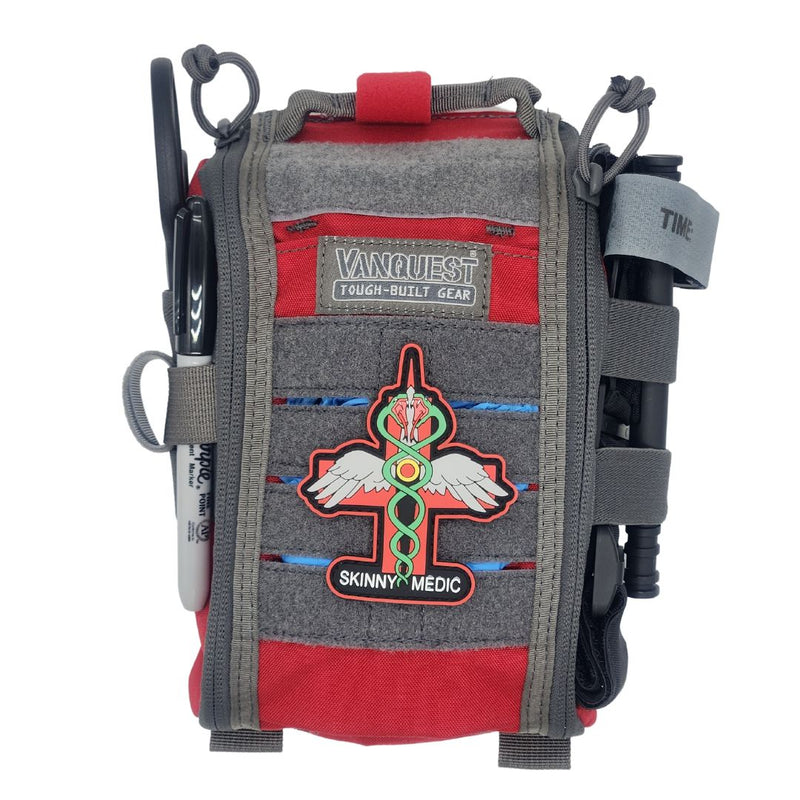
1st Aid Kit for Car: Complete Guide for 2026
Every driver faces potential emergencies on the road, from minor cuts and scrapes to more serious medical situations. Having a properly stocked 1st aid kit for car travel can mean the difference between a manageable incident and a crisis. Whether you're commuting to work, taking a road trip, or driving in remote areas, the right medical supplies stored in your vehicle provide peace of mind and the ability to respond effectively when seconds count. As first responder professionals know, preparation is the foundation of effective emergency care.
Essential Components Every 1st Aid Kit for Car Should Include
A comprehensive 1st aid kit for car use must address a wide range of potential medical situations. Unlike home first aid kits, vehicle kits need to withstand temperature fluctuations, vibration, and space constraints while remaining quickly accessible.
Basic Wound Care Supplies
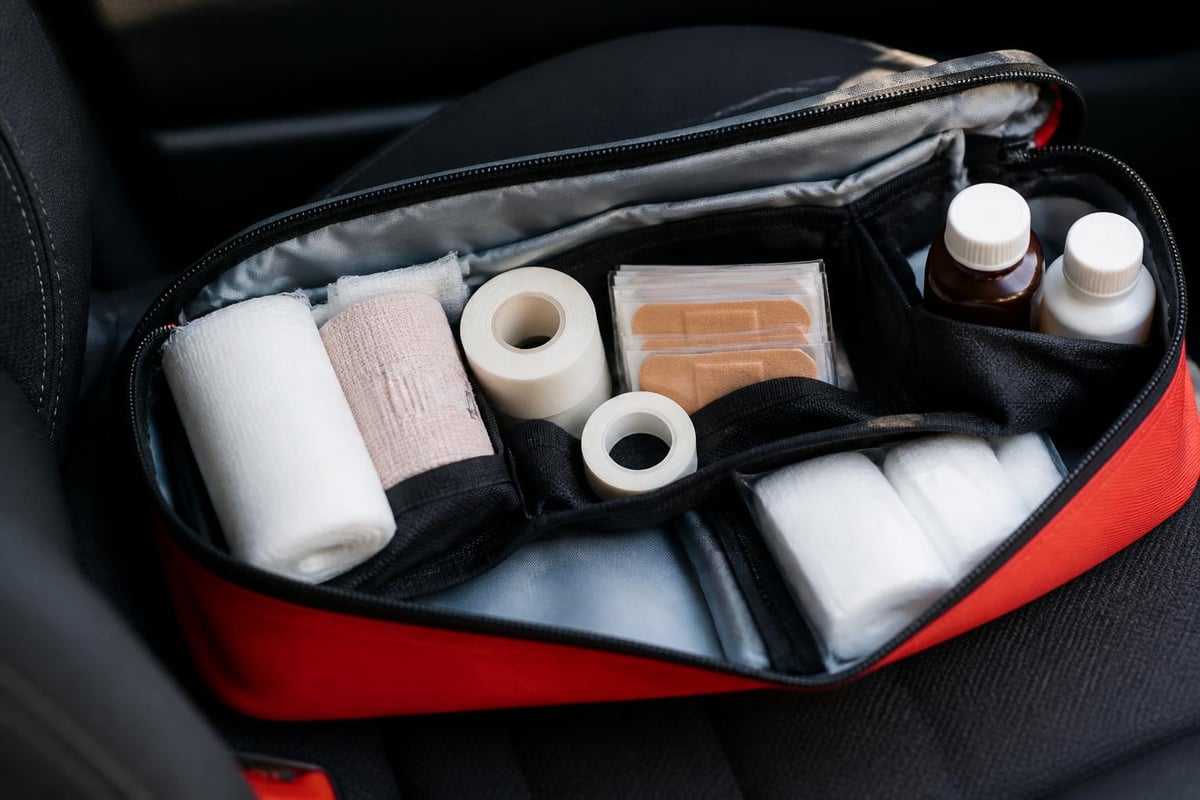
The foundation of any vehicle medical kit starts with wound management essentials. These items address the most common roadside injuries.
- Adhesive bandages in assorted sizes (minimum 25 count)
- Sterile gauze pads (2x2, 3x3, and 4x4 inch)
- Conforming roller gauze bandages
- Medical tape (both cloth and waterproof varieties)
- Antiseptic wipes and alcohol prep pads
- Antibiotic ointment packets
- Butterfly closures or wound closure strips
Triangular bandages serve multiple purposes, from creating slings to securing splints or covering large wounds. Include at least two in your kit. Understanding first aid content helps ensure you stock appropriate quantities for your specific needs.
Trauma and Bleeding Control
Motor vehicle accidents can result in severe bleeding that requires immediate intervention. Your 1st aid kit for car emergencies should include advanced trauma supplies.
| Supply Type | Purpose | Quantity |
|---|---|---|
| Tourniquet (CAT or SOFT-T) | Life-threatening extremity bleeding | 1-2 |
| Hemostatic gauze | Control severe bleeding | 2 packages |
| Israeli/pressure bandage | Compress and secure wounds | 2-3 |
| Chest seals (vented) | Penetrating chest injuries | 2 pairs |
| Trauma shears | Cut clothing, seatbelts | 1 pair |
These trauma kit components represent the difference between stabilizing a critically injured person and helplessly waiting for EMS arrival. Every driver should understand basic hemorrhage control principles and know how to access these supplies instantly.
Personal Protection Equipment
Protecting yourself while providing care prevents disease transmission and keeps you safe enough to help others. Your kit must include barriers between you and bodily fluids.
Nitrile gloves in multiple sizes ensure proper fit for different responders. Stock at least four pairs. Include a CPR mask or face shield for rescue breathing situations. Safety glasses or goggles protect against blood splatter during high-pressure bleeding scenarios.
Legal Requirements and Regulatory Standards
Some states mandate specific first aid equipment in vehicles. New Hampshire regulations require multipurpose passenger vehicles to carry securely mounted, fully equipped first aid kits with detailed mandatory contents.
Pennsylvania code specifies that vehicles must carry removable, moisture and dustproof first aid kits in accessible locations. While most states don't legally require personal vehicles to carry medical supplies, commercial vehicles often face stricter requirements.
Industry-Specific Requirements
Commercial drivers should familiarize themselves with federal regulations. Camp car standards mandate adequate first aid kits in weatherproof containers with specified minimum contents.
Transportation companies operating fleets benefit from reviewing recommended contents for work vehicles, which emphasizes preparedness for road incidents involving employees.
Medication and Pharmaceutical Considerations
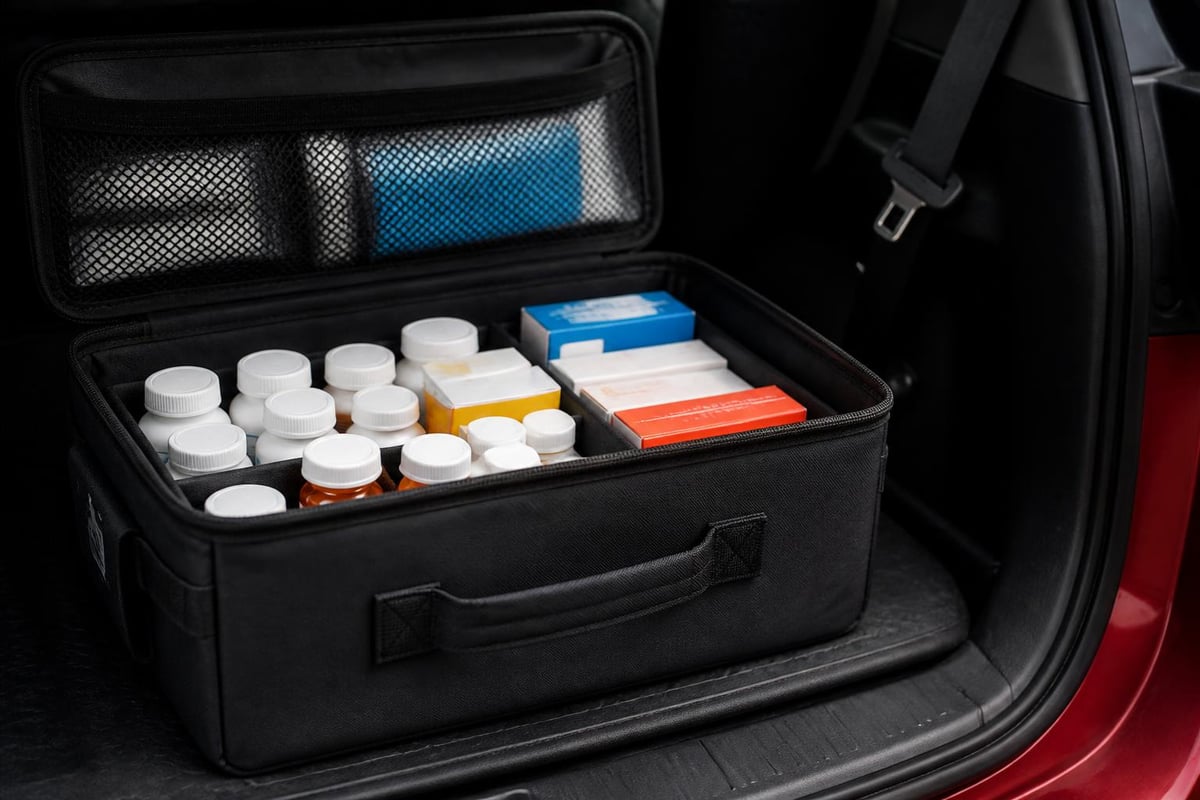
Pain relief, allergic reactions, and common medical conditions require pharmaceutical interventions. Your 1st aid kit for car storage should include over-the-counter medications in sealed, unexpired packaging.
- Acetaminophen or ibuprofen (individual packets)
- Aspirin (critical for suspected heart attacks)
- Antihistamines (diphenhydramine for allergic reactions)
- Antacids
- Anti-diarrheal medication
- Hydrocortisone cream
- Eye drops
Epinephrine auto-injectors save lives during severe allergic reactions. If you or family members have known allergies, keep these temperature-sensitive medications properly stored. Some drivers include prescription medications for chronic conditions as backup supplies.
Temperature extremes inside vehicles can degrade medications. Store pharmaceutical items in insulated pouches or containers, and rotate stock every six months to maintain effectiveness.
Tools and Diagnostic Equipment
Beyond bandages and medications, effective emergency response requires specific tools. These items expand your capability to assess and stabilize patients.
Assessment and Treatment Tools
A quality 1st aid kit for car emergencies includes diagnostic and treatment instruments that help you make informed decisions.
- Digital thermometer for fever assessment
- Blood pressure cuff for monitoring vital signs
- Penlight or small flashlight for pupil checks and illumination
- Tweezers (multiple sizes) for splinter removal
- Emergency blanket for shock and hypothermia prevention
- Instant cold packs for sprains, strains, and inflammation
- Sam splint for fracture immobilization
- Emergency whistle for signaling help
Include a permanent marker for noting treatment times on tourniquets or documenting patient information. Medical-grade shears cut through clothing, seatbelts, and other materials without struggling.
Documentation and Communication
Keep a small notepad and pencil for recording vital signs, treatments administered, and timing of interventions. This information proves invaluable when EMS arrives. Include emergency contact cards and medical information forms for family members.
Container Selection and Organization
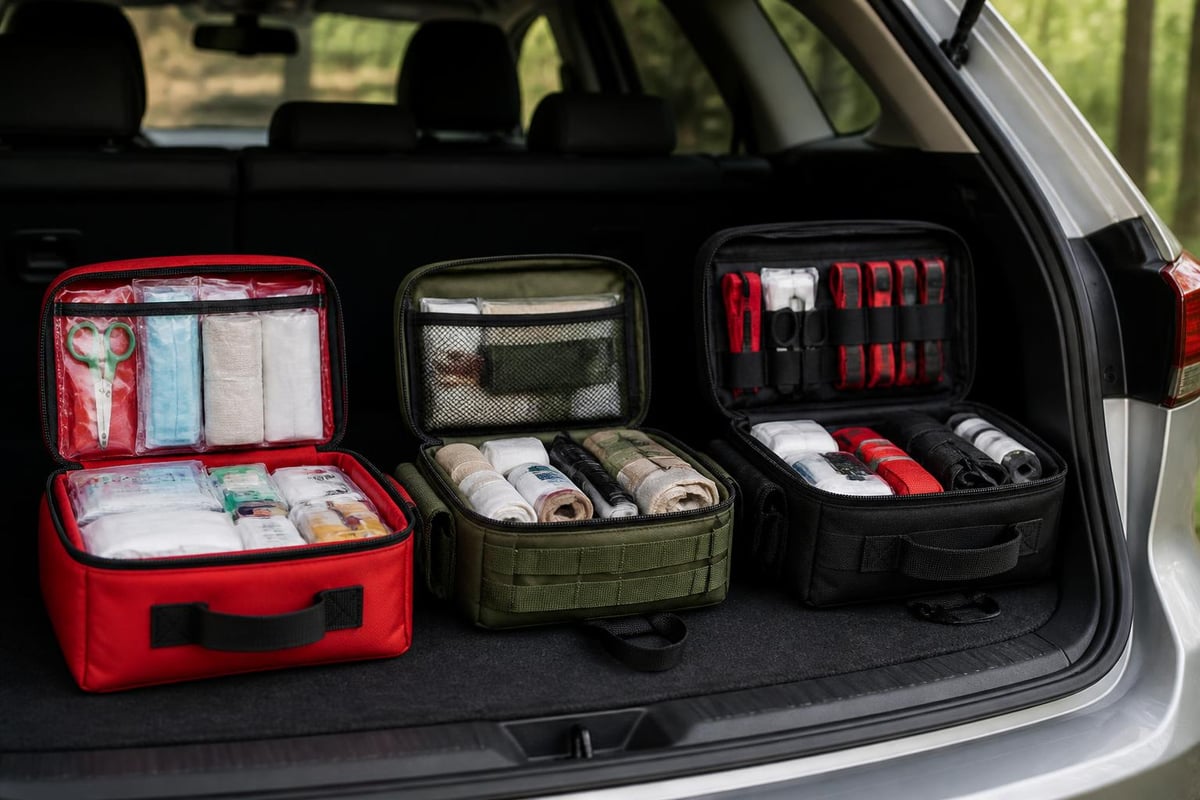
The best supplies become useless if you can't find them quickly. Your 1st aid kit for car storage must balance accessibility, protection, and organization.
| Container Type | Advantages | Disadvantages |
|---|---|---|
| Hard plastic case | Waterproof, crush-resistant, organized compartments | Bulky, limited expansion |
| Soft tactical bag | MOLLE compatible, expandable, versatile mounting | Less protective, requires organization |
| Weatherproof pouch | Compact, flexible placement, lightweight | Limited capacity, harder to organize |
| Custom organizer | Perfectly sized, maximum efficiency | Time-intensive setup, higher cost |
Modular organization using clear pouches or zippered bags within your main container creates categories: wound care, medications, trauma supplies, tools. This system enables rapid location of needed items during high-stress situations.
Consider vehicle-specific factors when selecting containers. Trucks with cargo areas accommodate larger kits. Sedans require compact solutions that fit under seats or in trunks without rolling around. Mounting systems keep kits stationary during sudden stops or collisions.
For comprehensive guidance on selecting the right size and style, review options for a portable medical kit that balances thoroughness with practicality.
Specialized Additions for Specific Scenarios
Customize your 1st aid kit for car travel based on your driving patterns, passenger needs, and geographic considerations. Base kits address common injuries, but thoughtful additions prepare you for unique situations.
Family and Pediatric Considerations
Traveling with children requires age-appropriate supplies. Add pediatric medication dosing charts, child-sized blood pressure cuffs, and smaller airway management tools. Parents of infants should include teething gel, diaper rash cream, and infant fever reducers.
Remote and Rural Driving
Extended trips through areas with limited EMS access demand enhanced capabilities. Wilderness first aid supplies supplement standard kit contents.
- Extended wound care supplies (larger quantities)
- Advanced splinting materials
- Irrigation syringes for wound cleaning
- Comprehensive blister care
- Snake bite management supplies
- Extended-shelf-life water purification
- Signal mirror and emergency beacon
Understanding snake bite kit essentials becomes critical for drivers in areas with venomous reptiles. These specialized items require knowledge of proper application techniques.
Occupational and Special Use Cases
First responders, security professionals, and healthcare workers traveling to job sites need enhanced trauma capabilities. IFAK contents provide templates for individual first aid kits designed for tactical situations.
Maintenance, Inspection, and Replacement Protocols
A neglected 1st aid kit for car storage becomes a liability rather than an asset. Systematic maintenance ensures readiness when emergencies strike.
Monthly Quick Checks
Perform brief inspections every month focusing on immediate concerns:
- Verify kit presence and accessibility
- Check for water damage or contamination
- Ensure seals and closures function properly
- Confirm nothing has spilled or leaked
- Test flashlight batteries
Quarterly Comprehensive Inspections
Every three months, conduct thorough reviews of your entire kit contents. Remove all items and inspect individually.
- Check expiration dates on all medications and supplies
- Replace or replenish any used items
- Clean the container interior
- Reorganize supplies for optimal access
- Update any documentation or instruction cards
- Replace batteries in electronic devices
Temperature-sensitive items require special attention. Medications, some ointments, and certain adhesives degrade when exposed to extreme heat or cold common in vehicle interiors. During summer months in hot climates, consider temporarily relocating pharmaceutical supplies indoors.
| Supply Category | Replacement Frequency | Notes |
|---|---|---|
| Medications (OTC) | 6-12 months | Check expiration dates |
| Adhesive bandages | 2-3 years | Adhesive degrades over time |
| Sterile gauze | 3-5 years | If packaging intact |
| Trauma supplies | Per manufacturer | Often 5+ years |
| Ointments/creams | 1-2 years | Temperature sensitive |
For detailed guidance on maintaining emergency medical supplies, refer to resources on basic first aid box upkeep that apply equally to vehicle kits.
Training and Competency Development
Owning a fully stocked 1st aid kit for car emergencies means nothing without the knowledge to use its contents effectively. Medical supplies become powerful tools only in trained hands.
Essential Skills Every Driver Should Master
Basic first aid training through organizations like the American Red Cross or American Heart Association provides foundational competencies. Focus on these critical skills:
- CPR and AED use for cardiac emergencies
- Choking relief for conscious and unconscious patients
- Direct pressure and pressure point bleeding control
- Tourniquet application for life-threatening extremity hemorrhage
- Basic wound cleaning and dressing
- Splinting techniques for suspected fractures
- Recognition of shock, stroke, and heart attack symptoms
Hands-on practice with your specific supplies builds muscle memory and confidence. Don't wait for an emergency to open packages and familiarize yourself with equipment operation.
Advanced Capabilities for Committed Responders
Drivers seeking enhanced preparedness benefit from wilderness first aid certification, Stop the Bleed courses, or EMT training. These programs teach assessment skills, treatment prioritization, and extended care techniques valuable in delayed-rescue scenarios.
Understanding how to stop major bleeding while avoiding common errors represents critical knowledge that dramatically improves survival outcomes in severe trauma situations.
Building Your Kit: Pre-Made vs. Custom Assembly
Drivers face the choice between purchasing complete commercial kits or assembling custom solutions. Each approach offers distinct advantages depending on your knowledge, budget, and specific requirements.
Commercial Pre-Assembled Kits
Ready-made first aid kits provide immediate solutions with professionally selected contents. These products save time and ensure you don't overlook essential items. Complete kits from reputable manufacturers offer various capacity levels matching different needs.
Advantages of commercial kits:
- Professionally designed contents
- Organized compartments and labeling
- Immediate availability
- Often include instruction guides
- Cost-effective for basic needs
Limitations to consider:
- May include unnecessary items
- Often lack advanced trauma supplies
- Generic contents not customized to your situation
- Replacement can be expensive
- May contain low-quality components
Custom Assembly Approach
Building your own 1st aid kit for car use allows complete control over contents, quality, and organization. This method suits experienced first responders and those with specific requirements.
Start with a quality container, then systematically add supplies based on comprehensive checklists. Resources like detailed first aid kit guides provide excellent starting points for inventory planning.
Purchase individual components from medical supply specialists to ensure professional-grade quality. This approach costs more initially but results in superior capabilities and allows precise customization.
Integration With Vehicle Emergency Equipment
Your 1st aid kit for car preparedness functions as one component within a comprehensive vehicle emergency system. Coordinate medical supplies with other safety equipment for maximum effectiveness.
Complementary Emergency Gear
Position your medical kit alongside other critical items:
- Fire extinguisher (ABC-rated, vehicle-appropriate size)
- Emergency escape tools (window breakers, seatbelt cutters)
- Reflective warning triangles or road flares
- Jumper cables or portable battery pack
- Basic tool kit
- Flashlight with extra batteries
- Blankets and warm clothing
- Water and non-perishable food
- Cell phone charger
Strategic placement ensures accessibility during various emergency types. Medical kits should never be stored in locked trunks if interior access becomes impossible after a collision.
Communication and Documentation
Include emergency contact information, insurance details, and medical information for all regular vehicle occupants. Note any allergies, chronic conditions, or medications that responding personnel need to know.
Consider adding a comprehensive medical kit bag system that integrates documentation, supplies, and personal protective equipment in one organized package.
Environmental Protection and Durability Factors
Vehicle interiors experience dramatic temperature swings, humidity fluctuations, and physical stress. Your 1st aid kit for car environments must withstand these challenges while maintaining supply integrity.
Temperature Management
Summer dashboard temperatures in southern states regularly exceed 150°F, while winter conditions in northern regions drop below 0°F. These extremes affect various supplies differently.
Heat-sensitive items:
- Medications (especially aspirin and antibiotics)
- Adhesives on bandages and tape
- Ointments and creams
- Some hemostatic agents
- CPR masks and gloves
Store pharmaceutical items in insulated pouches with temperature indicators. During extreme weather, temporarily relocate the most sensitive supplies indoors, maintaining a smaller emergency kit in the vehicle.
Moisture and Contamination Control
Waterproof containers protect supplies from spills, humidity, and weather exposure. Even in sealed vehicles, condensation can accumulate and degrade paper packaging or compromise sterile supplies.
Vacuum-sealed pouches within your main container provide secondary protection. Desiccant packets absorb residual moisture. Regular inspections catch contamination before supplies become unusable.
Legal Liability and Good Samaritan Considerations
Many drivers hesitate to assist at accident scenes due to liability concerns. Understanding legal protections helps you respond confidently when encountering emergencies.
Good Samaritan Laws
All 50 states have Good Samaritan statutes protecting individuals who provide reasonable assistance during emergencies. These laws generally shield you from liability when:
- You act in good faith
- You don't exceed your training level
- You don't act with gross negligence or willful misconduct
- You don't expect compensation
Staying within your competency remains critical. Using your 1st aid kit for car accident victims requires honest assessment of your capabilities. Apply only techniques you've learned through proper training.
Documentation and Consent
Obtain consent before treating conscious adults. For unconscious patients or minors without guardians present, implied consent allows necessary life-saving interventions.
Document your actions, including times of treatment and specific interventions performed. This information helps receiving medical personnel and provides legal protection if questions arise later.
Assembling and maintaining a comprehensive 1st aid kit for car emergencies represents a fundamental responsibility for every driver, transforming your vehicle into a mobile resource capable of addressing medical crises effectively. The combination of quality supplies, proper organization, regular maintenance, and solid training creates true emergency preparedness that can save lives during those critical moments before professional help arrives. Whether you're building a basic kit or assembling advanced trauma capabilities, Medical Gear Outfitters provides the professional-grade supplies and paramedic expertise to ensure you're equipped with the same quality gear trusted by first responders nationwide.