
Medicine Kit Bag: Complete Guide for 2026
Whether you work as a medical professional, serve as a first responder, or simply want to be prepared for emergencies at home or on the trail, selecting the right medicine kit bag can make the difference between effective intervention and fumbling through disorganized supplies during critical moments. A well-designed medicine kit bag serves as your portable command center for medical emergencies, combining durability, organization, and accessibility to ensure you can deliver care when seconds count. Understanding what features matter most, how to organize your supplies effectively, and maintaining your kit over time transforms a simple bag into a reliable lifeline.
Expert Opinion: A good medicine kit bag is durable, water-resistant, and organized for fast access, sized to match how you'll use it (personal, family, or professional). Stock it in layers: basic first aid (bandages, gauze, tape, antiseptic, gloves, scissors), advanced trauma gear (tourniquet, hemostatic gauze, chest seal), and any personal medications, then organize supplies by category and by how quickly you'll need them. Inspect and restock it on a schedule, protect it from heat and moisture, and match the bag type to your setting, wilderness, tactical, home, or vehicle. Full guide to features, sizing, supplies, and maintenance below.
Essential Features of a Quality Medicine Kit Bag
Selecting the right medicine kit bag requires evaluating several critical characteristics that directly impact your ability to respond during emergencies. The construction quality, material durability, and organizational design determine whether your bag performs reliably under pressure.
Durability and Material Construction
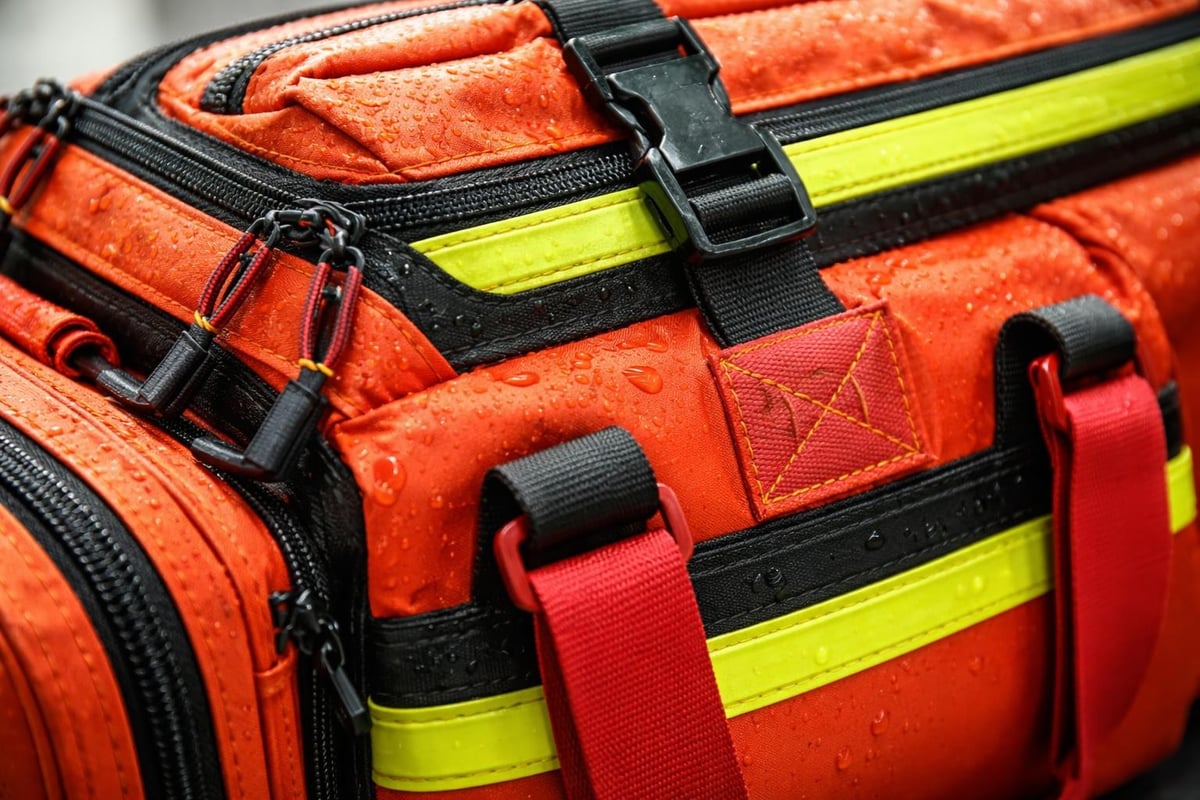
Premium materials form the foundation of any dependable medicine kit bag. Look for bags constructed from ripstop nylon, Cordura fabric, or ballistic polyester that can withstand rough handling, environmental exposure, and repeated use. These materials resist tears, abrasions, and punctures while remaining lightweight enough for comfortable transport.
Water resistance ranks among the most critical features for protecting medical supplies. Key features to look for in a medicine storage bag include waterproof zippers, sealed seams, and coated fabrics that prevent moisture infiltration. Even brief exposure to rain, snow, or humidity can compromise medications, bandages, and other supplies.
Reinforced stitching at stress points ensures your bag withstands heavy loads without failure. Quality manufacturers use bar-tack stitching at handle attachment points, double-stitched seams along edges, and reinforced bottom panels. These construction details extend the bag's service life significantly.
Organization and Accessibility Design
The internal layout of your medicine kit bag determines how quickly you locate supplies during high-stress situations. Multiple compartments allow you to separate different supply categories, preventing cross-contamination while enabling rapid identification.
Consider these organizational features:
- Clear mesh pockets for visual identification
- Elastic loops for securing instruments and tools
- Removable dividers for customizable configuration
- Color-coded compartments for supply categorization
- Quick-access external pockets for frequently used items
MOLLE webbing (Modular Lightweight Load-carrying Equipment) on the exterior provides attachment points for additional pouches, allowing you to expand carrying capacity as needs evolve. This modular approach proves especially valuable for specialized responders who require supplementary equipment.
| Feature | Benefit | Priority Level |
|---|---|---|
| Multiple compartments | Organized supply separation | High |
| Clear viewing panels | Quick visual inventory | High |
| Elastic retention | Secure instrument storage | Medium |
| MOLLE compatibility | Expandable capacity | Medium |
| External pockets | Rapid access to essentials | High |
The accessibility factor extends beyond organization to include opening mechanisms. Two-way zippers, wide-mouth openings, and clamshell designs allow the bag to lay flat, providing complete visibility of contents without requiring you to dig through layers.
Sizing Your Medicine Kit Bag Appropriately
Matching bag size to intended use prevents both under-preparation and unnecessary bulk. The right size depends on several factors including the number of people you're preparing to serve, the duration of coverage needed, and the specific environments where you'll deploy the kit.
Personal and Family Applications
For individual or small family use, compact medicine kit bags measuring 8-12 inches in length provide sufficient space for basic supplies without becoming cumbersome. These smaller bags work well for:
- Daily carry in vehicles or backpacks
- Home storage in accessible locations
- Short outdoor excursions or day trips
- Single-person emergency response
Family-sized bags typically range from 12-18 inches, accommodating supplies for four to six people. These larger configurations suit households, extended camping trips, or situations where multiple injury types might occur simultaneously. Complete kits designed for families balance comprehensive supplies with manageable size.
Professional and Tactical Requirements
Medical professionals and tactical responders require significantly larger medicine kit bags that can accommodate advanced life support equipment, trauma supplies, and specialized tools. These professional-grade bags often measure 18-24 inches or larger.
Backpack-style medical kits distribute weight across shoulders and back, making them ideal for wilderness medicine, search and rescue operations, or extended deployments. Backpack medical kits provide hands-free transport while maintaining organized supply access.
Consider carrying capacity measured in liters rather than just dimensions:
- Small bags: 5-10 liters (personal/basic)
- Medium bags: 15-25 liters (family/advanced first aid)
- Large bags: 30-50 liters (professional/comprehensive trauma)
- Extra-large bags: 50+ liters (extended operations/team deployment)
The environment where you'll use your medicine kit bag also influences size selection. Urban responders might prioritize compact designs for maneuvering through tight spaces, while wilderness medics need larger capacities for self-sufficient operations far from additional resources.
Critical Supplies for Your Medicine Kit Bag
Stocking your medicine kit bag with appropriate supplies transforms it from an empty container into a functional emergency response tool. The essential components of a first aid kit provide baseline guidance, but customization based on specific risks and skill levels optimizes effectiveness.
Basic First Aid Components
Every medicine kit bag should contain foundational supplies for treating common injuries and medical emergencies. These items address the majority of situations most people encounter:
Wound care essentials form the core of basic first aid:
- Adhesive bandages in multiple sizes
- Sterile gauze pads (2x2, 3x3, 4x4 inches)
- Medical tape and adhesive rolls
- Antiseptic wipes and solutions
- Antibiotic ointment packets
- Disposable gloves (nitrile preferred)
Trauma supplies address more serious injuries requiring immediate intervention. Trauma kits designed for severe bleeding control include compression bandages, hemostatic agents, and wound packing materials that prove critical when standard bandages prove insufficient.
Pain management and medication supplies deserve dedicated space within your medicine kit bag. Include over-the-counter pain relievers, antihistamines for allergic reactions, anti-diarrheal medication, and any prescription medications specific to known conditions among likely patients.
Advanced Medical Equipment
Airway management tools become essential for responders trained in advanced techniques. Airway and breathing equipment includes pocket masks, bag-valve masks, nasopharyngeal airways, and supplemental oxygen delivery systems for addressing respiratory emergencies.
Diagnostic instruments enhance assessment capabilities:
| Instrument | Primary Use | Skill Level Required |
|---|---|---|
| Blood pressure cuff | Vital signs monitoring | Basic |
| Stethoscope | Respiratory assessment | Intermediate |
| Pulse oximeter | Oxygen saturation reading | Basic |
| Thermometer | Temperature measurement | Basic |
| Penlight | Pupil response evaluation | Basic |
Immobilization supplies address fractures, sprains, and spinal injuries. Sam splints, rigid splints, triangle bandages, and cervical collars provide stabilization options across various injury presentations. Patient movement equipment extends capabilities when evacuation becomes necessary.
Specialized environments demand targeted supplies. Camping first aid kits include items like blister treatment, insect sting relief, and water purification tablets addressing wilderness-specific challenges.
Organizing Your Medicine Kit Bag Strategically
Effective organization within your medicine kit bag ensures rapid supply location during emergencies when fumbling costs precious seconds. Strategic placement based on usage frequency, supply type, and emergency protocols optimizes response efficiency.
Categorization Systems
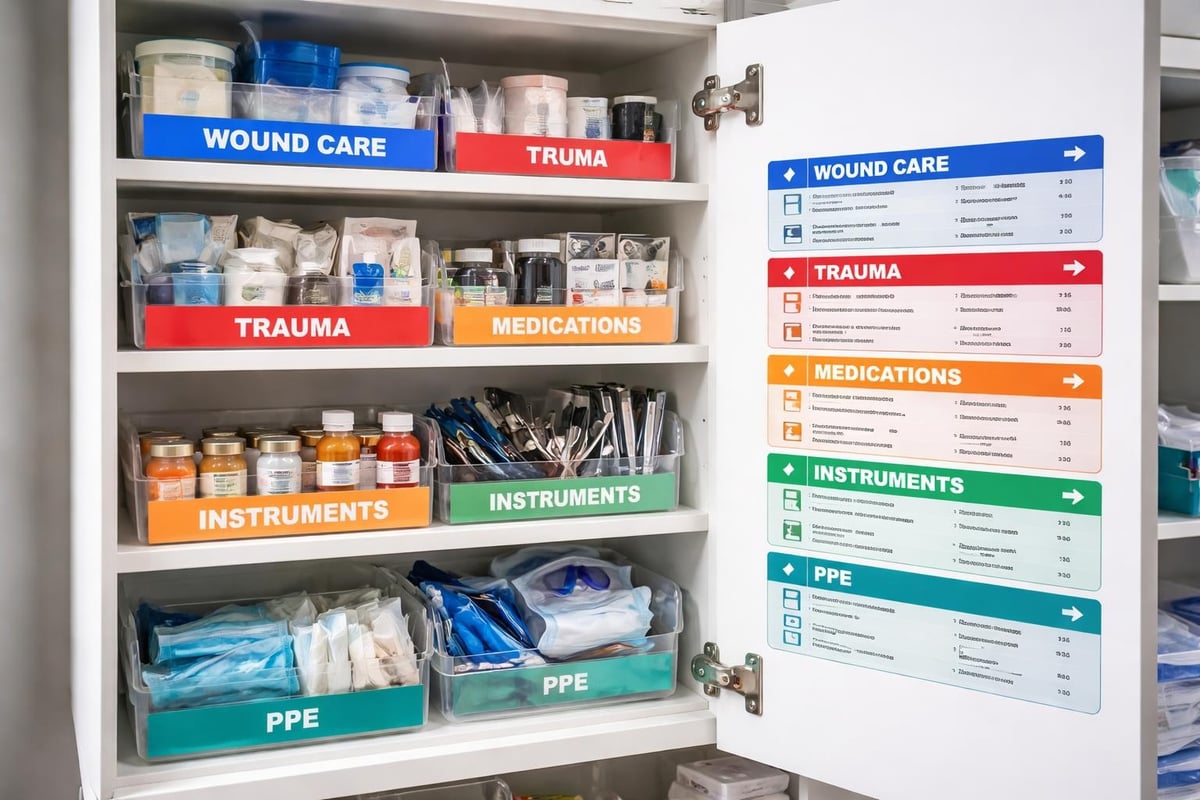
Color-coded organization uses pouches or containers in different colors to represent supply categories. This visual system allows even untrained assistants to locate needed items quickly:
- Red: Trauma and bleeding control
- Blue: Airway and respiratory
- Green: Medications and ointments
- Yellow: Wound care basics
- White: Instruments and tools
Alphabetical organization works well for medication storage within dedicated compartments. This approach proves especially valuable when managing multiple prescription medications or maintaining larger inventories.
Proper first aid storage practices emphasize labeling, separation of supplies by type, and maintaining clear inventory lists. Creating a laminated contents list attached to your medicine kit bag enables quick verification of available supplies.
Accessibility Prioritization
Front-loading critical supplies means placing life-saving items in the most accessible compartments. Tourniquets, chest seals, and hemostatic agents belong in external pockets or top compartments for immediate access without opening the entire bag.
Create zones within your medicine kit bag based on response priorities:
- Immediate access zone: Life-threatening emergency supplies
- Primary care zone: Common injury treatment items
- Support zone: Diagnostic tools and supplementary equipment
- Reserve zone: Backup supplies and less frequently used items
Consider the grab-and-go factor when organizing. If you need to deploy your medicine kit bag rapidly, ensure all critical components remain in the bag rather than stored separately. Response kits pre-configured for rapid deployment eliminate guesswork during urgent situations.
Maintenance and Resupply Protocols
Maintaining your medicine kit bag requires regular attention to ensure all supplies remain functional, unexpired, and ready for deployment. Neglected kits often contain expired medications, depleted supplies, or damaged equipment that fail when needed most.
Routine Inspection Schedules
Quarterly inspections provide sufficient frequency for most medicine kit bags without becoming burdensome. During each inspection, systematically verify:
- Expiration dates on all medications and ointments
- Integrity of sterile packaging on bandages and gauze
- Functionality of instruments and diagnostic equipment
- Battery levels in electronic devices
- Physical condition of the bag itself
First aid resupply guidelines emphasize documenting inspection dates and creating replacement schedules based on expiration timelines. Maintaining a simple spreadsheet or logbook tracks when items need replacement before they expire.
After any deployment where supplies are used, immediate resupply becomes critical. Waiting until the next scheduled inspection leaves your medicine kit bag inadequately stocked for subsequent emergencies.
Environmental Considerations
Storage conditions significantly impact supply longevity and reliability. Keep your medicine kit bag in climate-controlled environments when possible, avoiding extreme temperatures that degrade medications and adhesives.
Ideal storage conditions include:
- Temperature range: 60-75°F (15-24°C)
- Humidity: Below 60% relative humidity
- Light exposure: Minimal direct sunlight
- Location: Easily accessible but secure from children
Vehicle storage presents challenges since temperature extremes are unavoidable. If storing your medicine kit bag in vehicles, choose locations away from direct sunlight and check supplies more frequently for heat damage. Consider rotating vehicle kits seasonally to prevent degradation.
Best practices for proper storage in healthcare facilities translate well to personal medicine kit bags, emphasizing accessibility, environmental control, and inventory management systems that prevent supply expiration.
Specialized Medicine Kit Bags for Different Applications
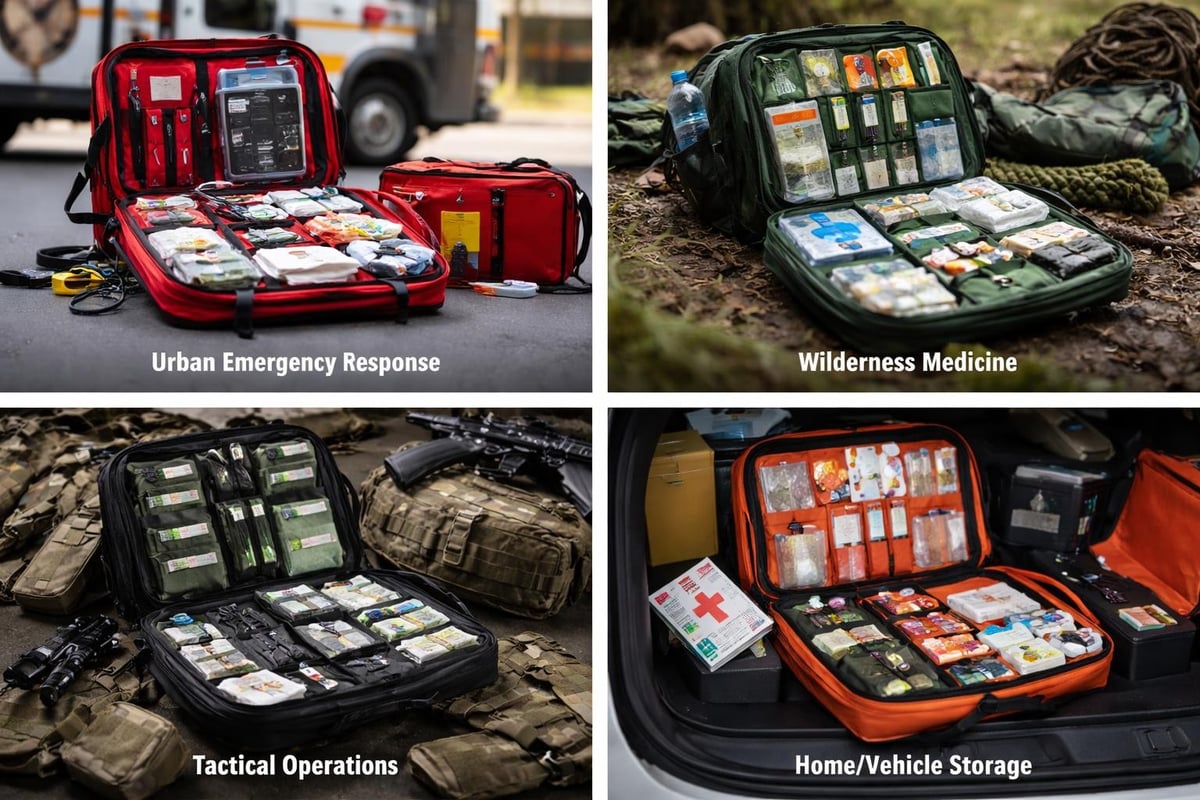
Different activities and environments demand specialized medicine kit bag configurations. Customizing your kit based on specific use cases ensures you carry appropriate supplies without unnecessary weight or bulk.
Wilderness and Outdoor Recreation
Trail medicine kit bags prioritize lightweight construction while including supplies for extended self-sufficiency. Mountain bike first aid considerations highlight sport-specific injuries like road rash, fractures from falls, and environmental exposure requiring specialized treatment approaches.
Wilderness kits should include:
- Extended wound care supplies for multi-day treatment
- Blister prevention and treatment options
- Water purification capabilities
- Emergency shelter materials (space blankets)
- Extended medication supplies
- Communication devices (satellite messengers)
Weight becomes a critical factor for backpacking applications. Ultralight medicine kit bags using silnylon or Dyneema fabrics reduce pack weight while maintaining weather resistance. Strip unnecessary packaging from supplies and consolidate items to minimize bulk.
Tactical and Professional Response
Tactical medicine kit bags incorporate features supporting high-risk environments including ballistic protection panels, low-profile designs, and rapid-access deployment systems. These bags often integrate with plate carriers, duty belts, or tactical vests for immediate availability.
Professional responders benefit from North American Rescue equipment designed specifically for tactical casualty care. These purpose-built systems address penetrating trauma, massive hemorrhage, and field stabilization under adverse conditions.
Consider role-specific customization:
| Responder Type | Key Supplies | Bag Features |
|---|---|---|
| Law Enforcement | Tourniquets, chest seals, hemostatics | MOLLE compatible, ballistic options |
| Wilderness EMS | Extended supplies, splinting materials | Large capacity, backpack style |
| Industrial Safety | Burn treatment, eye wash, trauma supplies | Hard-sided protection, visible marking |
| Event Medical | High-volume basics, AED access | Rolling options, multiple compartments |
Home and Vehicle Kits
Stationary medicine kit bags for home storage can prioritize capacity and comprehensiveness over portability. These larger kits serve as base stations supporting multiple smaller kits deployed in vehicles or carried during activities.
Vehicle kits face unique challenges including temperature fluctuations and space constraints. Small kits designed for vehicle storage balance adequate supplies with compact footprints fitting under seats or in glove compartments.
Family vehicles benefit from tiered approaches with basic supplies readily accessible and comprehensive equipment stored in trunk-mounted larger bags. This configuration provides immediate access to common needs while maintaining advanced capabilities for serious situations.
Training and Skill Development
Owning a well-equipped medicine kit bag provides little value without the knowledge and skills to use its contents effectively. What should be in a first aid bag matters less than knowing how to apply those supplies correctly under pressure.
Formal Training Programs
CPR and first aid certification through organizations like the American Red Cross or American Heart Association provides foundational skills applicable to most emergency situations. These courses cover basic life support, bleeding control, shock management, and common medical emergencies.
Advanced training options include:
- Wilderness First Responder (WFR) for backcountry medicine
- Tactical Combat Casualty Care (TCCC) for tactical environments
- Emergency Medical Technician (EMT) certification for comprehensive skills
- Stop the Bleed courses focusing on hemorrhage control
- Specialized courses for pediatric, geriatric, or sport-specific care
Paramedic-led training ensures you learn from professionals with real-world experience who understand not just the techniques but the decision-making processes critical during emergencies. Medical Gear Outfitters, being paramedic-owned, recognizes that equipment and education form inseparable components of effective emergency response.
Practice and Skill Maintenance
Regular practice sessions prevent skill degradation and build muscle memory for critical procedures. Schedule quarterly training refreshers where you practice with actual supplies from your medicine kit bag, becoming familiar with packaging, application techniques, and equipment operation.
Scenario-based training proves especially valuable. Create realistic emergency situations and practice responding with your actual medicine kit bag, identifying organizational improvements and supply gaps through hands-on experience. This practical approach reveals issues that theoretical knowledge overlooks.
Training supplies including practice tourniquets, training mannequins, and simulated wounds allow skill development without depleting operational inventory. Investing in training-specific equipment enables unlimited practice without worrying about supply depletion.
Legal and Regulatory Considerations
Understanding legal parameters surrounding medicine kit bags helps avoid complications while ensuring you operate within appropriate boundaries during emergency response situations.
Scope of Practice Limitations
Good Samaritan laws in most states provide liability protection for individuals rendering emergency assistance in good faith. However, these protections typically require acting within your training level and certification scope. Using advanced techniques or medications beyond your qualifications may expose you to legal risk.
Prescription medications present particular challenges. While carrying prescription medications for personal use remains legal, administering someone else's medications or possessing certain controlled substances without prescription raises legal questions. Consult local regulations and consider obtaining prescriptions for emergency medications like epinephrine auto-injectors if appropriate.
Professional responders face additional regulatory requirements including:
- Maintaining current certifications and licenses
- Following established protocols and medical direction
- Documenting interventions and patient interactions
- Ensuring equipment meets regulatory standards
- Maintaining confidentiality and privacy protections
Workplace and Public Requirements
OSHA regulations mandate specific first aid provisions in workplaces, including trained personnel and adequately stocked supplies. Workplace first aid kit requirements outline minimum standards based on workplace size, hazards, and proximity to medical facilities.
Public venues, schools, and recreational facilities often face similar requirements ensuring adequate emergency response capabilities. Compliance involves not just maintaining supplies but also ensuring accessibility, training staff, and documenting maintenance activities.
Transportation considerations affect certain medicine kit bags. Air travel restricts sharp instruments, liquids, and certain medications in carry-on baggage. Plan accordingly when traveling with your medicine kit bag, potentially checking larger kits while keeping essential supplies meeting TSA guidelines in carry-on bags.
Cost Considerations and Value Assessment
Investing in a quality medicine kit bag involves balancing upfront costs against long-term value, reliability, and the potential consequences of equipment failure during emergencies.
Initial Investment Analysis
Premium medicine kit bags from reputable manufacturers typically range from seventy-five dollars for basic models to several hundred dollars for professional-grade tactical systems. While budget options exist, construction quality, durability, and organizational features justify higher investments for serious applications.
Consider total cost of ownership including:
- Initial bag purchase price
- Supply costs to stock the bag
- Replacement supplies over time
- Training and certification expenses
- Maintenance and inspection time
Best medical kit options balance quality construction with practical supply selection, avoiding both inadequate cheap kits and unnecessarily expensive over-equipped options unsuitable for your actual needs.
Pre-assembled kits offer convenience but often include generic supplies that may not suit specific requirements. Building custom kits using quality bags designed for medical use combined with carefully selected components provides better customization while potentially reducing costs.
Long-Term Value Factors
Durability directly impacts value since bags requiring replacement every few years ultimately cost more than higher-quality options lasting decades. Professional-grade bags constructed from premium materials justify their price through extended service life and reliable performance.
The peace of mind factor resists quantification but carries real value. Knowing your medicine kit bag contains quality supplies organized for rapid deployment and will perform reliably when needed provides intangible benefits exceeding monetary cost.
Consider the cost of NOT having adequate emergency supplies. A single prevented infection, successfully controlled bleeding incident, or effectively managed allergic reaction provides value far exceeding any reasonable medicine kit bag investment. Emergency preparedness represents insurance against the potentially catastrophic costs of being unprepared.
Selecting and maintaining the right medicine kit bag ensures you're prepared to respond effectively when emergencies strike, whether at home, in the wilderness, or during tactical operations. The combination of durable construction, strategic organization, appropriate supplies, and proper training transforms a simple bag into a critical life-saving tool. Medical Gear Outfitters brings paramedic expertise to help you choose the right equipment and supplies for your specific needs, offering complete kits and individual components backed by the knowledge necessary to use them effectively when seconds count.
Medicine Kit Bag FAQs
What is a medicine kit bag?
A medicine kit bag is a dedicated, organized bag for carrying medical and first aid supplies. Unlike a generic pouch, it's built for durability and fast access, with compartments that keep wound care, medications, and trauma gear sorted so you can find what you need in an emergency.
What should a medicine kit bag contain?
Start with basic first aid, assorted bandages, gauze, tape, antiseptic wipes, antibiotic ointment, gloves, and scissors, then add advanced gear like a tourniquet, hemostatic gauze, a pressure bandage, and a chest seal, plus any personal medications and a first aid guide. Tailor the contents to your training, group size, and environment.
What size medicine kit bag do I need?
Match the size to the use case. A compact bag suits everyday carry and personal use, a mid-size bag fits a family or vehicle, and a larger bag or pack suits professional, tactical, or wilderness use where you'll treat multiple people or be far from help.
What's the best material for a medical kit bag?
Look for tough, water-resistant fabrics like high-denier nylon or Cordura, durable zippers, and reinforced stitching. Water resistance protects supplies from moisture, and a wipeable interior makes cleaning easier after use.
How should I organize a medicine kit bag?
Group supplies by category (wound care, medications, trauma, tools) and arrange them by how quickly you'll need them, with life-saving bleeding-control gear most accessible. Color-coding, labeled pouches, and clear inner bags help you find items fast under stress.
What's the difference between a medicine kit bag and a first aid kit?
A first aid kit is usually a fixed set of supplies for minor injuries. A medicine kit bag is the carrier, often larger and customizable, that can hold first aid supplies, trauma gear, and medications together, and be tailored and resupplied over time.
How often should I check and restock a medicine kit bag?
Inspect it every three to six months, and always after any use. Replace expired medications and sterile items, check that packaging is intact, and account for temperature extremes if the bag is stored in a vehicle or outdoors.
What kind of medical bag do EMS and professionals use?
Professionals typically use larger, highly organized bags or packs with modular compartments, fast-access trauma sections, and rugged, easy-to-clean materials. Contents should always match the user's certification level, scope of practice, and local protocols.

