
First Aid Kit MTB: Essential Gear for Trail Safety
Mountain biking delivers unmatched adventure, but the technical terrain and remote locations expose riders to unique risks. Whether you're tackling downhill runs, navigating rocky singletracks, or exploring backcountry trails, having a properly equipped first aid kit mtb can mean the difference between a minor inconvenience and a serious emergency. Unlike road cycling, mountain biking often takes you far from immediate help, making self-sufficiency critical. This comprehensive guide examines the essential components, packing strategies, and practical considerations for assembling a trail-ready medical kit that balances comprehensive care with practical portability.
Understanding Mountain Biking Injury Patterns
Mountain biking injuries differ significantly from other cycling disciplines due to terrain complexity and higher speeds on technical descents. Most incidents involve soft tissue damage, including cuts, abrasions, and contusions from falls onto rocks, roots, or the bike itself.
Common Trail Injuries
The nature of mountain biking creates specific injury patterns that should inform your first aid kit mtb preparation:
- Lacerations and abrasions from contact with trail obstacles, vegetation, or bike components
- Fractures and sprains resulting from high-impact crashes or awkward landings
- Puncture wounds from thorns, sharp rocks, or broken equipment
- Overuse injuries including muscle strains, cramps, and dehydration
- Head injuries despite helmet use, particularly in technical terrain
According to guidelines from Aspen Valley Health, understanding these common injury patterns helps riders prioritize their medical supplies. Impact injuries require immediate wound management, while musculoskeletal trauma demands stabilization supplies.
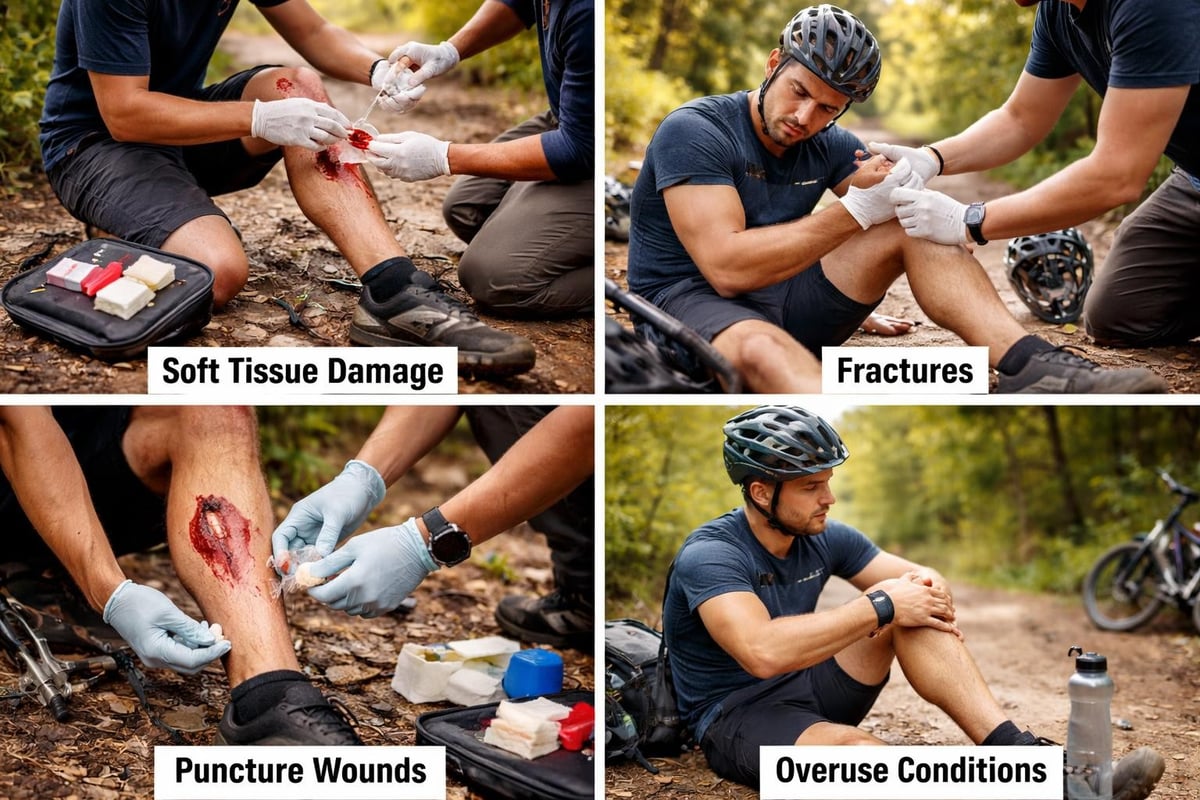
Environmental factors also play a significant role. Remote trails mean extended evacuation times, while weather exposure can complicate even minor injuries. A comprehensive approach to your first aid kit mtb accounts for both immediate trauma care and extended field treatment scenarios.
Core Components of a First Aid Kit MTB
Building an effective medical kit requires balancing comprehensiveness with weight constraints. Every item should serve a clear purpose in addressing likely trail scenarios.
Wound Management Essentials
Proper wound care prevents infection and controls bleeding, making these items non-negotiable:
| Item | Purpose | Quantity |
|---|---|---|
| Sterile gauze pads (4x4) | Wound cleaning and dressing | 6-8 pads |
| Adhesive bandages (various sizes) | Minor cuts and abrasions | 10-15 pieces |
| Butterfly closures | Wound edge approximation | 4-6 strips |
| Medical tape (1-inch) | Securing dressings | 1 roll |
| Antiseptic wipes | Wound cleaning | 10-12 packets |
Advanced wound management should include hemostatic agents for severe bleeding. Hemostatic dressings provide critical capabilities when direct pressure alone proves insufficient, particularly in remote locations where evacuation takes time.
Self-adhesive bandages deserve special attention in your first aid kit mtb. These versatile wraps secure dressings, provide compression, and don't require clips or tape. They conform to irregular body parts, making them ideal for extremity injuries common in mountain biking crashes.
Trauma and Musculoskeletal Supplies
Beyond basic wound care, your kit must address structural injuries and pain management. Comprehensive trauma kits designed for first responders provide excellent templates for serious mountain bikers.
Essential trauma components include:
- Elastic compression bandages for sprains, strains, and swelling control
- Triangular bandages for slings, splinting, and large wound coverage
- SAM splints or improvised splinting materials for fracture stabilization
- Cold packs for immediate swelling reduction and pain relief
- Nitrile gloves for infection control and personal protection
Pain management medications warrant careful consideration. Over-the-counter anti-inflammatories like ibuprofen address both pain and inflammation, while acetaminophen provides alternatives for riders with NSAID sensitivities.
Specialized Mountain Biking Considerations
Mountain biking presents unique medical challenges requiring specialized tools beyond standard first aid supplies.
Tick removal tools become essential in wooded areas, as detailed guides for mountain biking first aid emphasize the importance of rapid tick extraction. Tweezers or dedicated tick removal devices should occupy minimal space while providing maximum utility.
Eye injuries from branches, mud, or debris require specific attention. Eye wash solution or sterile saline helps flush foreign objects, while eye pads protect injured eyes during evacuation. Given the dusty, debris-filled environment of many trails, these items prove their worth repeatedly.
Blister management deserves priority in any first aid kit mtb. Extended rides create friction points, and untreated blisters can end rides prematurely. Moleskin, blister pads, and lubricating products prevent hot spots from becoming debilitating injuries.
Packing and Organization Strategies
Even the most comprehensive supplies prove useless if you cannot access them quickly during emergencies. Strategic packing transforms a collection of items into an effective emergency response system.
Container Selection
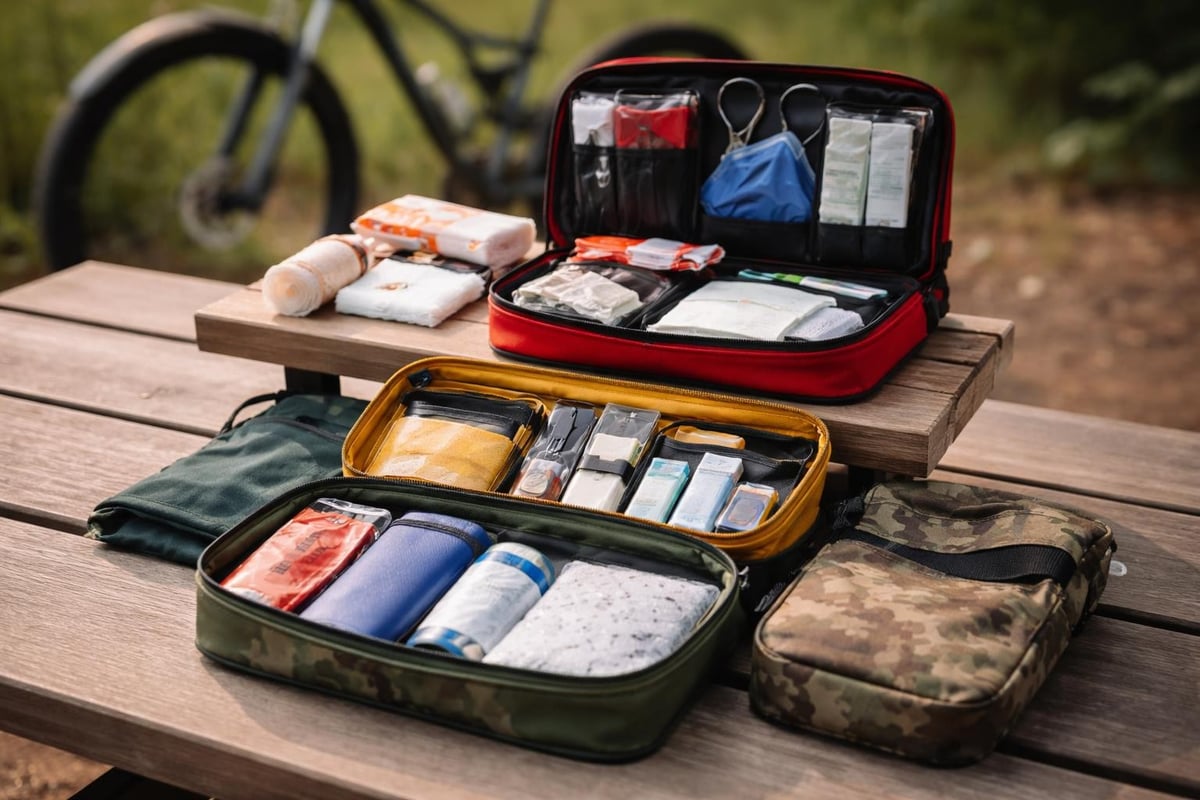
Your first aid kit mtb container must withstand trail conditions while remaining accessible. Hard-shell cases provide excellent protection but add weight and bulk. Soft pouches offer flexibility and lighter weight but require waterproof bags for moisture protection.
Consider these container characteristics:
- Water resistance to protect contents from rain, stream crossings, and humidity
- Compartmentalization for quick item identification under stress
- Mounting options compatible with your pack or bike frame
- Visibility through bright colors or reflective elements for easy location
- Durability to survive impacts, abrasion, and repeated opening
Many riders benefit from examining various first aid kit pack options designed specifically for active use. The right container balances protection with practical access.
Weight and Volume Optimization
Every gram matters when climbing steep grades, yet insufficient supplies create risk. Optimize your first aid kit mtb through strategic choices:
Repackaging strategies significantly reduce bulk. Transfer medications from bottles to labeled zip-lock bags. Remove excess packaging from bandages and gauze. Consolidate multiple small items into compact containers.
Multi-use items earn their place through versatility. Duct tape serves for equipment repair, blister prevention, and securing dressings. Bandanas function as sweat management, wound covering, or slings. Prioritize items offering multiple applications.
Frequency-based packing places commonly needed items in exterior pockets. Bandages for minor scrapes stay readily accessible, while rarely needed supplies like SAM splints occupy interior spaces. This organization accelerates response times when every second counts.
Essential Medications and Personal Items
Medical supplies extend beyond bandages and dressings. Pharmaceutical and personal items address common trail health challenges.
Over-the-Counter Medications
A well-rounded first aid kit mtb includes medications for pain, inflammation, allergic reactions, and gastrointestinal issues:
| Medication Type | Examples | Primary Uses |
|---|---|---|
| Pain relievers | Ibuprofen, Acetaminophen | Pain, fever, inflammation |
| Antihistamines | Diphenhydramine, Loratadine | Allergic reactions, insect stings |
| Anti-diarrheal | Loperamide | Gastrointestinal distress |
| Antacids | Calcium carbonate | Heartburn, indigestion |
| Electrolyte tablets | Various brands | Hydration, cramp prevention |
Pack medications in blister packs when possible, as these protect individual doses better than bulk bottles. Label everything clearly with drug names and expiration dates, particularly if repackaging into smaller containers.
Personal Medical Considerations
Individual health needs require customization of your standard first aid kit mtb. Riders with known conditions should carry appropriate supplies and medications.
Personal medical additions include:
- Prescription medications in original containers with pharmacy labels
- EpiPens or other emergency injectors for severe allergies
- Glucose tablets for diabetic riders
- Asthma inhalers and spacers for respiratory conditions
- Personal emergency information cards with medical history and emergency contacts
These individualized components transform a generic kit into a personalized emergency response system. Consider creating specialized kits similar to camping first aid approaches that account for extended periods away from definitive medical care.
Tools and Equipment for Trail Emergencies
Medical supplies address injuries, but additional tools enhance overall emergency preparedness and self-sufficiency on remote trails.
Communication and Navigation
Modern technology provides critical safety layers. Fully charged mobile phones enable emergency calls when cell service exists. Portable battery packs extend phone life for GPS navigation and communication. Consider satellite communication devices for truly remote areas beyond cellular coverage.
Emergency whistles require no batteries and carry sound farther than voices. Three short blasts signal distress universally among outdoor enthusiasts. This simple tool weighs almost nothing yet provides invaluable emergency communication capability.
Documentation and Information
Paper-based information remains accessible when electronics fail. Include a compact first aid manual or instruction cards covering common trail injuries. Resources from mountain biking safety guides emphasize the importance of having reference materials, particularly for riders without formal medical training.
Emergency contact information should include:
- Personal emergency contacts with phone numbers
- Local emergency services numbers for areas you frequent
- Medical insurance information and policy numbers
- Known allergies, medications, and medical conditions
- Trail names and access points for common riding areas
This documentation helps first responders and provides critical information if you're unable to communicate. Laminated cards protect against moisture while remaining readable in all conditions.
Multi-Tools and Repair Items
While not strictly medical, certain tools prevent minor mechanical issues from becoming medical emergencies. A comprehensive first aid kit mtb recognizes that preventing injuries often proves easier than treating them.
Basic bike repair capability keeps you mobile and able to reach help. Multi-tools, tire levers, spare tubes, and chain links address common mechanical failures. These items occupy minimal space but prevent situations where mechanical failure leads to extended exposure or dangerous improvised solutions.
Training and Knowledge Application
Equipment alone provides limited value without the knowledge to use it effectively. The most comprehensive first aid kit mtb remains ineffective in untrained hands.
Formal First Aid Training
Professional first aid certification courses provide structured education covering trauma assessment, wound management, and emergency response. Organizations offer wilderness first aid courses specifically addressing remote settings where mountain biking occurs.
Training benefits extend beyond technical skills:
- Confidence to act decisively during emergencies rather than freezing
- Assessment skills to prioritize multiple injuries and determine severity
- Improvisation ability to adapt limited supplies to unexpected situations
- Legal understanding of Good Samaritan protections and liability issues
Many mountain biking clubs and organizations host group training sessions, creating opportunities to learn alongside fellow riders who understand sport-specific challenges. Consider courses offered through organizations mentioned in comprehensive mountain biking safety resources.
Practice and Familiarization
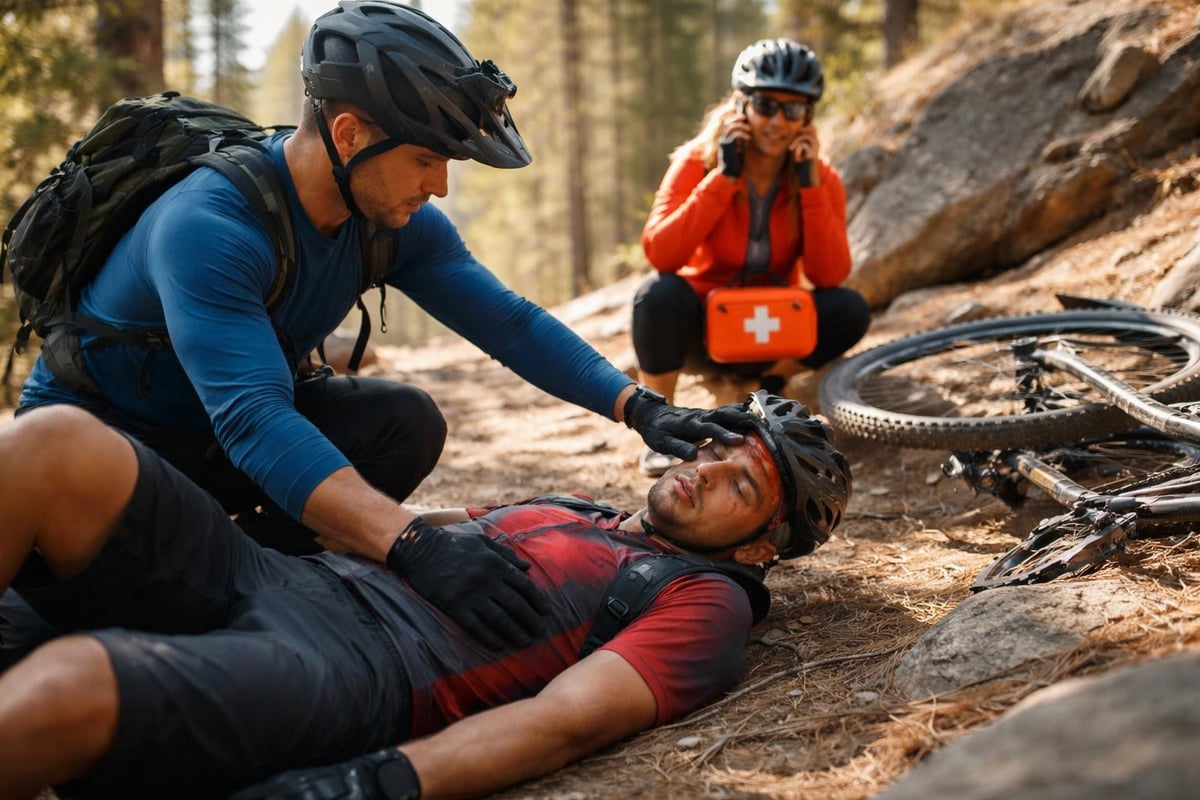
Regular practice sessions with your first aid kit mtb build muscle memory and reveal organizational weaknesses. Set up training scenarios addressing common injuries like lacerations, fractures, or unconsciousness. Practice accessing supplies quickly while wearing gloves or in low-light conditions simulating real trail emergencies.
Periodic kit reviews ensure supplies remain current and complete. Check expiration dates quarterly, replacing outdated medications and sterile items. Replenish used supplies immediately after rides rather than waiting until the next outing. This discipline ensures readiness when emergencies occur.
Kit Maintenance and Evolution
A first aid kit mtb represents a living system requiring regular attention and updates. Environmental conditions, personal experience, and changing needs drive continuous improvement.
Seasonal Considerations
Different seasons present unique challenges requiring kit adjustments. Summer riding increases heat-related illness risks, necessitating additional electrolyte replacement and sun protection. Winter conditions demand hand warmers, emergency blankets, and cold injury management supplies.
Adjust quantities based on ride duration and remoteness. Day trips on well-traveled trails require less comprehensive supplies than multi-day backcountry expeditions. Match your first aid kit mtb to specific ride characteristics rather than maintaining a one-size-fits-all approach.
Experience-Based Refinement
Every ride provides data for kit optimization. Track which items you use frequently versus those that remain untouched. Common-use items like bandages for minor scrapes might need quantity increases, while rarely used specialized equipment could be reassessed.
Incident reviews prove particularly valuable. After using your kit for actual injuries, evaluate what worked well and what proved insufficient or inaccessible. These real-world tests drive meaningful improvements impossible to anticipate theoretically.
Consider investing in quality trauma kits designed by medical professionals as your experience and skill level advance. Professional-grade equipment often provides capabilities and durability justifying higher initial costs through superior performance and longevity.
Risk Assessment and Preparedness Planning
The most effective first aid kit mtb exists within a broader safety strategy encompassing prevention, preparation, and response planning.
Pre-Ride Planning
Communicate your riding plans with someone reliable. Provide trail names, expected return times, and emergency contact procedures. This simple step ensures someone knows to initiate search procedures if you fail to return as planned.
Weather forecasts inform appropriate clothing and supply decisions. Sudden weather changes in mountainous terrain can transform benign rides into survival situations. Pack additional layers, rain protection, and emergency shelter based on forecast conditions and terrain characteristics.
Trail condition reports from recent riders reveal hazards like washouts, fallen trees, or wildlife activity. Online forums, trail apps, and local bike shops provide valuable current information supplementing your first aid kit mtb with preventative knowledge.
Group Riding Considerations
Riding with companions changes first aid dynamics significantly. Distribute medical supplies among group members to prevent single-point failures if one person crashes. Designate individuals with medical training as primary responders while ensuring everyone knows supply locations.
Group kits can include more comprehensive supplies since weight distribution among multiple riders permits carrying additional equipment. Splinting materials, extensive wound care supplies, and evacuation equipment become feasible when shared across a group.
Establish clear emergency protocols before rides. Determine who carries communication devices, who has medical training, and what procedures govern injury response and evacuation decisions. These conversations prevent confusion and delays during actual emergencies.
Environmental and Ethical Considerations
Responsible mountain biking extends beyond personal safety to environmental stewardship and community responsibility. Your first aid kit mtb should support these broader values.
Leave No Trace Principles
Pack out all medical waste following Leave No Trace ethics. Bring extra zip-lock bags specifically for used bandages, wipes, and other contaminated materials. Blood and bodily fluids require proper disposal at appropriate facilities rather than burial or abandonment on trails.
Biodegradable and eco-friendly first aid supplies reduce environmental impact. Natural fiber bandages, recyclable packaging, and minimal-waste designs align medical preparedness with environmental responsibility. Many manufacturers now offer sustainable alternatives to traditional petroleum-based medical supplies.
Community Preparedness
Well-equipped riders provide valuable assistance to other trail users in distress. Your first aid kit mtb capabilities extend beyond personal emergencies to community support roles. This responsibility requires supplies sufficient for multiple casualties and training adequate for varied scenarios.
Consider contributing to trail emergency supply caches in extremely remote areas frequented by multiple user groups. Coordinate with land managers and user groups to establish appropriate cache locations, contents, and maintenance protocols. These community resources benefit all trail users while fostering collaborative safety cultures.
Similar to preparedness approaches for serious outdoor activities, mountain bikers benefit from layered safety systems extending beyond individual equipment to community-wide emergency response capabilities.
Building and maintaining an effective first aid kit mtb represents an ongoing commitment to safety, preparedness, and responsible trail use. The right combination of quality supplies, proper training, and regular practice transforms potential disasters into manageable situations, allowing you to confidently explore challenging terrain while prepared for unexpected emergencies. Medical Gear Outfitters provides paramedic-selected first aid and trauma supplies specifically designed for outdoor enthusiasts and emergency responders, offering the professional-grade equipment and expert guidance needed to build truly capable trail emergency kits. Explore their comprehensive selection of trauma supplies, training resources, and complete kits to ensure you're prepared when seconds count.

