Prepper First Aid Supplies: Essential Medical Gear Guide
When disaster strikes, access to professional medical care may be limited or completely unavailable. Whether facing natural disasters, extended power outages, or societal disruptions, having well-stocked prepper first aid supplies can mean the difference between a manageable medical situation and a life-threatening crisis. Beyond simply purchasing a basic first aid kit, serious preppers understand that medical preparedness requires thoughtful planning, quality equipment, and the knowledge to use it effectively. This comprehensive guide explores the essential medical supplies every prepared individual should stockpile, organized by priority and use case.
Understanding Medical Supply Priorities
Building your prepper first aid supplies inventory requires a systematic approach based on injury likelihood and severity potential. Not all medical scenarios are equal, and your supply strategy should reflect realistic threat assessments.
The Trauma Care Foundation
Severe bleeding control stands as the highest priority in any emergency medical situation. A person can bleed to death in minutes from an arterial injury, making hemorrhage control equipment absolutely critical. Your trauma response capabilities should include multiple methods for stopping blood loss.
Essential bleeding control items include:
- Tourniquets (minimum of two, preferably four per person)
- Hemostatic gauze for wounds that cannot accept a tourniquet
- Pressure dressings in various sizes
- Standard gauze rolls and trauma pads
- Medical tape in multiple widths
The American Red Cross recommends including both compression bandages and standard gauze in every first aid kit, advice that becomes even more critical for preppers planning for extended emergencies.
Wound Management Supplies
After controlling immediate bleeding threats, wound care becomes essential for preventing infection and promoting healing. In grid-down scenarios where professional medical care is unavailable, proper wound management can prevent minor injuries from becoming life-threatening infections.
| Supply Category | Specific Items | Quantity Recommendation |
|---|---|---|
| Cleaning | Sterile saline, antiseptic wipes, irrigation syringes | 20-30 units each |
| Closure | Butterfly closures, suture strips, medical staples | 15-20 packages |
| Protection | Non-adherent dressings, sterile gauze pads (multiple sizes) | 50+ assorted |
| Infection Prevention | Antibiotic ointment, iodine solution | 10-15 tubes/bottles |
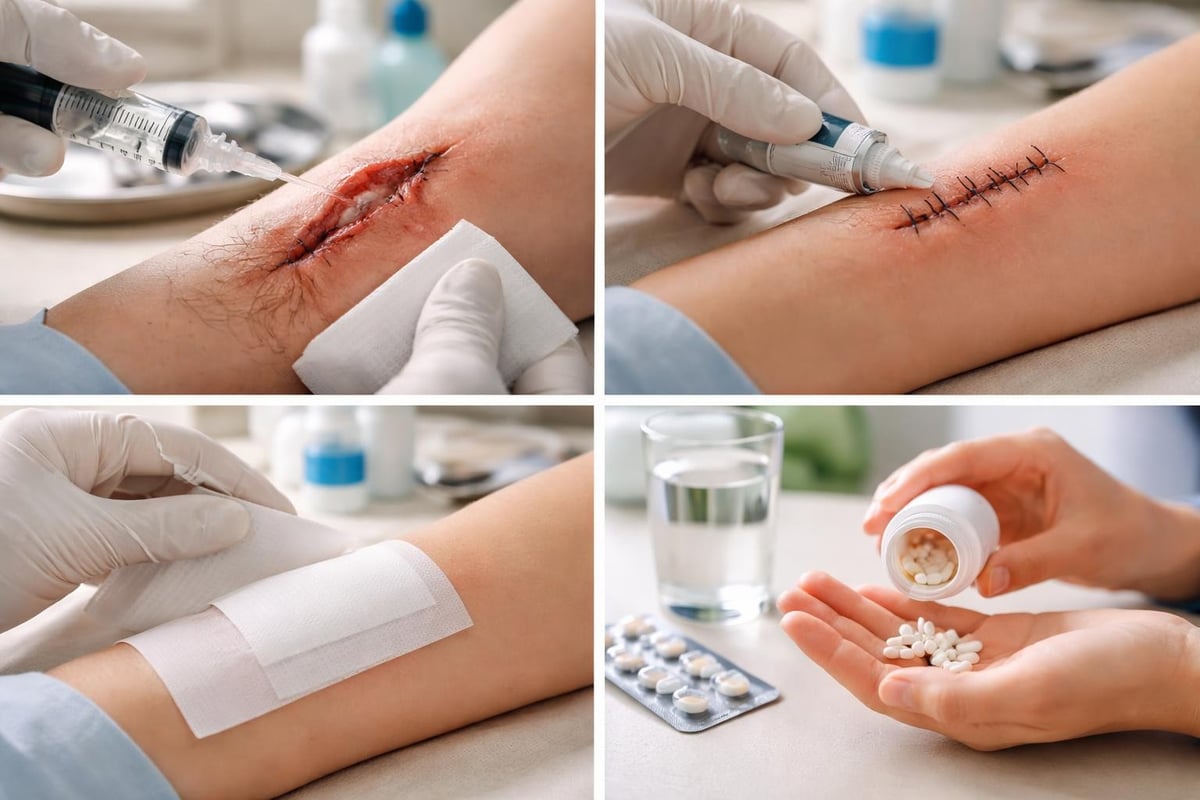
Modern wound care goes beyond simple bandages. Advanced preppers should understand the difference between bacitracin and triple antibiotic ointments, with bacitracin options offering advantages for individuals with neomycin allergies.
Building Your Core Medical Kit
The foundation of prepper first aid supplies starts with assembling a comprehensive core kit that addresses the most common medical emergencies. This kit should be portable enough to grab quickly yet substantial enough to handle multiple casualties.
Commercial Versus Custom Kits
Pre-assembled commercial kits offer convenience and often include items you might not think to purchase separately. However, building a custom kit allows you to tailor supplies to your specific needs, skill level, and anticipated scenarios. Many experienced preppers use a hybrid approach, starting with a quality commercial kit and supplementing it with additional supplies.
When evaluating first aid kit supplies, consider these factors:
- Storage environment (vehicle, home, bug-out bag)
- Number of people the kit must serve
- Medical training level of potential users
- Climate conditions in your region
- Specific health conditions of family members
The Ready.gov emergency kit guidelines provide an excellent baseline for general emergency preparedness, though preppers should expand significantly beyond these basic recommendations.
Medications and Pharmaceuticals
Pharmaceutical supplies represent one of the most challenging aspects of medical preparedness. Most critical medications require prescriptions, have expiration dates, and need specific storage conditions.
Over-the-counter medications every prepper should stockpile include:
- Pain relievers (ibuprofen, acetaminophen, aspirin)
- Antihistamines for allergic reactions
- Anti-diarrheal medications
- Antacids and stomach relief
- Electrolyte replacement solutions
- Topical pain relief creams
Prescription medication considerations require proactive planning. Work with your physician to obtain emergency supplies of critical medications. Many doctors will provide extra prescriptions if you explain your preparedness goals. Rotate stock to ensure fresh supplies, using the oldest medications in your regular routine while replacing them with new prescriptions.
Specialized Emergency Supplies
Beyond basic wound care and medications, comprehensive prepper first aid supplies must address specific life-threatening emergencies that require immediate intervention.
Respiratory Emergency Equipment
Airway management can determine survival in choking, allergic reactions, or trauma situations. While advanced airway tools require significant training, basic equipment should be part of every serious prepper's medical cache.
Consider including:
- CPR pocket masks with one-way valves
- Oral and nasal airways (if trained)
- Chest seals for penetrating chest injuries
- Emergency tracheostomy supplies (advanced users only)
The difference between basic and advanced respiratory equipment relates directly to training level. Never stockpile medical equipment you haven't been trained to use properly.
Environmental Injury Supplies
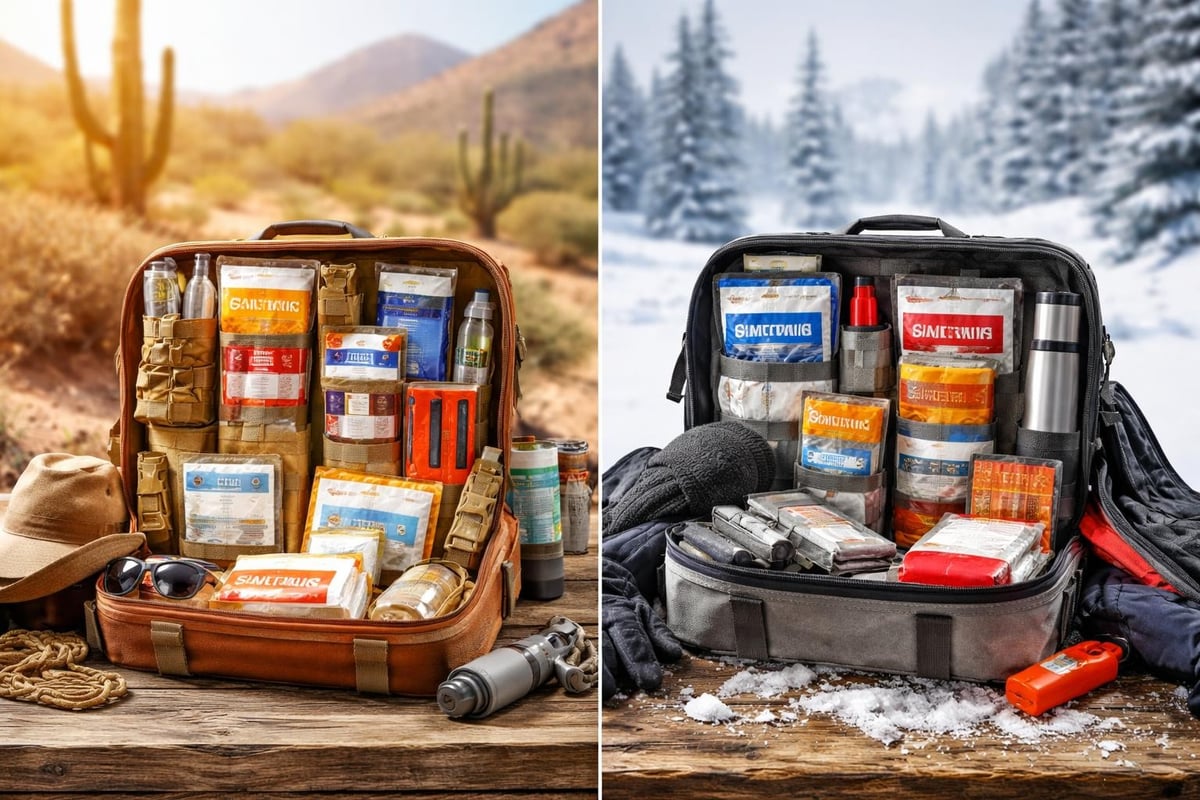
Your geographic location and climate dictate specific environmental hazard preparations. Preppers in different regions face vastly different medical challenges.
| Climate/Environment | Specific Supply Needs | Key Considerations |
|---|---|---|
| Hot/Desert | Heat exhaustion treatments, sun protection, electrolyte solutions | Dehydration prevention focus |
| Cold/Mountain | Thermal blankets, chemical heat packs, frostbite care supplies | Hypothermia response priority |
| Coastal/Tropical | Insect sting treatment, antivenin information, marine injury supplies | Envenomation preparedness |
| Urban | Trauma supplies, burn treatments, respiratory protection | Mass casualty readiness |
Burn Treatment Supplies
Burns represent some of the most painful and infection-prone injuries. Proper burn care supplies prevent complications and reduce scarring while managing pain during the healing process.
Stock multiple sizes of:
- Sterile burn dressings (non-adherent)
- Burn gel or hydrogel sheets
- Specialized burn bandages
- Pain management specifically for burns
Advanced Trauma Capabilities
Serious preppers preparing for worst-case scenarios need trauma supplies that go beyond typical first aid. These advanced prepper first aid supplies require proper training but can save lives when professional help is hours or days away.
Hemorrhage Control Beyond Basics
While tourniquets form the foundation of bleeding control, comprehensive trauma preparedness requires multiple hemorrhage control methods. Understanding tourniquet selection helps preppers choose quality equipment over cheap alternatives that fail under pressure.
Advanced bleeding control includes:
- Junctional tourniquets for groin and armpit injuries
- Hemostatic agents in multiple forms (gauze, granules, sponges)
- Pressure dressing systems like the Israeli compression bandage
- Surgical clamps and forceps (requires training)
Each bleeding control method has specific applications. Tourniquets work only on extremities, while hemostatic gauze can be packed into wounds anywhere on the body. Understanding when to use each tool comes from proper training, which should be every prepper's priority alongside supply acquisition.
Fracture and Splinting Materials
Broken bones improperly treated can lead to permanent disability, nerve damage, or life-threatening complications. Immobilization supplies prevent further injury during transport or while waiting for professional care.
Essential orthopedic supplies:
- SAM splints in multiple sizes
- Triangle bandages for slings and swathes
- Elastic bandages (various widths)
- Cravats and improvised splinting materials
- Padding materials (foam, cloth)
The NHS first aid guidance covers basic fracture stabilization techniques that every prepper should master before needing them in an emergency.
Medical Supplies for Specific Populations
Different family members have unique medical needs that require specialized supplies beyond general prepper first aid supplies.
Pediatric Considerations
Children are not simply small adults when it comes to medical care. Dosing, equipment sizes, and treatment approaches differ significantly. Families with children must stock pediatric-specific supplies.
Pediatric additions include:
- Child-sized blood pressure cuffs
- Pediatric medication dosing guides
- Smaller bandages and splints
- Oral rehydration solutions
- Infant/child CPR masks
- Pediatric pain relief (appropriate formulations)
Elderly and Chronic Condition Management
Older adults and individuals with chronic conditions need continuity of their regular medical care even during emergencies. This population requires the most extensive pharmaceutical planning.
Critical considerations:
- Extended prescription medication supplies
- Blood glucose monitoring equipment
- Blood pressure monitoring tools
- Incontinence supplies
- Mobility assistance equipment
- Compression stockings
Work with healthcare providers well in advance to develop emergency protocols for managing chronic conditions when normal healthcare access is disrupted.
Organization and Storage Strategies
Even the most comprehensive prepper first aid supplies become useless if they cannot be accessed quickly or have degraded due to improper storage. Strategic organization ensures medical equipment remains functional and findable during emergencies.
Climate-Controlled Storage
Temperature and humidity dramatically affect medical supply longevity. Most pharmaceuticals and many medical supplies require storage between 59°F and 77°F with low humidity.
Storage best practices:
- Use airtight containers with desiccant packs
- Avoid basements prone to flooding
- Keep supplies away from direct sunlight
- Consider climate-controlled safe rooms
- Maintain backup storage locations
Rotating stock according to expiration dates prevents waste and ensures freshness. Implement a "first in, first out" system, using older supplies in daily life while replacing them with fresh stock.
Modular Kit System
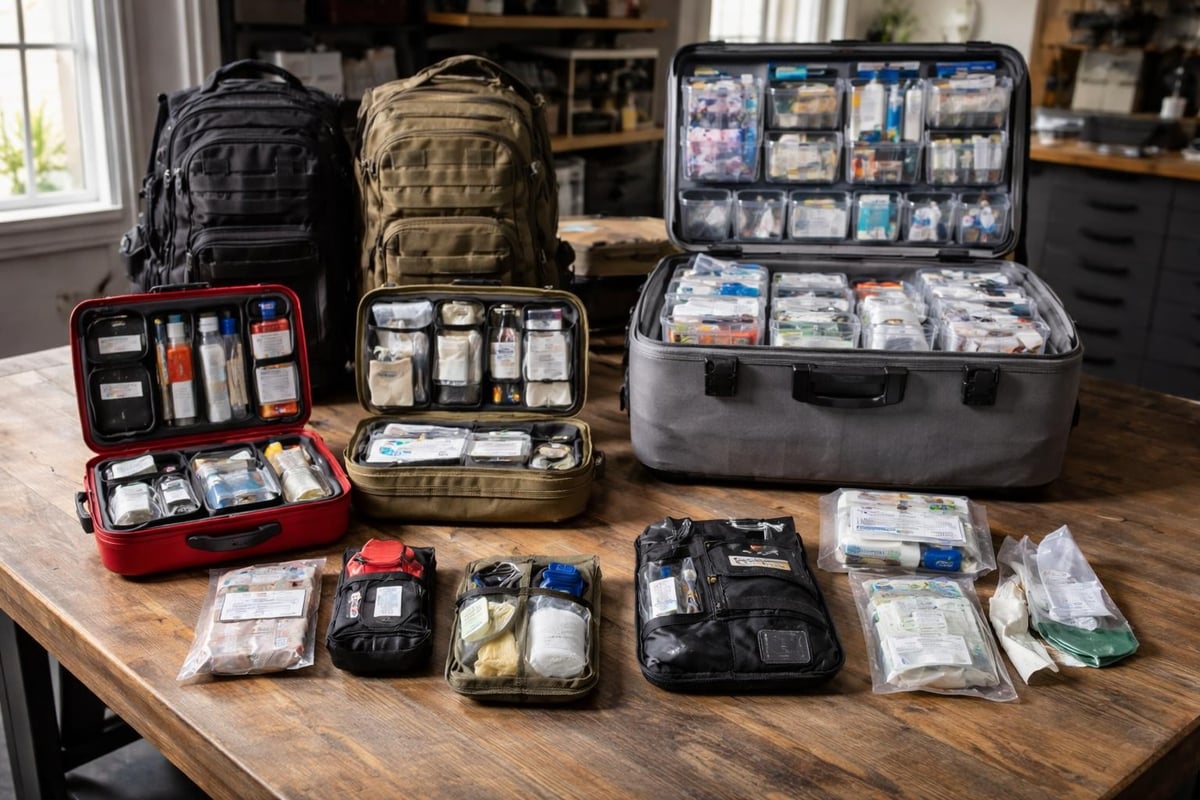
Rather than maintaining one massive medical kit, experienced preppers organize supplies into modular systems serving different purposes. This approach provides flexibility and ensures you are never without basic capabilities.
Suggested modular approach:
- Individual EDC kit (pocket/purse trauma essentials)
- Vehicle kit (comprehensive roadside emergency supplies)
- Home primary kit (extensive supplies for family needs)
- Bug-out medical bag (portable crisis supplies)
- Cache supplies (long-term storage reserves)
Each module should contain appropriate first aid equipment scaled to its intended use scenario. Your everyday carry kit might contain only a tourniquet, pressure dressing, and gloves, while your home kit could fill an entire closet.
Inventory Management
Tracking hundreds of medical items across multiple locations requires systematic inventory management. Digital spreadsheets work well for tech-savvy preppers, while others prefer physical checklists.
Your inventory system should track:
- Item name and quantity
- Storage location
- Purchase date
- Expiration date
- Replacement cost
- Usage notes
The comprehensive prepper supplies checklist provides a starting framework that can be customized to your specific medical supply inventory.
Training and Skill Development
The most critical component of prepper first aid supplies is the knowledge to use them effectively. Expensive trauma equipment becomes worthless in untrained hands, while skilled providers can save lives with minimal supplies.
Progressive Medical Training
Medical training should follow a progressive path from basic to advanced skills. Most preppers should focus on mastering fundamental capabilities before pursuing advanced procedures.
Recommended training progression:
- Standard first aid and CPR certification
- Wilderness first aid course
- Stop the Bleed training
- Tactical Combat Casualty Care (TCCC)
- Wilderness First Responder certification
- Advanced courses based on interest and needs
The article on lifesaving skills every prepper needs emphasizes that skills matter more than supplies when facing true emergencies.
Hands-On Practice
Reading about medical procedures differs drastically from performing them under stress. Regular hands-on practice builds muscle memory and confidence that proves invaluable during actual emergencies.
Practice strategies include:
- Monthly skills review sessions with family
- Simulated emergency scenarios
- Timed bleeding control drills
- Wound care practice on training manikins
- Medication administration practice
Consider joining or forming a preparedness group where members practice medical skills together, learning from each other's experiences and expertise.
Continuous Assessment and Improvement
Preparedness is not a destination but an ongoing process. Regular assessment of your prepper first aid supplies ensures your medical capabilities evolve with changing needs, new products, and updated best practices.
Annual Medical Supply Audit
Schedule a comprehensive review of all medical supplies at least annually. This audit should verify inventory accuracy, check expiration dates, test equipment functionality, and identify gaps in your capabilities.
Audit checklist components:
- Physical count of all supplies
- Expiration date verification
- Equipment function testing
- Storage condition inspection
- Gap analysis against current needs
- Training currency review
This systematic review prevents the common prepper mistake of assembling supplies once and forgetting about them until an emergency reveals critical shortcomings.
Adapting to New Threats
The threat landscape changes over time. New diseases emerge, civil unrest patterns shift, and climate change affects regional hazard profiles. Your medical supplies must adapt to evolving threats.
Stay informed through:
- Medical professional associations
- Preparedness community forums
- Government emergency management updates
- Regional hazard assessments
- New product developments
Building relationships with medical professionals provides access to expert guidance on supply selection and use. Many paramedics, nurses, and physicians support preparedness and willingly share knowledge with serious students.
Comprehensive prepper first aid supplies represent a critical investment in your family's survival and well-being during emergencies when professional medical care may be unavailable. By systematically building trauma capabilities, stockpiling essential medications, organizing supplies effectively, and continuously developing your medical skills, you create resilient healthcare capacity independent of fragile systems. Medical Gear Outfitters combines paramedic expertise with quality emergency medical equipment to help preppers build effective medical supply systems backed by the training needed to use them confidently when lives depend on your response.

