Medical Tools Kit: Essential Equipment for Emergency Response
A well-stocked medical tools kit represents the critical difference between an effective emergency response and a potentially life-threatening situation. Whether you're a trained medical professional, a first responder, or simply someone committed to family safety, understanding what constitutes a comprehensive medical tools kit and how to maintain it properly is fundamental to emergency preparedness. The contents, organization, and maintenance of these kits require thoughtful consideration based on your specific needs, environment, and skill level.
Understanding the Core Components of a Medical Tools Kit
Every effective medical tools kit begins with fundamental supplies that address the most common emergency scenarios. These basic elements form the foundation upon which more specialized equipment can be added based on individual requirements and training levels.
Basic Wound Care Essentials
The primary function of most medical tools kits involves managing wounds of varying severity. Sterile gauze pads in multiple sizes, adhesive bandages, medical tape, and antiseptic wipes constitute the baseline for wound management. These items address everything from minor cuts and scrapes to more significant lacerations requiring immediate attention before professional medical care arrives.
Pressure dressings and trauma bandages serve a critical role in controlling severe bleeding. The Israeli compression bandage has become a standard in both military and civilian emergency kits due to its versatility and effectiveness in applying direct pressure to wounds. These specialized bandages combine multiple functions into a single, easy-to-apply package.
Advanced wound care supplies should include:
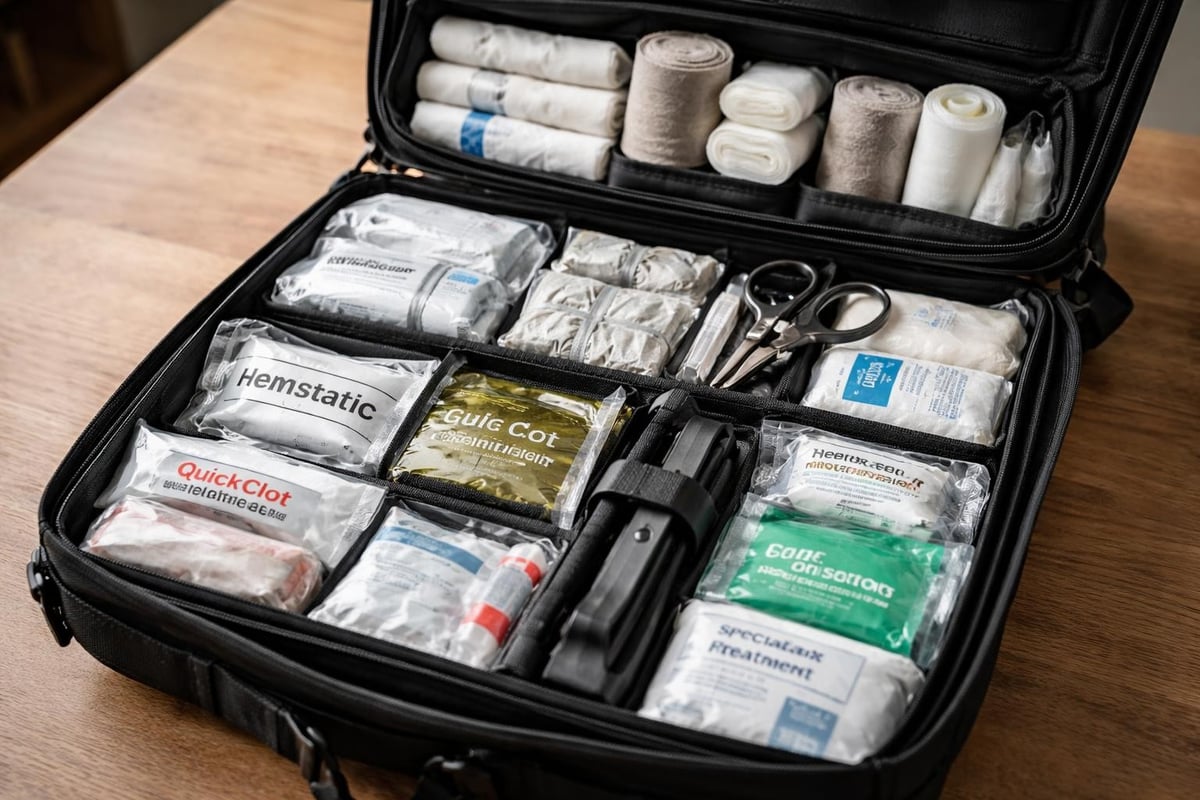
- Hemostatic agents for rapid blood clotting
- Occlusive dressings for chest injuries
- Burn treatment materials
- Irrigation solutions for wound cleaning
- Suture kits for trained personnel
Protective Equipment and Diagnostic Tools
Personal protective equipment (PPE) serves dual purposes within a medical tools kit. First, it protects the responder from bloodborne pathogens and infectious materials. Second, it prevents contamination of wounds and maintains a sterile treatment environment whenever possible.
Nitrile gloves, face shields, eye protection, and CPR barrier devices represent minimum PPE requirements. Understanding first aid basics and proper tool use ensures these protective items are deployed correctly during emergency situations.
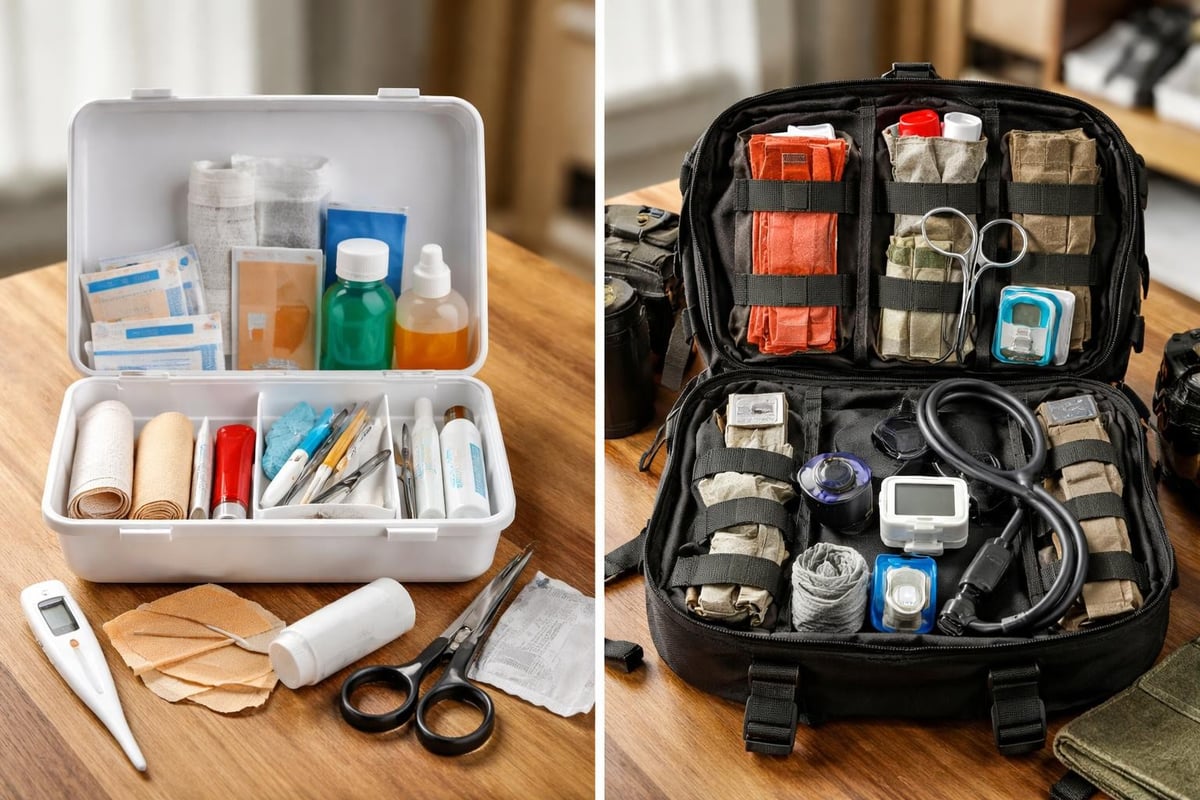
Diagnostic instruments provide crucial information about a patient's condition:
| Instrument | Primary Use | Skill Level Required |
|---|---|---|
| Thermometer | Temperature assessment | Basic |
| Blood pressure cuff | Circulatory monitoring | Intermediate |
| Stethoscope | Heart and lung sounds | Intermediate |
| Pulse oximeter | Oxygen saturation | Basic |
| Penlight | Pupil response checking | Basic |
Selecting the Right Medical Tools Kit for Your Needs
Not all medical tools kits serve identical purposes. The appropriate kit depends on multiple factors including intended use environment, number of people covered, available storage space, and the training level of potential users.
Home and Family Medical Tools Kits
Residential medical tools kits prioritize accessibility and comprehensiveness for common household emergencies. These kits typically contain supplies for treating minor injuries, managing sudden illnesses, and stabilizing more serious conditions until emergency medical services arrive.
A comprehensive family first aid box should accommodate various age groups and address specific family health concerns. Families with young children benefit from including items like triple antibiotic ointment to prevent infection in minor wounds, while households with elderly members might prioritize cardiac emergency supplies.
The ultimate guide to medical kits emphasizes matching kit contents to household risk factors. Consider location-specific hazards such as wilderness proximity, natural disaster likelihood, or occupational hazards when customizing your medical tools kit.
Professional and Tactical Applications
Medical professionals and first responders require specialized medical tools kits that exceed standard first aid capabilities. These advanced kits incorporate equipment for managing severe trauma, performing advanced life support procedures, and operating in challenging environments.
Tactical medical kits designed for high-risk situations include:
- Airway management tools - Advanced airway adjuncts, suction devices, and oxygen delivery systems
- Hemorrhage control - Multiple tourniquets, hemostatic gauze, and pressure dressings
- Chest trauma supplies - Vented and non-vented chest seals, decompression needles
- IV access equipment - Catheters, IV fluids, administration sets
- Medication protocols - Emergency drugs appropriate to responder certification level
The debate over tourniquet selection illustrates how professional responders must evaluate equipment based on proven effectiveness, ease of application under stress, and environmental durability.
Organization and Accessibility Strategies
A medical tools kit's effectiveness depends equally on its contents and its organization. Even the most comprehensive supplies prove useless if responders cannot quickly locate and deploy necessary items during high-stress emergencies.
Systematic Categorization Methods
Organizing an effective medical kit requires logical categorization that aligns with emergency response priorities. The most effective systems group supplies by injury type or treatment phase rather than alphabetically or by item size.
Primary organization categories include:
- Immediate life threats (airway, breathing, circulation)
- Hemorrhage control
- Wound management
- Fracture stabilization
- Burn treatment
- Medications and ointments
- Tools and instruments
- Personal protective equipment
Color-coding, clear labeling, and transparent containers facilitate rapid item identification. Vacuum-sealed packages maximize space efficiency while protecting supplies from moisture and contamination. However, these packages should remain easy to open quickly without requiring scissors or excessive force.
Container Selection and Portability
The container housing your medical tools kit significantly impacts its functionality. Soft-sided bags offer flexibility and typically weigh less than hard cases, while rigid containers provide superior protection for delicate instruments and maintain organization during transport.
Consider these container characteristics:
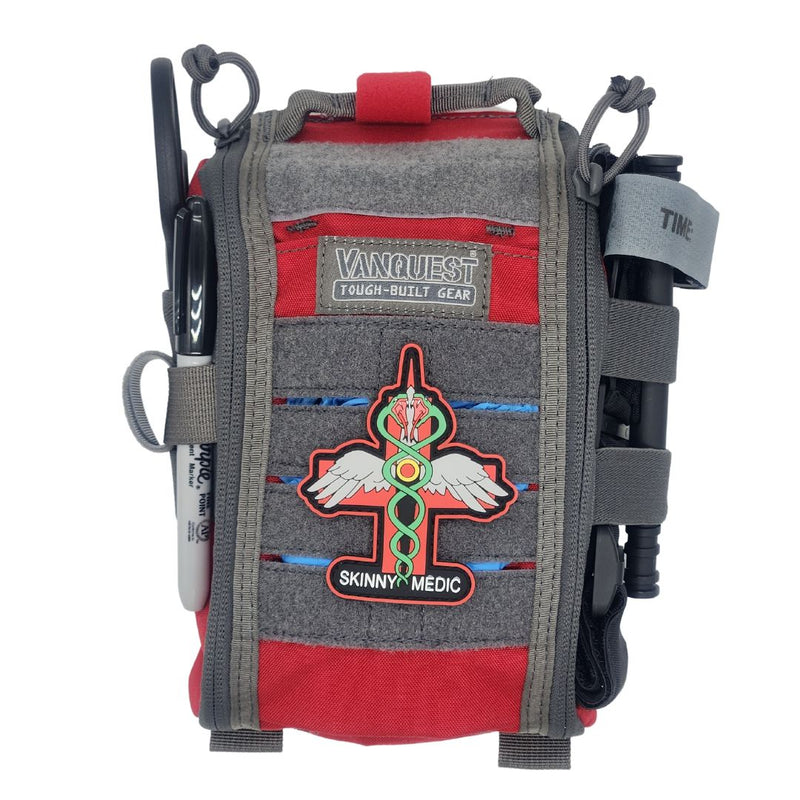
- MOLLE compatibility for tactical applications
- Water resistance for outdoor use
- Multiple compartments for organization
- Visibility features like bright colors or reflective strips
- Carrying options including handles, shoulder straps, and backpack configurations
Medical Gear Outfitters offers various specialized bags designed specifically for medical equipment transport, ensuring responders can access supplies efficiently regardless of environment or situation.
Maintenance and Inventory Management
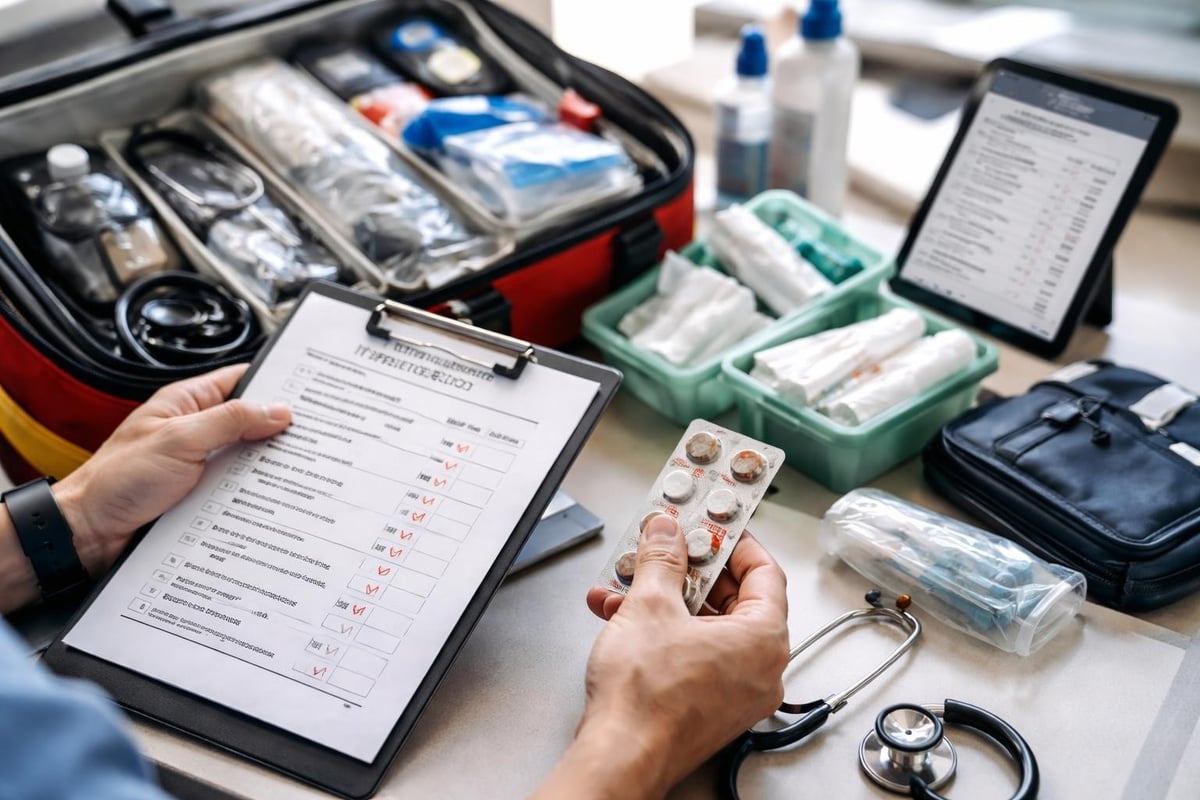
A medical tools kit requires regular attention to ensure all components remain functional and current. Neglected kits often contain expired medications, depleted supplies, or deteriorated equipment that fails precisely when needed most.
Regular Inspection Schedules
Establish a consistent inspection routine based on kit usage frequency and storage conditions. Monthly checks suit frequently-used professional kits, while quarterly or semi-annual reviews suffice for home medical tools kits in stable environments.
Each inspection should verify:
- Expiration dates on all medications and sterile supplies
- Package integrity for sealed items
- Functionality of electronic devices and batteries
- Completeness of multi-component items
- Cleanliness and sterilization status of reusable instruments
Documentation of inspection dates and findings helps identify patterns requiring kit modifications. Some organizations benefit from medical kitting best practices that incorporate formal tracking systems and regulatory compliance measures.
Restocking and Replacement Protocols
After any kit deployment, immediate restocking prevents future emergencies from finding you unprepared. Creating a standardized first aid resupply checklist ensures no critical items are overlooked during replenishment.
| Supply Category | Replacement Frequency | Storage Consideration |
|---|---|---|
| Adhesive bandages | After 50% depletion | Climate-controlled |
| Gauze and dressings | Before expiration | Moisture-free |
| Medications | 6 months before expiry | Temperature-stable |
| Gloves | Quarterly inspection | UV-protected |
| Tourniquets | After use or annually | Avoid compression |
Maintaining relationships with reliable suppliers streamlines the restocking process. Professional-grade medical components from reputable sources ensure replacement items meet the same quality standards as original kit contents.
Training and Skill Development
Equipment competency separates a well-stocked medical tools kit from an effective emergency response capability. The most sophisticated supplies provide no benefit if responders lack the knowledge and confidence to deploy them correctly under pressure.
Matching Equipment to Training Level
Ethical medical response requires honest assessment of one's capabilities and limitations. Including advanced equipment like suturing kits in your medical tools kit makes sense only if you possess proper training in wound closure techniques and understand when suturing is appropriate versus contraindicated.
Novice responders should focus on mastering fundamental skills:
- Controlling external bleeding through direct pressure
- Recognizing and treating shock
- Immobilizing suspected fractures
- Clearing airway obstructions
- Performing effective CPR
As skills advance through formal training and practical experience, medical tools kit contents should evolve accordingly. This progression ensures equipment matches capability while motivating continued education.
Practical Application and Scenario Training
Knowledge retention requires regular reinforcement through hands-on practice. Conducting periodic drills using actual kit supplies familiarizes users with item locations, packaging characteristics, and application techniques before real emergencies demand split-second decisions.
Effective training scenarios should:
- Simulate realistic time pressure and environmental conditions
- Incorporate multiple simultaneous casualties when appropriate
- Require problem-solving when preferred supplies are unavailable
- Build muscle memory for critical procedures like tourniquet application
- Identify kit deficiencies or organizational improvements
Medical professionals and serious preparedness enthusiasts benefit from attending tactical emergency casualty care courses that emphasize rapid assessment and intervention using trauma kit components similar to those in their personal medical tools kits.
Specialized Medical Tools Kit Variations
Beyond general-purpose kits, specific situations demand specialized equipment configurations. Understanding these variations helps responders prepare for unique challenges associated with particular environments or scenarios.
Wilderness and Remote Location Kits
Remote medical tools kits must account for extended care periods before evacuation or professional medical assistance arrives. These kits emphasize wound infection prevention, environmental protection, and improvisation capabilities when standard protocols prove impractical.
Additional wilderness considerations include:
- Extended medication supplies for multi-day incidents
- Splinting materials for fracture management during transport
- Hypothermia and hyperthermia treatment supplies
- Water purification for wound irrigation
- Signal devices for rescue coordination
Vehicle and Transportation Kits
Automotive medical tools kits address the specific injury patterns associated with vehicle accidents while accommodating space and weight constraints. These kits prioritize spinal immobilization, extrication injury management, and multiple casualty scenarios.
Properly equipped vehicle kits complement other emergency equipment like fire extinguishers, reflective triangles, and basic tools. The proper care and handling of medical instruments becomes particularly important in vehicles where temperature extremes and vibration can damage sensitive equipment.
Workplace and Industrial Kits
Occupational medical tools kits reflect specific workplace hazards identified through safety assessments. Manufacturing environments might emphasize burn treatment and eye injury supplies, while construction sites require robust fracture management capabilities and fall injury equipment.
Regulatory compliance often mandates minimum workplace kit contents. However, responsible employers exceed these minimums by analyzing actual incident data and customizing medical tools kits to address demonstrated risks rather than generic requirements.
Advanced Equipment Considerations
Responders with appropriate training may incorporate advanced medical tools that significantly enhance treatment capabilities. These items require careful selection, proper maintenance, and regular competency verification.
Hemostatic Agents and Advanced Wound Care
Modern hemostatic agents have revolutionized civilian trauma care by bringing battlefield-proven technology to first responders. These specialized gauzes and powders promote rapid blood clotting in wounds that resist conventional pressure dressing control.
Hemostatic products vary in application method, active ingredients, and effectiveness for different wound types. Training in proper deployment techniques prevents complications while maximizing bleeding control effectiveness.
Key hemostatic selection factors:
| Factor | Consideration | Impact |
|---|---|---|
| Active ingredient | Kaolin vs. chitosan | Mechanism of action |
| Form factor | Gauze vs. granules | Application technique |
| Storage requirements | Temperature sensitivity | Shelf life |
| Cost | Initial and replacement | Budget planning |
| Training complexity | Learning curve | Deployment confidence |
Airway Management Tools
Airway compromise represents an immediate life threat requiring rapid, decisive intervention. Basic airway adjuncts like oropharyngeal and nasopharyngeal airways prevent tongue obstruction in unconscious patients, while advanced tools enable definitive airway control in trained hands.
Supraglottic airway devices offer intermediate capability between basic positioning and endotracheal intubation. These tools require specific training but provide valuable options when basic maneuvers prove insufficient and advanced paramedic support remains distant.
Building Your Customized Medical Tools Kit
Creating an optimal medical tools kit involves balancing comprehensiveness against portability, cost considerations, and realistic assessment of probable usage scenarios. This customization process ensures your specific kit serves your unique needs effectively.
Needs Assessment and Risk Analysis
Begin by identifying potential medical emergencies based on your environment, activities, and population served. Urban families face different risks than rural homesteaders, just as office workers encounter distinct hazards compared to construction professionals.
Document your risk assessment findings:
- Most likely medical emergencies (frequency)
- Highest consequence emergencies (severity)
- Special population needs (children, elderly, chronic conditions)
- Environmental factors (climate, isolation, disaster risks)
- Available backup resources (proximity to hospitals, EMS response times)
This analysis guides intelligent equipment selection that addresses actual rather than hypothetical needs. A prepper first aid kit for extended grid-down scenarios differs substantially from kits designed for typical household emergencies.
Phased Implementation Strategy
Comprehensive medical tools kits can represent significant investments. Phased implementation allows gradual capability building while managing costs and training progression simultaneously.
Recommended implementation phases:
- Phase 1: Basic wound care, CPR barriers, common medications
- Phase 2: Advanced bleeding control, splinting materials, expanded PPE
- Phase 3: Specialized equipment matching completed training courses
- Phase 4: Scenario-specific additions based on experience and identified gaps
This approach prevents overwhelming novice responders while establishing a foundation for continuous improvement. As skills develop and budgets allow, the medical tools kit evolves into an increasingly capable emergency response system.
Medical Gear Outfitters provides complete kit options for those seeking professionally assembled solutions alongside individual components for custom configurations. This flexibility accommodates various implementation strategies and budget constraints.
A properly selected, organized, and maintained medical tools kit represents a critical investment in emergency preparedness that pays dividends when seconds matter most. By matching equipment to training, maintaining supplies diligently, and continuously improving both skills and gear, you transform from a bystander into a capable first responder ready to make a genuine difference during life's unexpected emergencies. Medical Gear Outfitters brings paramedic-level expertise to help you build the right medical tools kit for your specific needs, offering quality equipment and the knowledge to use it effectively. Explore our comprehensive selection and start building your emergency response capability today at Medical Gear Outfitters.