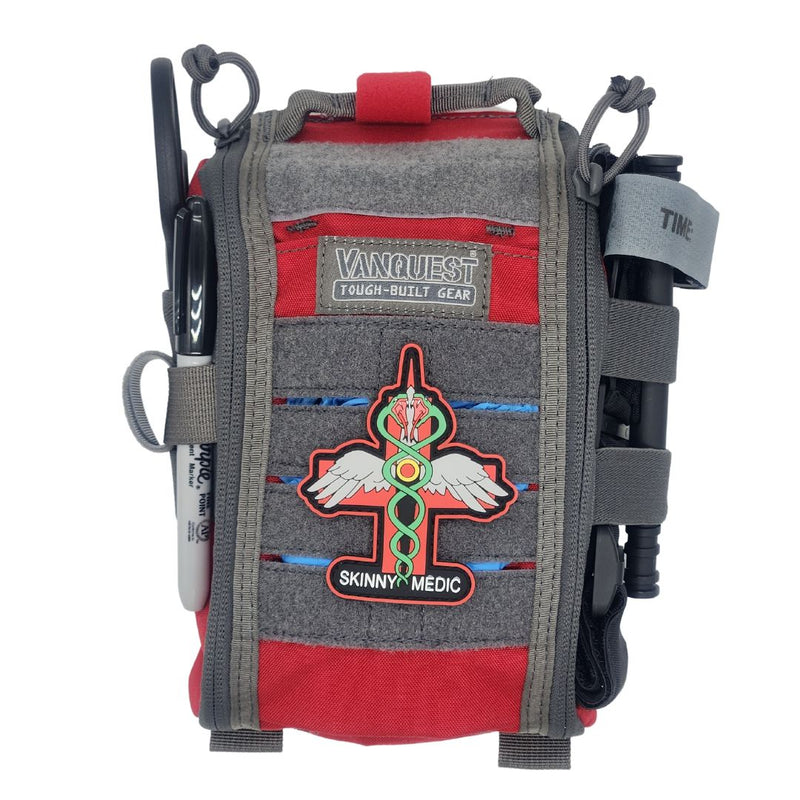
First Aid Kit in Bag: Essential Guide for 2026
Keeping a well-stocked first aid kit in bag format provides immediate access to emergency supplies when accidents happen away from home. Whether you're commuting to work, traveling across the country, or spending time outdoors, a properly equipped portable kit can make the difference between effective first response and helpless waiting. This comprehensive guide explores how to select, assemble, and maintain a first aid kit in bag configuration that meets your specific needs while remaining compact and accessible.
Understanding Portable First Aid Kit Requirements
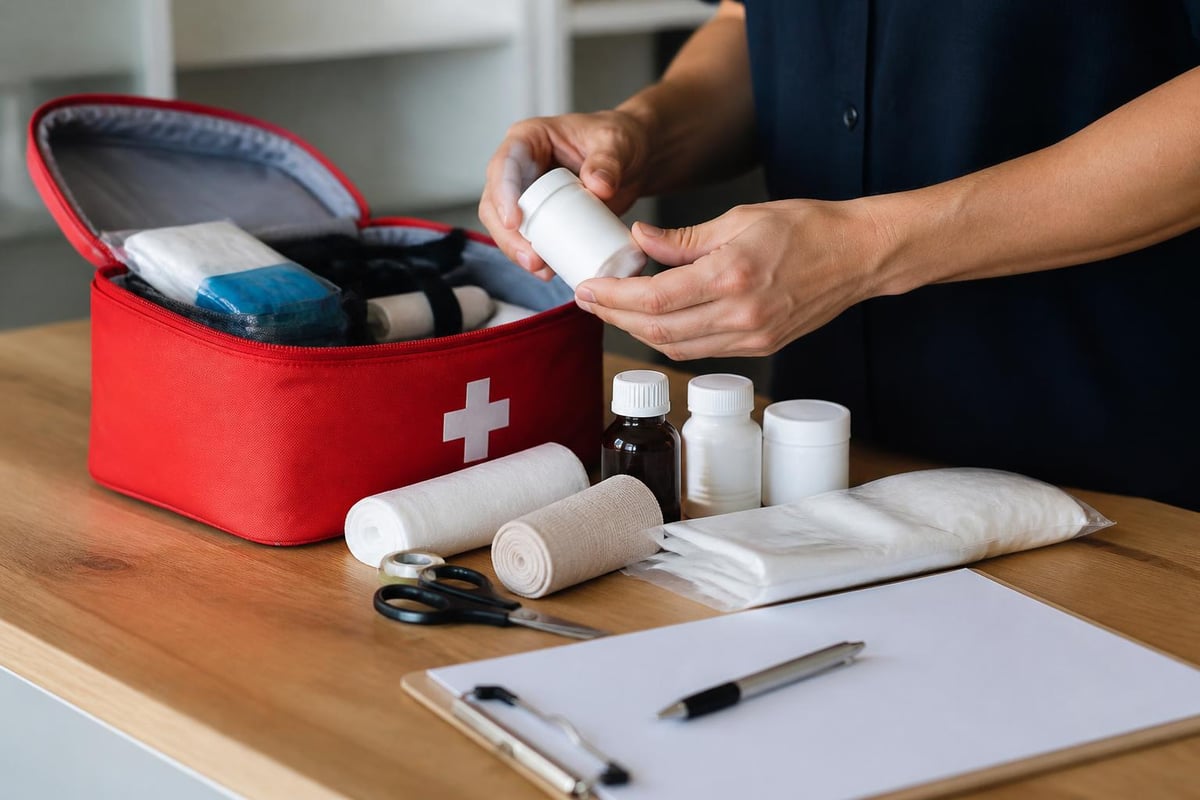
The concept of a first aid kit in bag design centers on balancing comprehensiveness with portability. Unlike stationary kits kept at home or in the workplace, bag-based kits must prioritize lightweight construction and efficient organization without sacrificing essential supplies.
Size and Weight Considerations
Optimal bag dimensions typically range from 7x5x3 inches for minimal daily carry kits to 10x8x4 inches for comprehensive family or travel versions. Weight should remain under two pounds for personal kits and under five pounds for expanded family kits to ensure consistent portability.
The bag material itself matters significantly. Ripstop nylon offers excellent durability while remaining lightweight, and water-resistant coatings protect contents from moisture exposure during outdoor activities or unexpected weather.
Primary Use Case Assessment
Different scenarios demand different supply configurations:
- Daily commute kits focus on treating minor injuries like cuts, scrapes, headaches, and blisters
- Travel kits expand to include medications for digestive issues, altitude sickness, and extended wound care
- Outdoor adventure kits prioritize trauma supplies, blister treatment, insect sting relief, and temperature regulation items
- Vehicle emergency kits incorporate supplies for multiple casualties and extended wait times
Core Components for Every First Aid Kit in Bag
Regardless of your specific use case, certain foundational items belong in every portable first aid kit. The American Red Cross provides comprehensive guidance on travel first aid essentials that apply broadly to bag-based kits.
Wound Care Essentials
Proper wound management prevents infection and promotes healing:
- Adhesive bandages in assorted sizes (minimum 10-20 pieces)
- Sterile gauze pads in 2x2 and 4x4 inch sizes
- Medical tape or first aid paper tape for securing dressings
- Antibiotic ointment packets
- Antiseptic wipes for cleaning wounds
- Trauma dressings for larger injuries
Nitrile gloves represent a critical component often overlooked in basic kits. As detailed in medical kit essentials guidance, these gloves protect both the responder and patient from bloodborne pathogens.
Medication and Treatment Supplies
| Medication Type | Purpose | Recommended Quantity |
|---|---|---|
| Pain relievers | Headaches, minor aches | 10-20 tablets |
| Antihistamines | Allergic reactions | 6-12 tablets |
| Anti-diarrheal | Digestive issues | 6-10 tablets |
| Antacids | Stomach upset | 6-10 tablets |
| Aspirin | Heart attack response | 4-6 tablets |
Each medication should be checked regularly for expiration dates. First aid kits do expire, making regular inventory reviews essential for maintaining kit effectiveness.
Tools and Instruments
Every first aid kit in bag should include:
- Tweezers for splinter removal
- Small scissors for cutting tape and gauze
- Digital thermometer
- CPR face shield
- Emergency whistle
- Compact flashlight or headlamp
A comprehensive item list helps ensure nothing gets overlooked. MedicineNet's detailed breakdown of 27 essential first aid items provides an excellent reference when building or auditing your kit.
Advanced Supplies for Comprehensive Preparedness
Moving beyond basic supplies transforms a standard first aid kit in bag into a genuine emergency response tool. These advanced components address more serious medical situations that may occur during outdoor activities or in areas with delayed emergency services.
Trauma and Bleeding Control
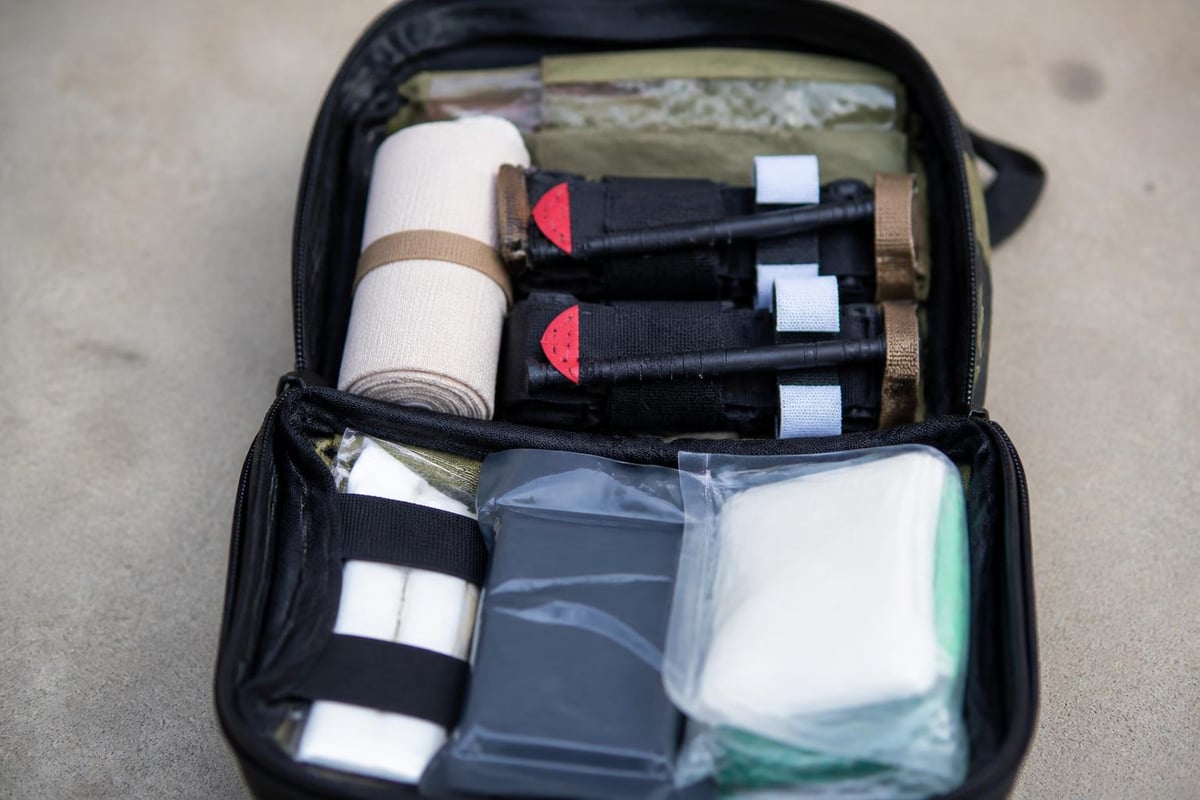
Life-threatening hemorrhage requires immediate intervention. Modern civilian first aid kits increasingly include trauma supplies previously reserved for military or tactical applications:
- Tourniquets stop arterial bleeding from extremities when direct pressure fails
- Hemostatic gauze accelerates clotting in deep wounds
- Pressure bandages provide controlled compression for moderate to severe bleeding
- Chest seals address penetrating chest injuries
Understanding how to stop a major bleed and avoiding common errors can save lives in critical situations.
Environmental Protection Items
Temperature-related emergencies pose significant risks during outdoor activities:
- Emergency blankets reflect body heat to prevent hypothermia
- Cooling packs reduce swelling and help manage heat-related illness
- Sun protection including sunscreen and lip balm with SPF
- Hydration supplies like electrolyte packets
The compact nature of modern emergency blankets makes them ideal for any first aid kit in bag configuration, adding minimal weight while providing crucial thermal protection.
Specialized Medical Devices
Consider adding these items based on your training and anticipated scenarios:
- Blood pressure cuff for monitoring cardiovascular status
- Glucose tablets for diabetic emergencies
- EpiPen (if prescribed) for severe allergic reactions
- Sam splint for immobilizing fractures
- Irrigation syringe for wound cleaning
Only include items you understand how to use properly. A first aid kit in bag filled with unfamiliar equipment provides false confidence rather than genuine emergency capability.
Organization Strategies for Maximum Efficiency
The most comprehensive supplies become useless if you cannot locate them quickly during an emergency. Strategic organization transforms a jumbled collection into an effective response tool.
Categorization Methods
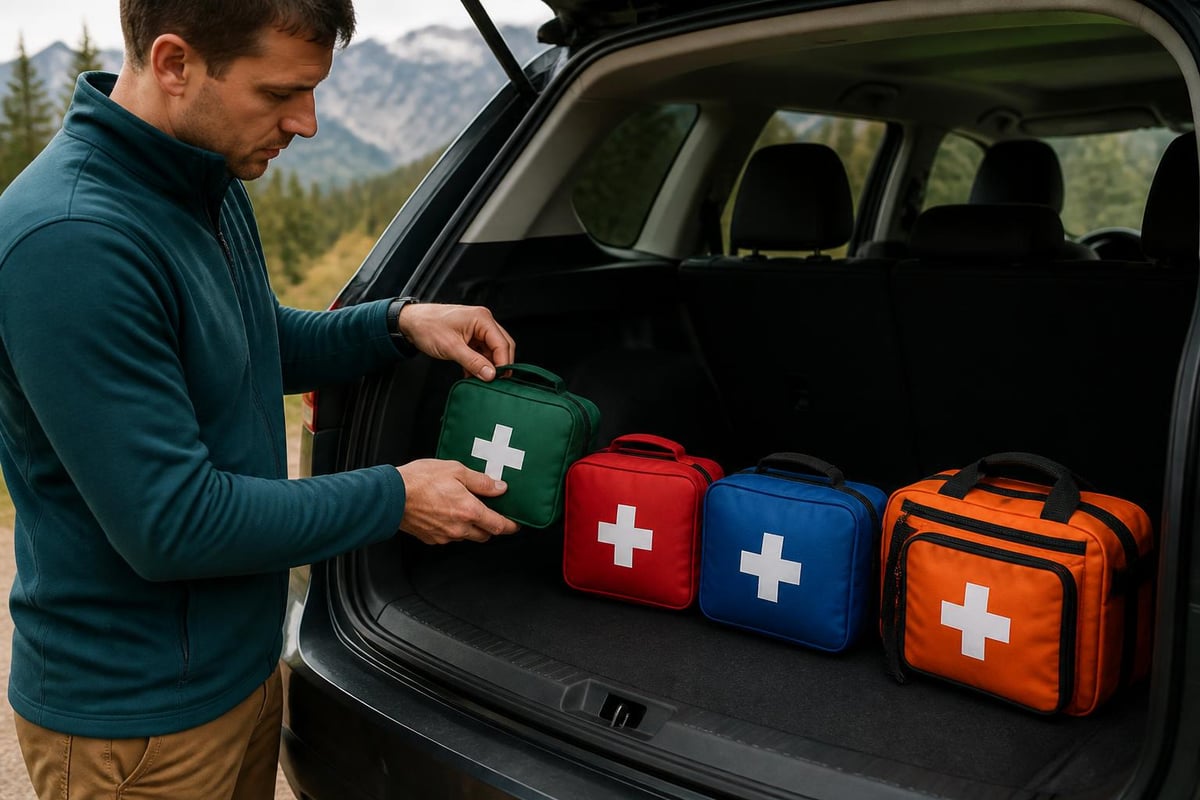
Color-coded pouches separate supplies by function:
- Red pouches for bleeding control and trauma supplies
- Blue pouches for medications and pills
- Green pouches for wound care and bandages
- Yellow pouches for tools and instruments
Transparent zippered bags allow visual identification without opening each compartment, saving precious seconds during stressful situations.
Labeling and Inventory Systems
Clear labeling serves two purposes: rapid item location and efficient restocking. Label both the exterior and interior of compartments, and maintain a laminated inventory card listing all contents with expiration dates.
Digital inventory management offers advantages for those maintaining multiple kits. Simple smartphone photos of your kit contents, updated after each use or quarterly review, create visual records that simplify restocking and auditing.
Customizing Your First Aid Kit in Bag
Generic pre-assembled kits provide convenience but rarely address individual medical needs or activity-specific risks. Customization ensures your first aid kit in bag truly serves your requirements.
Personal Medical Considerations
Include extra quantities of:
- Prescription medications (minimum three-day supply for travel kits)
- Specific allergy treatments
- Chronic condition management supplies
- Personal medical devices like inhalers or glucose monitors
Document any chronic conditions, allergies, and current medications on a wallet-sized card kept in your kit. This information proves invaluable if someone else must provide care on your behalf.
Activity-Specific Additions
Different activities introduce unique injury patterns:
Hiking and backpacking kits should emphasize:
- Blister treatment and prevention (moleskin, blister pads)
- Snake bite protocols and supplies
- Tick removal tools
- Water purification tablets
Sports and athletic kits prioritize:
- Instant cold packs
- Elastic bandages for sprains
- Athletic tape
- Blister prevention
Marine and boating kits require:
- Waterproof packaging for all supplies
- Seasickness medication
- Fishing hook removal tools
- Flare-related burn treatment
Maintenance and Regular Updates
A first aid kit in bag requires ongoing attention to remain effective. Supplies expire, get used, and require replacement to maintain readiness.
Inspection Schedule
Establish a quarterly review routine:
- Check all medication expiration dates
- Replace used items immediately
- Test batteries in electronic devices
- Verify packaging integrity on sterile items
- Update inventory lists
Setting calendar reminders ensures these inspections happen consistently. Many people choose the first day of each season as their review date, creating an easy-to-remember schedule.
Restocking Procedures
Refill and restocking options simplify maintenance, especially for workplaces or families maintaining multiple kits. Purchasing supplies in bulk reduces costs while ensuring consistent availability.
Create a dedicated storage area for replacement supplies, organized to match your kit's layout. This system makes restocking quick and reduces the chance of forgetting critical items.
Training and Skill Development
The most sophisticated first aid kit in bag provides limited benefit without knowledge of proper use. WebMD emphasizes that understanding both kit assembly and proper usage represents essential preparation.
Essential First Aid Skills
Prioritize training in these fundamental techniques:
- CPR and AED use for cardiac emergencies
- Choking response including the Heimlich maneuver
- Bleeding control from minor wounds to life-threatening hemorrhage
- Shock recognition and treatment
- Fracture stabilization and splinting
Advanced Emergency Response
For those seeking deeper expertise:
- Wilderness first aid addresses extended care scenarios
- Tactical casualty care teaches civilian trauma response
- Medical emergency response covers broader health crises
Many certifications require renewal every two years, ensuring skills remain current with evolving best practices and protocols.
Legal and Regulatory Considerations
Carrying medical supplies involves certain legal responsibilities and regulatory awareness, particularly for commercial applications or international travel.
Medication Regulations
Prescription medications must remain in original containers with proper labeling when traveling, especially across state or international borders. Over-the-counter medications generally face fewer restrictions but still require attention to:
- Liquid volume limits for air travel (typically 3.4 ounces per container)
- Controlled substance documentation for prescription pain medications
- Import restrictions varying by destination country
Good Samaritan Protections
Most U.S. states provide legal protection for individuals providing emergency care in good faith. However, these protections typically require:
- Acting within the scope of your training
- Obtaining consent when possible
- Avoiding reckless or intentionally harmful actions
- Continuing care until professional help arrives or takes over
Understanding local laws regarding emergency medical assistance helps responders act confidently when situations demand intervention.
Specialized Applications and Settings
The versatility of a first aid kit in bag extends across numerous environments and user groups, each with distinct requirements and challenges.
Commercial and Workplace Kits
Commercial first aid kits must comply with OSHA regulations, which specify minimum contents based on workplace size and hazard level. These kits typically require:
- Higher quantities of basic supplies
- Multiple pairs of protective gloves
- Eye wash solution for chemical exposure risks
- Burn treatment supplies for certain industries
Family and Childcare Applications
Families with young children need specialized additions:
- Child-safe medication formulations and dosages
- Smaller bandages appropriate for little fingers
- Thermometer strips or non-contact thermometers
- Pediatric CPR reference cards
Colorful, engaging packaging helps reduce fear when children require treatment, making the experience less traumatic and encouraging cooperation.
International Travel Considerations
Cross-border travel introduces unique challenges:
| Challenge | Solution |
|---|---|
| Language barriers | Pictorial instruction cards |
| Unfamiliar medications | Generic drug name references |
| Varying medical standards | Carry supplies meeting highest standards |
| Customs inspections | Clear labeling and documentation |
Research destination-specific health risks and add appropriate preventive supplies like antimalarial medications, altitude sickness treatments, or specific vaccines.
Integration With Broader Emergency Preparedness
A first aid kit in bag represents one component of comprehensive emergency readiness. Integration with other preparedness elements creates a more robust safety system.
Vehicle Emergency Kits
Combining first aid supplies with automotive emergency equipment provides complete roadside preparedness:
- Jumper cables and portable battery packs
- Emergency signaling devices (flares, reflective triangles)
- Basic tools for minor repairs
- Emergency food and water supplies
Store your first aid kit in bag format separately from these items for quick grab-and-go capability if you must leave the vehicle.
Home Emergency Stations
Maintain multiple kits for different scenarios:
- Primary home kit with comprehensive supplies for extended care
- Portable bag kit ready to grab during evacuations
- Vehicle kit permanently stored in each family car
- Workplace kit for office or job site emergencies
Cross-reference inventory across kits to ensure no critical gaps exist in your overall preparedness system.
Cost Management and Budget Optimization
Building a comprehensive first aid kit in bag need not strain household budgets. Strategic purchasing and prioritization make quality emergency preparedness accessible.
Phased Assembly Approach
Rather than purchasing everything at once:
- Month one: Core wound care supplies and basic medications
- Month two: Tools, instruments, and protective equipment
- Month three: Advanced trauma supplies and specialized items
- Month four: Environmental protection and activity-specific additions
This approach spreads costs while building capability progressively.
Bulk Purchasing Benefits
Items like adhesive bandages, gauze pads, and gloves cost significantly less when purchased in larger quantities. Split bulk purchases with family members, neighbors, or community groups to maximize savings while ensuring everyone improves their preparedness.
Generic medications provide identical active ingredients to name brands at fraction of the cost. Verify active ingredient names and concentrations match your needs, then choose the most economical option.
Building and maintaining a properly equipped first aid kit in bag ensures you're prepared to respond effectively when emergencies strike away from home. The combination of carefully selected supplies, organized storage, regular maintenance, and appropriate training creates genuine emergency response capability that can save lives and prevent minor injuries from becoming serious complications. Whether you're assembling your first portable kit or upgrading an existing setup, Medical Gear Outfitters provides the high-quality supplies and expert guidance needed to build confidence in your emergency preparedness, backed by real-world paramedic experience and a commitment to equipping civilians with professional-grade equipment.