First Aid Bag Large: Essential Guide for 2026
When emergencies strike, having adequate supplies can mean the difference between a minor incident and a life-threatening situation. A first aid bag large enough to handle multiple casualties, extended response times, or diverse medical scenarios represents a critical investment for organizations, outdoor enthusiasts, and anyone responsible for group safety. Unlike compact personal kits designed for basic injuries, these comprehensive systems provide the capacity and organization necessary to manage serious medical events until professional help arrives. Understanding what makes an effective large-format emergency kit ensures you're prepared when seconds count.
Understanding Large First Aid Bag Applications
A first aid bag large in capacity serves distinct purposes that smaller kits cannot adequately address. These comprehensive systems find their place in environments where medical response demands exceed what a basic kit can provide.
Workplace and Industrial Settings
Manufacturing facilities, construction sites, and warehouses require extensive first aid supplies that comply with OSHA standards and can address multiple workers simultaneously. A first aid bag large enough for industrial environments typically contains supplies for burns, lacerations, crush injuries, and chemical exposures. Organizations often position these kits at strategic locations throughout their facilities, ensuring response times remain minimal regardless of where an incident occurs.
Key workplace considerations include:
- Coverage for 25-100+ employees per kit
- Industry-specific supplies (burn treatments, eye wash, etc.)
- Compliance with state and federal regulations
- Accessibility within 4 minutes from any location
- Regular inspection and restocking protocols
Event Management and Public Gatherings
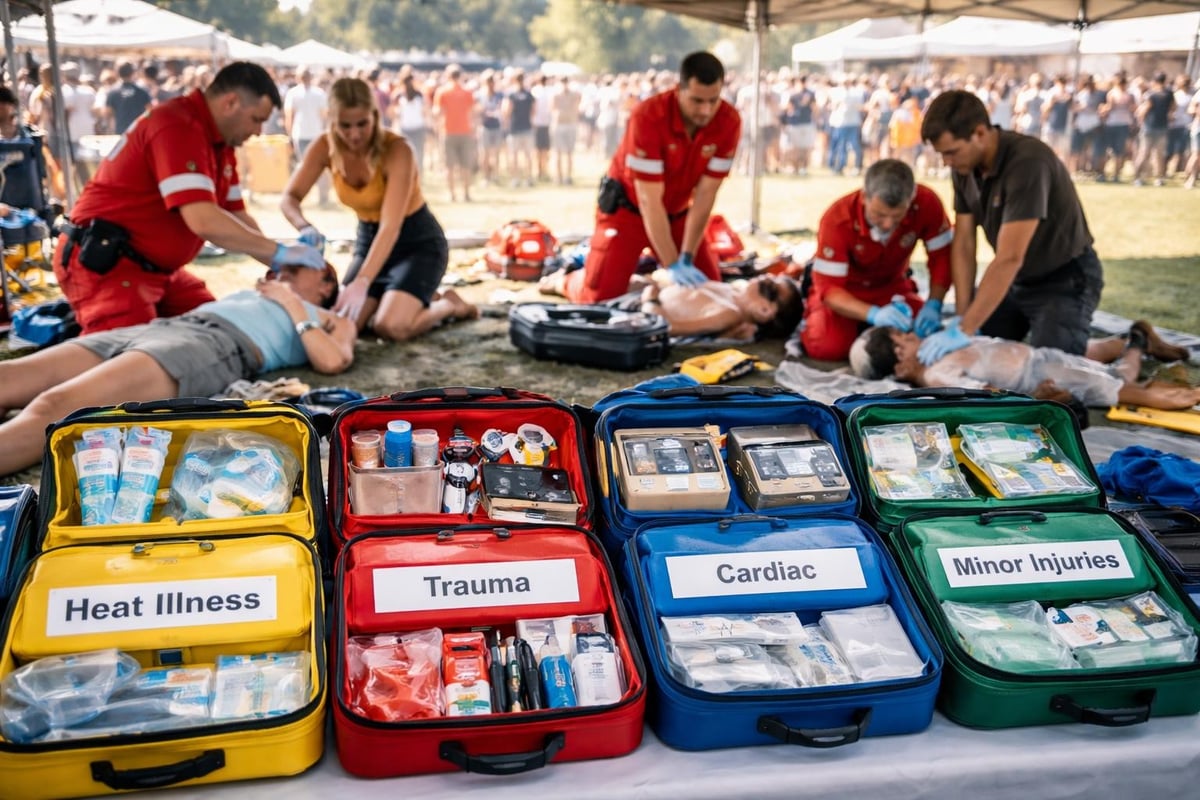
Concert venues, sporting events, festivals, and conferences face unique challenges when medical emergencies arise. Event organizers rely on large first aid systems that can handle heat exhaustion, allergic reactions, minor trauma, and cardiac events among large crowds.
Essential Components of a Comprehensive Large First Aid Bag
The contents of a first aid bag large enough for serious response scenarios extend far beyond adhesive bandages and antiseptic wipes. Understanding what supplies belong in different kit classes helps ensure your system matches your specific needs.
Trauma and Hemorrhage Control
Life-threatening bleeding requires immediate intervention. Quality large first aid bags include multiple options for hemorrhage control, from direct pressure to advanced hemostatic agents.
| Supply Category | Purpose | Quantity (Large Kit) |
|---|---|---|
| Tourniquets | Extremity hemorrhage | 2-4 units |
| Hemostatic gauze | Deep wound packing | 3-5 packages |
| Pressure dressings | Israeli/Emergency bandages | 4-6 units |
| Trauma pads | Large wound coverage | 10-20 pads |
| Chest seals | Penetrating chest injuries | 2-4 seals |
Medical Gear Outfitters emphasizes the importance of proper tourniquet selection when building comprehensive trauma capabilities. These tools save lives when applied correctly during severe extremity bleeding.
Wound Care and Infection Prevention
Beyond major trauma, a first aid bag large in scope addresses the full spectrum of wound management. These supplies prevent infection, promote healing, and provide comfort during the critical period before professional medical care.
- Sterile gauze pads (multiple sizes: 2x2, 3x3, 4x4 inches)
- Conforming roller bandages for securing dressings
- Adhesive bandages in various sizes and configurations
- Medical tape (cloth, paper, and waterproof varieties)
- Antiseptic solutions and wipes
- Antibiotic ointment packets
- Burn dressings and gels
- Irrigation solution for wound cleaning
Medications and Pharmaceuticals
While a first aid bag large enough for comprehensive care contains various medications, proper storage and rotation remain critical. Medications expire, lose potency, and require temperature control to remain effective.
Common over-the-counter medications include:
- Pain relievers (acetaminophen, ibuprofen, aspirin)
- Antihistamines for allergic reactions
- Anti-diarrheal medications
- Antacids for digestive issues
- Hydrocortisone cream for skin irritation
- Eye drops and saline solution
- Glucose tablets for diabetic emergencies
- Electrolyte replacement packets
Organizational Systems for Large First Aid Bags
Effective organization transforms a collection of supplies into a functional emergency response system. A first aid bag large enough to contain comprehensive supplies becomes useless if responders cannot quickly locate needed items during high-stress situations.
Color-Coded and Compartmentalized Storage
Professional emergency medical services have long recognized that color-coding and compartmentalization reduce response times and prevent critical errors. Implementing similar systems in your large first aid bag creates intuitive navigation even for minimally trained responders.
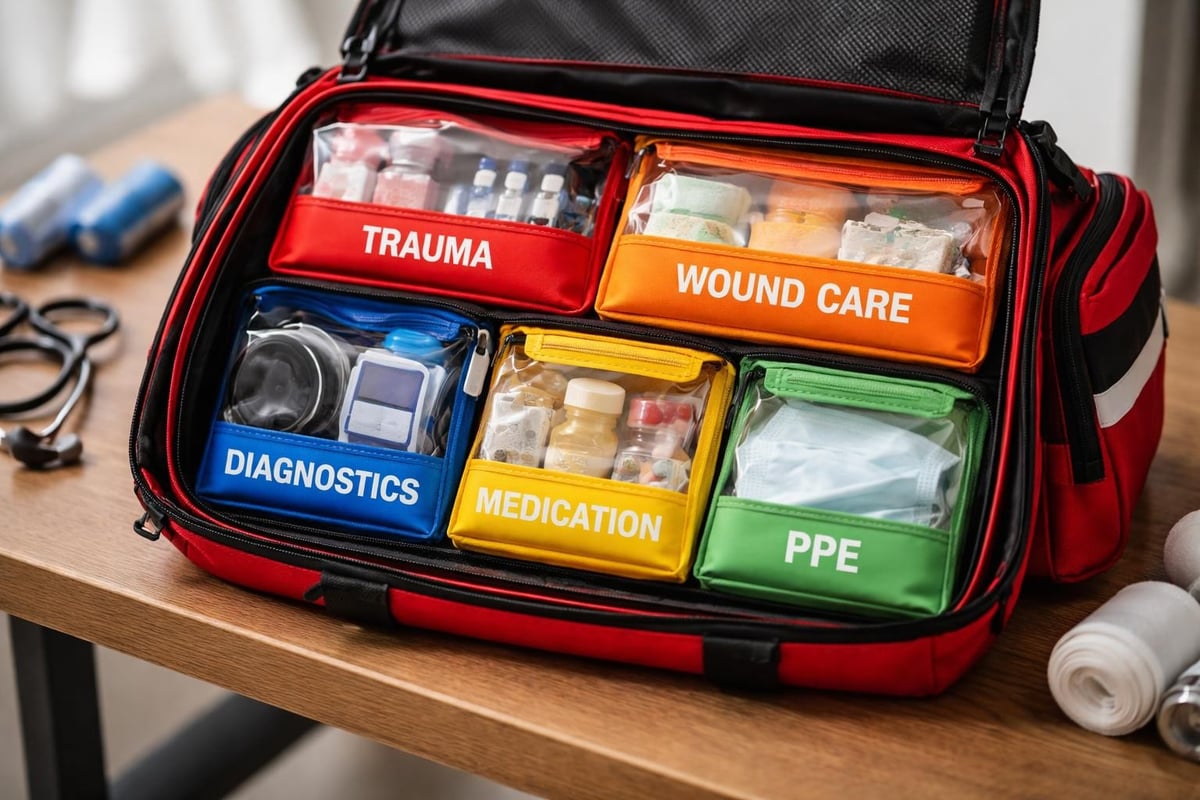
Recommended organizational categories:
- Red zone: Life-threatening emergency supplies (tourniquets, chest seals, hemostatic agents)
- Yellow zone: Serious injury management (splints, burn treatments, large dressings)
- Green zone: Minor wound care (bandages, antiseptics, basic medications)
- Blue zone: Diagnostic and assessment tools (blood pressure cuff, thermometer, glucose meter)
- White zone: Personal protective equipment and documentation
Inventory Management and Expiration Tracking
The American Red Cross recommends regular inspection of first aid supplies to ensure readiness. A first aid bag large in scope requires systematic tracking to maintain operational status.
| Inspection Element | Frequency | Action Required |
|---|---|---|
| Medication expiration dates | Monthly | Replace items within 3 months of expiration |
| Sterile packaging integrity | Monthly | Discard compromised packages |
| Quantity verification | Quarterly | Restock used or missing items |
| Equipment functionality | Quarterly | Test batteries, replace worn straps |
| Complete inventory audit | Annually | Document all contents, update protocols |
Selecting the Right Size and Configuration
Determining what constitutes a first aid bag large enough for your specific situation requires careful assessment of multiple factors. The UK Health and Safety Executive provides guidance on matching kit contents to workplace environments and risk levels.
Capacity Planning Based on Population
The number of people your kit must serve directly influences required size and contents. Unlike basic personal first aid kits, large systems must accommodate simultaneous casualties and extended response scenarios.
General capacity guidelines:
- 10-25 people: Medium kit (75-100 pieces)
- 25-50 people: Large kit (150-200 pieces)
- 50-100 people: Extra-large kit (250-350 pieces)
- 100+ people: Multiple large kits or dedicated medical stations
Environmental and Hazard Considerations
The environment where your first aid bag large operates determines specialized supply requirements. Remote wilderness locations demand different capabilities than urban office buildings or manufacturing facilities.
Environment-specific additions:
- Outdoor/Wilderness: Snake bite kits, insect sting treatments, emergency blankets, water purification
- Marine/Aquatic: Waterproof packaging, jellyfish sting treatments, hypothermia prevention
- Industrial/Chemical: Eye wash stations, chemical burn treatments, specialized PPE
- High-altitude: Altitude sickness medications, supplemental oxygen, enhanced cold protection
Medical Gear Outfitters offers specialized response kits designed for specific environmental challenges, ensuring your supplies match your operational context.
Bag Design and Durability Features
The container itself represents a critical component of any large first aid system. A first aid bag large enough to hold comprehensive supplies must also withstand demanding conditions while providing rapid access during emergencies.
Material Construction and Weather Resistance
Professional-grade bags utilize heavy-duty materials that resist tearing, water damage, and UV degradation. Ballistic nylon, reinforced polyester, and water-resistant coatings extend operational lifespan even in harsh environments.
- Exterior shell: 1000D Cordura or equivalent for abrasion resistance
- Zippers: YKK #10 or larger, water-resistant when possible
- Seams: Double-stitched with reinforced stress points
- Handles: Padded, reinforced attachment points rated for loaded weight
- Hardware: Corrosion-resistant buckles and clips
Access and Visibility Enhancements
During emergencies, every second counts. Bag design should facilitate rapid identification and quick access to critical supplies without requiring extensive searching or reorganization.
- Reflective panels for low-light visibility
- Medical symbols (Star of Life, red cross) for instant recognition
- Multiple access points (top, front panel, side zippers)
- Clear or mesh internal pockets for content visibility
- External MOLLE webbing for additional attachments
- Integrated lighting (LED strips or attachable flashlights)
Training and Preparedness Protocols
Possessing a first aid bag large in capacity means little without the knowledge to use its contents effectively. Medical Gear Outfitters emphasizes that equipment and training form inseparable components of emergency readiness.
User Competency Levels
Different supplies require varying skill levels for safe and effective use. Understanding these distinctions helps organizations match their kit contents to available training and expertise.
Training tier system:
| Skill Level | Appropriate Interventions | Training Required |
|---|---|---|
| Basic | Bandaging, wound cleaning, CPR | 4-8 hour course |
| Intermediate | Splinting, advanced wound care, medication administration | 16-24 hour course |
| Advanced | Tourniquet application, airway management, hemorrhage control | 40+ hour course with regular recertification |
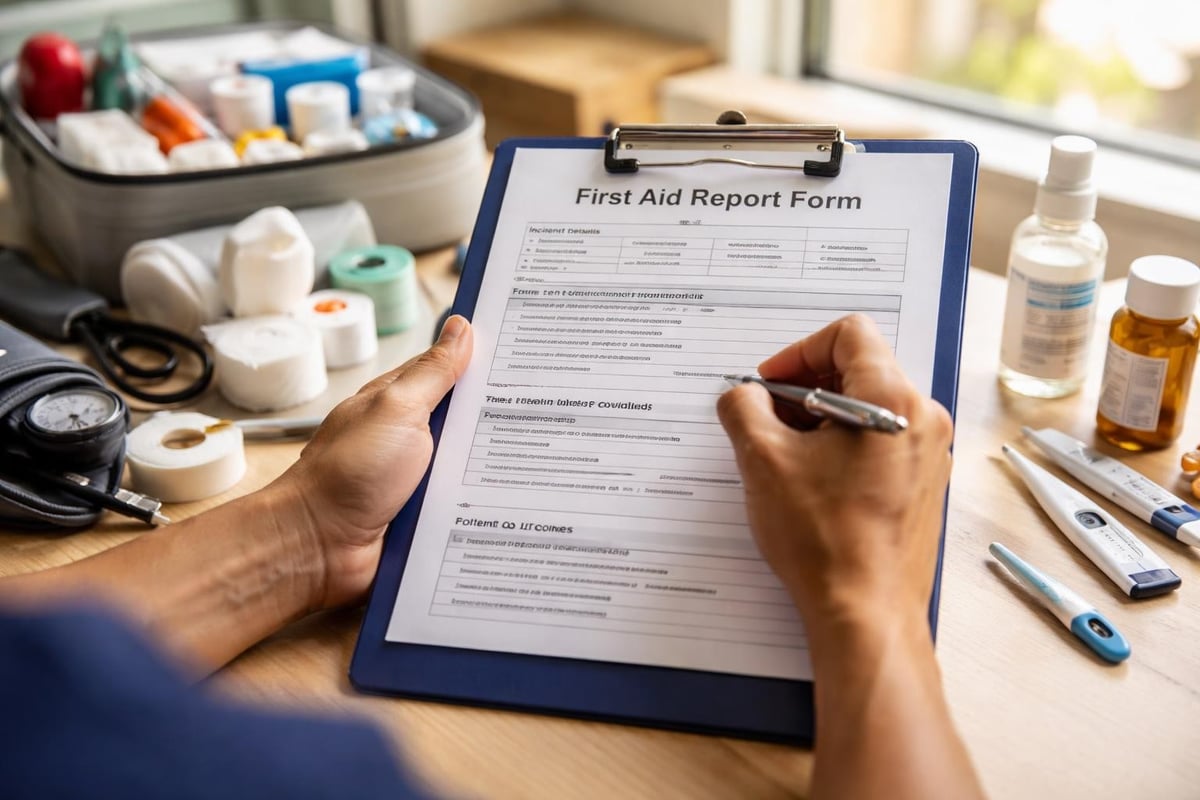
Documentation and Reporting Requirements
Professional organizations maintain detailed records of first aid incidents, supply usage, and kit maintenance. These records support continuous improvement, identify training gaps, and demonstrate regulatory compliance.
Specialized Large Bag Configurations
While general-purpose kits serve many situations, certain scenarios demand specialized configurations of a first aid bag large enough to address unique challenges.
Multi-Casualty Incident (MCI) Kits
Mass casualty events require supplies organized for triage and rapid assessment. These kits often include color-coded triage tags, multiple victim tracking systems, and supplies packaged for quick distribution to multiple patients simultaneously.
MCI-specific additions:
- START triage tags (50-100 units)
- Mass casualty tracking forms
- Additional tourniquets (8-12 units)
- Bulk packaging of common supplies
- Communication equipment
- Patient identification wristbands
Understanding comprehensive first aid kit contents helps organizations build systems appropriate to their worst-case scenarios rather than typical daily needs.
Tactical and Law Enforcement Applications
Law enforcement agencies and security professionals require first aid bags large enough to support tactical operations while maintaining portability and rapid deployment capabilities. These systems emphasize hemorrhage control and penetrating trauma management.
- Low-profile, tactical-colored exteriors
- MOLLE-compatible mounting systems
- Quick-access hemorrhage control pockets
- Ballistic panel options for high-threat environments
- Compatibility with body armor and tactical gear
- Reduced reflective elements for tactical operations
Regulatory Compliance and Standards
Organizations cannot ignore the legal and regulatory landscape surrounding workplace first aid. A first aid bag large in capacity must meet applicable standards while exceeding minimum requirements to ensure comprehensive preparedness.
ANSI and OSHA Requirements
The American National Standards Institute (ANSI) publishes widely recognized standards for workplace first aid kit contents. Kent State University's guidance on first aid kit selection references these standards when helping organizations choose appropriate systems.
ANSI Z308.1-2021 classifications:
- Class A: Basic kit for minimal workplace hazards
- Class B: Comprehensive kit for complex or high-hazard environments
A first aid bag large enough for most organizational needs typically meets or exceeds Class B requirements, containing minimum quantities of 24 different supply types.
Industry-Specific Regulations
Beyond general workplace standards, certain industries face additional requirements based on operational hazards. Understanding industry standards and certifications ensures your kit satisfies all applicable regulations.
Sector-specific considerations:
- Construction: OSHA 1926.50 requirements for field operations
- Maritime: U.S. Coast Guard vessel medical kit standards
- Aviation: FAA requirements for aircraft medical kits
- Childcare: State-specific requirements for educational facilities
- Food service: Local health department first aid mandates
Maintenance and Long-Term Sustainability
Purchasing a first aid bag large in capacity represents a significant investment. Proper maintenance extends useful life, ensures readiness, and maximizes return on investment through years of reliable service.
Restocking Strategies and Supply Chain
Establishing reliable restocking procedures prevents critical shortages and ensures continuous readiness. Medical Gear Outfitters recommends maintaining relationships with trusted first aid supply providers to guarantee rapid replacement of used or expired items.
Effective restocking approaches:
- Immediate replacement after any use
- Quarterly scheduled inspections with on-the-spot restocking
- Pre-packaged refill modules for common supply categories
- Automated reorder systems based on expiration tracking
- Backup supply cache for critical items
Storage Conditions and Environmental Protection
Even the highest-quality first aid bag large enough for comprehensive response can deteriorate if stored improperly. Environmental factors significantly impact supply longevity and equipment reliability.
| Environmental Factor | Optimal Range | Risk of Deviation |
|---|---|---|
| Temperature | 60-75°F (15-24°C) | Medication degradation, adhesive failure |
| Humidity | 30-50% | Mold growth, package deterioration |
| Light exposure | Minimal direct sunlight | UV degradation of materials and medications |
| Accessibility | Within 4-minute walk | Delayed response, compromised outcomes |
Integration with Emergency Response Plans
A first aid bag large in capability functions most effectively when integrated into comprehensive emergency preparedness protocols. Standalone equipment without supporting plans and procedures provides only partial protection.
Multi-Tiered Response Systems
Organizations benefit from establishing first aid capabilities at multiple levels, with increasingly comprehensive resources available as situation severity escalates.
Tiered system example:
- Tier 1: Personal micro-kits (individual employees)
- Tier 2: Department-level medium kits (25-person coverage)
- Tier 3: Facility-wide large kits (100+ person coverage)
- Tier 4: Dedicated medical room with advanced equipment
This approach ensures appropriate resources reach patients quickly while reserving comprehensive large kits for situations truly requiring their capacity.
Communication and Activation Protocols
Clear procedures for locating, accessing, and deploying a first aid bag large enough for serious incidents prevent confusion during high-stress situations.
- Posted maps showing all kit locations
- Unique identification numbers for each kit
- Clear signage and lighting at storage locations
- Established chain of command for medical incidents
- Communication protocols for summoning advanced help
- Post-incident debriefing and improvement processes
Medical Gear Outfitters provides resources for equipping comprehensive first aid systems that integrate seamlessly with organizational emergency plans.
Building a properly equipped first aid bag large enough to handle serious medical emergencies requires careful planning, quality supplies, and ongoing maintenance. Whether your organization faces workplace hazards, manages public events, or operates in remote environments, comprehensive preparedness separates effective response from tragic outcomes. Medical Gear Outfitters brings paramedic expertise to every product and consultation, helping you build emergency response systems that truly protect your people when it matters most.