Best Newborn First Aid Kit: Essential Guide for 2026
Bringing a newborn home is one of life's most exciting moments, but it also comes with significant responsibility. Parents quickly discover that minor injuries and health concerns can arise unexpectedly, making preparedness essential. Having the best newborn first aid kit readily available provides peace of mind and ensures you can respond quickly to common infant emergencies. Unlike standard first aid kits designed for adults, newborn-specific kits contain specialized items sized appropriately for infants and address the unique medical needs of babies in their first months of life.
Understanding Newborn-Specific First Aid Needs
Newborns require different medical supplies than older children or adults. Their delicate skin, developing immune systems, and smaller body size mean that standard first aid items may not be appropriate or effective.
Why Standard Kits Fall Short
Most general first aid kits contain adhesive bandages, medications, and tools sized for adults or older children. These items often don't work well for newborns. For example, adult-sized bandages won't adhere properly to tiny fingers, and many over-the-counter medications aren't suitable for infants under certain ages.
The best newborn first aid kit addresses these limitations by including:
- Infant-specific thermometers (rectal, temporal, or ear types designed for accuracy in babies)
- Appropriately sized sterile gauze pads and bandages
- Bulb syringes or nasal aspirators for clearing congested airways
- Petroleum jelly for rectal thermometer use and diaper rash prevention
- Saline drops for nasal congestion relief
Understanding these distinctions helps parents avoid the common mistake of relying solely on household first aid supplies that may be ineffective or even unsafe for newborns.
Essential Components of the Best Newborn First Aid Kit
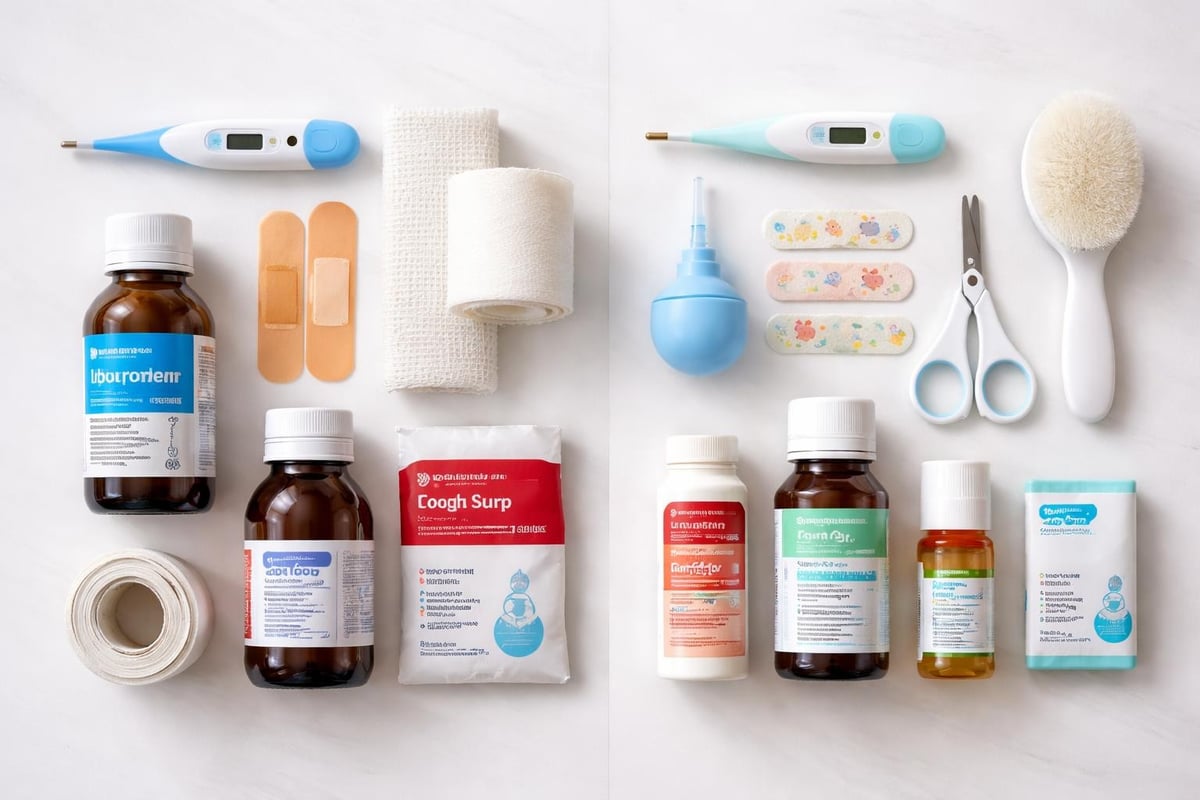
Building a comprehensive kit requires careful selection of items that address the most common newborn health concerns. Experts recommend organizing supplies by category to ensure quick access during stressful situations.
Temperature Management Supplies
Fever monitoring is one of the most critical aspects of newborn care. A reliable thermometer is non-negotiable.
| Thermometer Type | Best For | Age Recommendation |
|---|---|---|
| Rectal Digital | Most accurate readings | Birth to 3 months |
| Temporal Artery | Non-invasive option | 3 months and older |
| Ear (Tympanic) | Quick readings | 6 months and older |
Include petroleum jelly for lubricating rectal thermometers and alcohol wipes for sanitizing between uses. Many parents keep backup batteries specifically for their thermometer to avoid emergencies when the device fails.
Wound Care and Skin Protection
Newborn skin is remarkably fragile and prone to minor scrapes, scratches from their own fingernails, and irritation. Your kit should contain multiple sizes of sterile gauze pads, medical tape designed for sensitive skin, and alcohol-free antiseptic wipes.
Butterfly wound closures offer an excellent alternative to traditional bandages for small cuts. These specialized strips hold wound edges together without covering the entire area, allowing parents to monitor healing while keeping the injury protected.
Additional skin care items include:
- Hydrocortisone cream (0.5%) for minor rashes and irritation
- Antibiotic ointment specifically labeled safe for infants
- Cotton balls and swabs for gentle cleaning
- Soft gauze rolls for securing larger dressings
Respiratory and Nasal Care
Newborns breathe exclusively through their noses for the first few months, making nasal congestion a serious concern. The best newborn first aid kit includes multiple tools for managing breathing difficulties.
A bulb syringe remains the most recommended tool for clearing mucus. However, modern nasal aspirators with controlled suction offer more effective relief for stubborn congestion. Saline drops help loosen thick mucus before suctioning, making the process gentler and more effective.
Organization and Storage Strategies
Even the most complete kit proves useless if you can't find what you need during an emergency. Proper organization transforms a collection of supplies into a functional emergency response system.
Container Selection
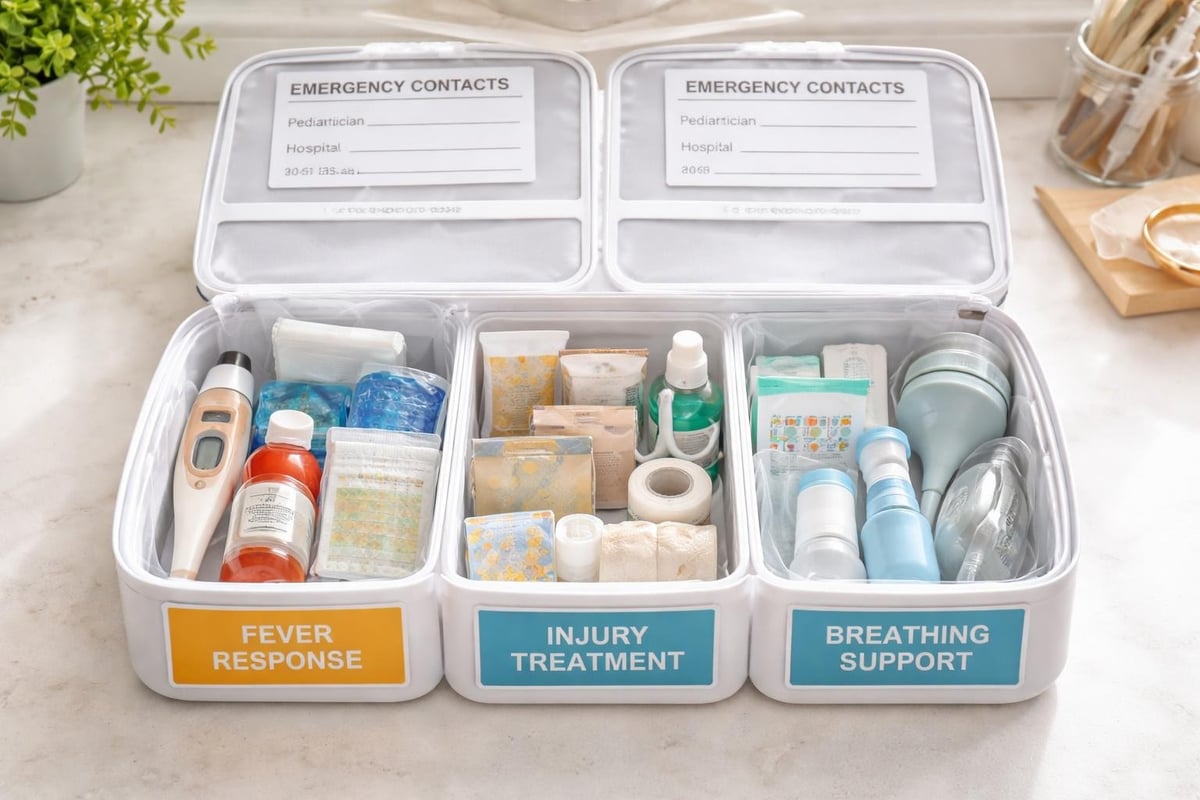
Choose a container that balances portability with capacity. Clear plastic bins allow quick visual inventory, while soft-sided bags offer easier transport. Consider keeping one kit at home and a smaller portable version in your diaper bag for outings.
Label sections clearly using these categories:
- Temperature monitoring
- Wound care
- Medication and ointments
- Nasal and respiratory
- Emergency information
Strategic Placement
Location matters as much as contents. Keep your primary kit in a central location accessible from the nursery, kitchen, and main living areas. Avoid storing it in bathrooms where humidity can damage supplies or in high cabinets that require precious seconds to access during emergencies.
Medical Supplies and Medications
Understanding which medications are safe for newborns requires consultation with your pediatrician. Never administer any medication without specific dosing instructions from your healthcare provider.
Age-Appropriate Pain Relief
Most over-the-counter pain relievers are not recommended for newborns under two months. Your pediatrician may recommend specific products and dosing based on your baby's weight and age. Always verify current recommendations, as medical guidelines change based on new research.
Keep these medication-related items ready:
- Calibrated medicine droppers or syringes for accurate dosing
- Current dosing charts from your pediatrician
- Expiration date log to ensure medication freshness
- Specific instructions for emergency medication use
Allergy and Reaction Supplies
While rare in newborns, allergic reactions require immediate attention. Stock antihistamine options only with explicit pediatrician approval, including exact dosing for your baby's current weight. Emergency medication storage guidelines emphasize keeping these supplies at room temperature and checking expiration dates monthly.
Critical Emergency Information
Medical supplies alone don't constitute the best newborn first aid kit. Documentation and reference materials prove equally essential during emergencies when stress impairs decision-making.
Contact Information Card
Create a laminated card containing:
- Pediatrician's office number and after-hours emergency line
- Poison Control Center (1-800-222-1222)
- Local emergency services (911 or local equivalent)
- Nearby urgent care facilities with addresses
- Parents' cell phone numbers and work contacts
Place duplicate cards in your kit, diaper bag, and car. Capturing professional newborn photos during the first weeks creates precious memories, but ensuring safety documentation is equally important for protecting your baby's wellbeing.
Medical History Summary
Maintain a brief medical summary including birth details, weight progression, any diagnosed conditions, and vaccination records. This information proves invaluable when calling poison control or visiting urgent care facilities unfamiliar with your baby's history.
Specialized Items for Common Newborn Concerns
Beyond basic first aid supplies, the best newborn first aid kit addresses specific situations parents frequently encounter during the first months.
Digestive and Feeding Support
Gas, colic, and feeding difficulties affect many newborns. While these aren't traditional first aid concerns, having appropriate supplies reduces parental stress and infant discomfort.
| Supply Item | Purpose | Usage Notes |
|---|---|---|
| Gas relief drops | Reduces trapped gas bubbles | Use only as pediatrician directs |
| Gripe water | Soothes digestive discomfort | Verify age-appropriate formulation |
| Feeding syringe | Administers medication or supplements | Sterilize after each use |
Eye and Ear Care
Blocked tear ducts and ear cleaning require gentle, specialized tools. Include sterile saline solution for eye irrigation and soft cotton pads for cleaning around the eyes. Never insert anything into a baby's ear canal, but keep supplies for cleaning the outer ear during regular hygiene routines.

Maintaining and Updating Your Kit
A first aid kit is only effective if maintained properly. Regular resupply checks ensure you're never caught without essential items during emergencies.
Monthly Inspection Routine
Set a recurring calendar reminder to check your kit. This inspection should include:
- Verifying all medications remain within expiration dates
- Replacing any used supplies immediately
- Updating emergency contacts if phone numbers change
- Adjusting medication dosages as your baby grows
- Checking battery-operated devices for functionality
Seasonal Adjustments
Different seasons bring different risks. Summer months may require additional burn dressings and sun protection items, while winter increases the need for respiratory support supplies due to cold and flu season.
Training and Preparedness
The most comprehensive kit provides limited benefit without knowledge of proper use. Understanding basic first aid techniques empowers parents to respond confidently during emergencies.
Essential Skills Every Parent Should Learn
Infant CPR differs significantly from adult techniques. Consider taking a certified infant first aid and CPR course before your baby arrives or during the first weeks at home. These courses cover:
- Proper CPR compression depth and rate for infants
- Choking response techniques specific to babies
- Recognizing signs of serious illness requiring immediate medical attention
- Basic wound care and bandaging methods
- Assessing bleeding severity in infants
Reference Materials
Include a current infant first aid manual in your kit. Digital resources on your phone provide backup, but physical guides remain accessible if your phone dies or you're in an area without service. Comprehensive first aid guides offer step-by-step instructions for common emergencies.
Travel Considerations
Your home kit serves as the foundation, but traveling with a newborn requires additional planning. Create a condensed version containing the most essential items for your diaper bag or car.
Compact Travel Kit Essentials
Space limitations demand prioritization. Focus on items addressing the most likely scenarios:
- Portable thermometer
- Small antiseptic wipes packet
- Adhesive bandages (smallest sizes)
- Nasal aspirator
- Emergency contact card
- Any prescribed medications with current dosing information
Building an effective portable medical kit requires balancing preparedness with practicality. Refresh travel kit supplies from your main kit monthly to ensure nothing expires while stored in your car or diaper bag.
Special Circumstances and Conditions
Some newborns require specialized first aid supplies based on diagnosed conditions or specific vulnerabilities. Consult your pediatrician about additional items your particular situation demands.
Premature Infants
Babies born prematurely often have unique medical needs extending beyond standard newborn care. Your pediatrician may recommend additional monitoring equipment, specialized feeding supplies, or specific medications tailored to your baby's developmental stage rather than chronological age.
Multiple Birth Preparations
Parents of twins, triplets, or more face compounded emergency preparedness needs. Comprehensive medical kits for multiple newborns should include duplicate supplies of frequently used items while maintaining single quantities of reference materials and contact information.
Professional vs. DIY Kit Assembly
Parents face the choice between purchasing pre-assembled kits or building custom solutions. Each approach offers distinct advantages depending on your knowledge level, budget, and specific needs.
Pre-Assembled Kit Benefits
Commercial newborn first aid kits provide convenience and expert curation. Reputable manufacturers include items meeting safety standards and age-appropriate specifications. However, these kits may contain unnecessary items while missing others specific to your baby's needs.
Custom Assembly Advantages
Building your own kit allows complete customization based on your pediatrician's recommendations and your baby's specific health profile. This approach often proves more cost-effective and ensures you understand each item's purpose and proper use. Professional guidance from experienced medical providers helps ensure your custom kit meets comprehensive safety standards.
Cost Considerations and Budgeting
Creating the best newborn first aid kit requires financial investment, but smart shopping strategies keep costs manageable without compromising quality or completeness.
Prioritizing Essential Purchases
Not all items carry equal importance. Allocate your budget first toward critical supplies:
- Accurate thermometer (highest priority)
- Sterile wound care supplies
- Nasal aspirator and saline drops
- Emergency reference materials
- Storage container with organization
Secondary items can be added gradually as budget allows. Many supplies like cotton balls, petroleum jelly, and basic bandages come from regular household shopping, reducing specialized medical supply costs.
Long-Term Value Planning
Quality items cost more initially but offer better long-term value. Investing in durable medical instruments like high-quality thermometers or aspirators saves money over repeatedly replacing cheaper alternatives. Evaluating kit contents helps identify which items justify premium investment versus those where generic options suffice.
Building the best newborn first aid kit represents a critical step in emergency preparedness for new parents. By selecting age-appropriate supplies, maintaining proper organization, and combining physical resources with essential training, you create a comprehensive safety system protecting your baby during their most vulnerable months. Medical Gear Outfitters brings paramedic-level expertise to help families assemble professional-grade first aid solutions tailored to newborn care. Whether you need individual specialized components or guidance building a complete emergency response system, Medical Gear Outfitters ensures you're prepared to protect your newest family member when seconds matter most.

