
1st Aid Pouch: Essential Guide for First Responders
A well-organized 1st aid pouch serves as the foundation for effective emergency response, whether you're a professional paramedic responding to calls or a prepared citizen ready to assist in critical moments. Unlike bulky kits designed for stationary locations, a 1st aid pouch prioritizes mobility, accessibility, and essential supplies that address the most common and life-threatening injuries. The difference between a properly stocked pouch and an inadequate one can mean the difference between saving a life and feeling helpless during an emergency. This comprehensive guide explores everything you need to know about selecting, organizing, and maintaining a 1st aid pouch that meets professional standards while remaining practical for everyday carry.
Understanding 1st Aid Pouch Design and Purpose
The primary distinction between a 1st aid pouch and traditional first aid kits lies in portability and immediate accessibility. A pouch is designed for rapid deployment in dynamic environments where every second counts. Medical professionals, law enforcement officers, outdoor enthusiasts, and everyday citizens increasingly rely on compact pouches that can attach to belts, backpacks, or vehicle interiors.
Size and Capacity Considerations
When selecting a 1st aid pouch, size directly impacts both carrying comfort and supply capacity. Standard pouches range from small belt-mounted options (approximately 4x6 inches) to larger MOLLE-compatible carriers (8x10 inches or larger). The ideal size depends on your specific role and anticipated scenarios.
Key sizing factors include:
- Personal carry needs: Belt pouches work well for daily carry, while larger options suit vehicle or backpack mounting
- Response environment: Urban settings may require different supplies than wilderness scenarios
- Regulatory requirements: Workplace first aid compliance may dictate minimum contents
- Weight distribution: Heavier pouches require better attachment systems to prevent shifting during movement
Material Quality and Environmental Protection
Professional-grade 1st aid pouches utilize materials that withstand harsh conditions while protecting sensitive medical supplies. Cordura nylon (500D-1000D) offers excellent durability and weather resistance, while ripstop fabrics provide lightweight alternatives. Water-resistant coatings and sealed seams prevent moisture infiltration that could compromise sterile dressings and medications.
Critical material considerations include:
| Material Feature | Benefit | Best Application |
|---|---|---|
| Waterproof lining | Protects supplies from moisture | Marine, outdoor environments |
| YKK zippers | Reliable opening/closing under stress | All applications |
| MOLLE webbing | Modular attachment capability | Tactical, professional use |
| Elastic organizers | Secure items during movement | Active response scenarios |
Essential Contents for Your 1st Aid Pouch
Stocking your pouch requires balancing comprehensive care capabilities with space limitations. The 2024 American Heart Association and American Red Cross Guidelines for First Aid provide evidence-based recommendations for first aid supplies that address the most critical emergencies.
Trauma and Hemorrhage Control
Uncontrolled bleeding represents the leading cause of preventable death in emergency situations. Your 1st aid pouch must prioritize hemorrhage control above all other supplies. Professional responders know that addressing massive hemorrhage within the first three minutes dramatically improves survival rates.
Essential trauma supplies:
- Tourniquet: A proven device like the CAT or SOF-T Wide for extremity bleeding control
- Hemostatic gauze: QuikClot or similar agent for wound packing
- Pressure bandages: Israeli or emergency bandages for compression
- Chest seals: Vented seals for treating penetrating chest injuries
- Trauma shears: For rapid clothing removal and bandage cutting
Understanding proper tourniquet selection and application remains fundamental for anyone carrying a 1st aid pouch designed for trauma response. The Israeli compression bandage deserves special attention for its versatility in controlling bleeding while maintaining compression.
Wound Care and Protection
After addressing life-threatening injuries, your pouch should contain supplies for wound management and infection prevention. These items treat the majority of injuries encountered in both emergency and everyday situations.
- Sterile gauze pads (various sizes)
- Adhesive bandages (assorted)
- Medical tape (cloth or paper-based)
- Antibiotic ointment packets
- Non-adherent dressings
- Elastic wrap bandages
Personal Protective Equipment
Every 1st aid pouch must include barrier protection to prevent disease transmission during patient care. OSHA regulations for workplace first aid specifically mandate appropriate protective equipment for anyone providing emergency care.
Standard PPE includes nitrile gloves (multiple pairs), CPR face shield or pocket mask, and eye protection. Storing gloves in easily accessible exterior pockets ensures you can don them immediately before patient contact.
Compliance Standards and Regulations
Organizations and individuals providing emergency care must understand relevant compliance standards that govern 1st aid pouch contents. The ANSI/ISEA Z308.1 standard establishes minimum requirements for workplace first aid kits, though personal pouches often exceed these baselines.
ANSI Standards Overview
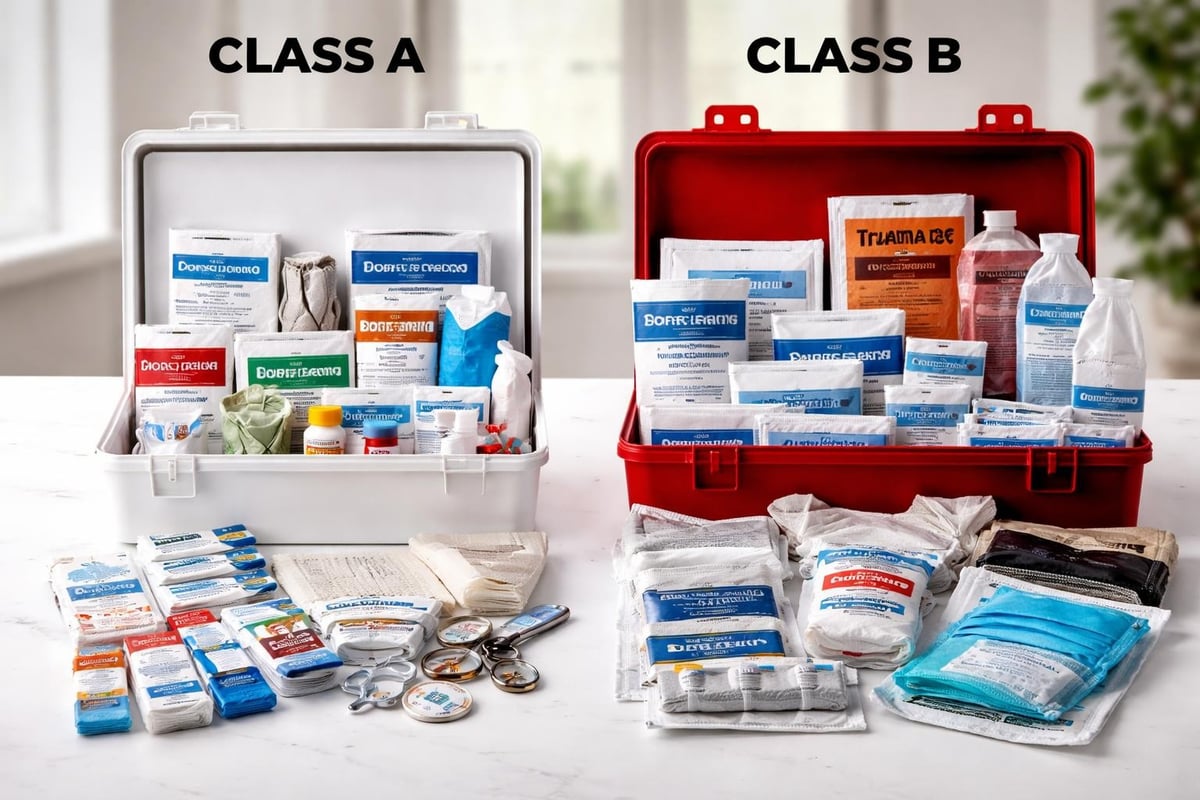
The ANSI/ISEA Z308.1-2021 revision classifies first aid supplies into two categories: Class A (basic) and Class B (comprehensive). While designed for stationary workplace kits, understanding these standards helps inform personal pouch assembly.
| ANSI Class | Intended Use | Minimum Items | Ideal Application |
|---|---|---|---|
| Class A | Small workplaces, basic injuries | 16 item types | Office environments, low-risk settings |
| Class B | Complex/high-risk workplaces | 24 item types | Industrial, construction, outdoor work |
Workplace-Specific Requirements
Organizations must assess their specific hazards and ensure first aid supplies match workplace risks. A 1st aid pouch carried by industrial workers requires different contents than one designed for office environments. Chemical facilities need eye wash capabilities, while construction sites prioritize trauma supplies.
Consulting OSHA's mandatory first aid kit guidelines ensures your organization meets legal obligations while protecting employees. Regular audits verify compliance and identify supply gaps before emergencies occur.
Organization and Accessibility Strategies
A poorly organized 1st aid pouch creates dangerous delays during emergencies when you're searching for critical supplies. Professional responders organize pouches using systematic approaches that enable rapid access even under stress.
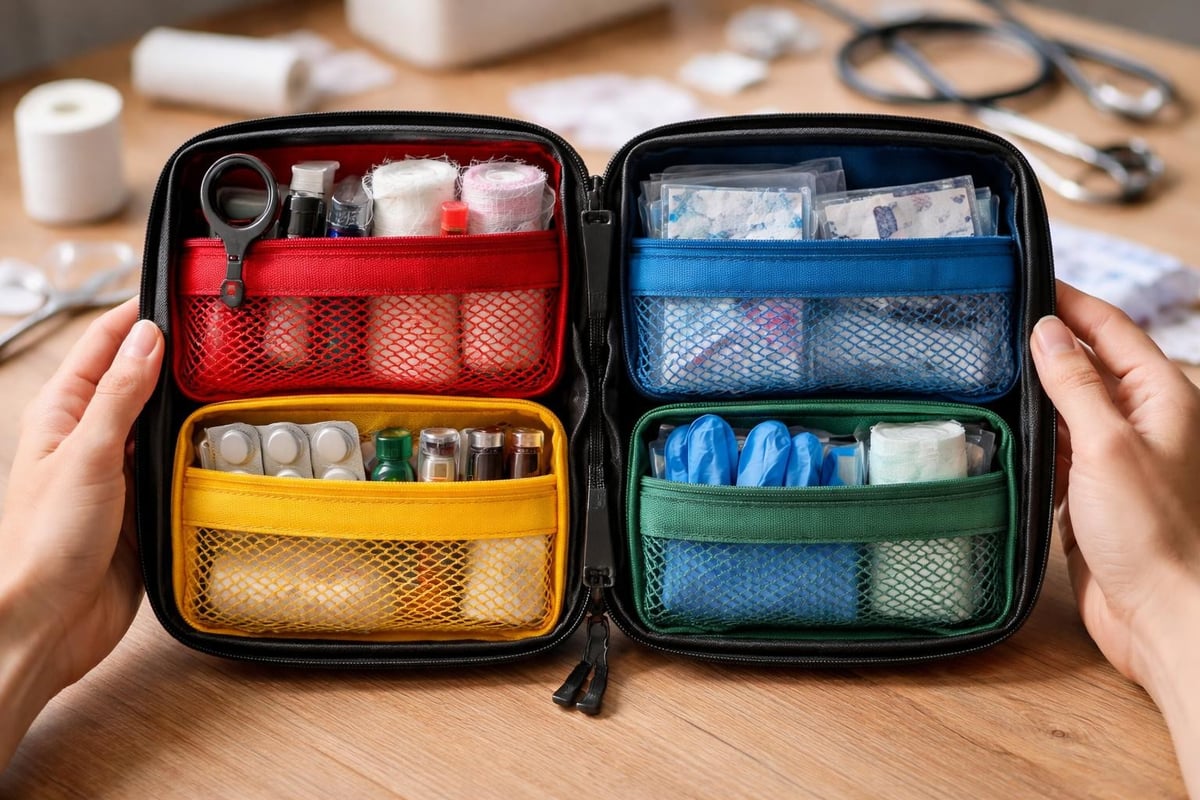
Color-Coded Compartment Systems
Implementing color coordination helps identify supply categories instantly. Red compartments typically house trauma supplies, blue contains wound care items, and clear sections hold medications. This visual system works effectively even in low-light conditions or high-stress scenarios.
Effective organization methods:
- Frequency-based placement: Position most-used items in exterior pockets
- Alphabetical labeling: Mark compartments clearly for team use
- Category separation: Group similar items together
- Expiration tracking: Place items with nearest expiration dates toward front
- Inventory cards: Include contents lists for quick verification
MOLLE and Modular Attachment Options
Modern 1st aid pouches increasingly feature MOLLE (Modular Lightweight Load-carrying Equipment) compatibility, allowing attachment to tactical vests, backpacks, and vehicle interiors. This modular approach enables customization based on mission requirements while maintaining accessibility.
Quality bags designed for medical gear incorporate multiple attachment methods including belt loops, MOLLE webbing, and carabiner clips. This versatility ensures your pouch remains accessible whether you're in uniform, civilian clothes, or operating from a vehicle.
Specialized 1st Aid Pouch Applications
Different roles and environments demand tailored approaches to pouch configuration. Understanding these variations helps you build a kit matched to your specific needs rather than relying on generic, one-size-fits-all solutions.
Tactical and Professional Response
Law enforcement, military personnel, and professional emergency responders require pouches emphasizing trauma care and hemorrhage control. These trauma kits prioritize life-saving interventions over comfort care supplies.
Professional pouches typically include:
- Multiple tourniquets
- Combat gauze
- Nasopharyngeal airways
- Decompression needles
- Occlusive dressings
- Hemostatic agents
Outdoor and Wilderness Use
Wilderness medicine introduces unique challenges including extended transport times, environmental exposure, and limited evacuation options. A wilderness-oriented 1st aid pouch expands beyond immediate trauma care to include supplies for prolonged care and environmental injuries.
Additional wilderness considerations include blister treatment, insect sting relief, irrigation supplies for contaminated wounds, and medications for altitude sickness. Comprehensive first aid kit planning helps ensure you're prepared for scenarios specific to remote environments.
Vehicle and EDC Applications
Many individuals maintain a 1st aid pouch in their vehicle for roadside emergencies or as part of everyday carry (EDC) preparedness. These pouches balance comprehensive capabilities with compact size suitable for glove compartments or door pockets.
Vehicle-based pouches benefit from additional space for items like:
- Larger trauma dressings
- Splinting materials
- Emergency blankets
- Additional gloves and PPE
- Basic medications (pain relievers, antihistamines)
Maintenance and Inventory Management
A 1st aid pouch provides no value if supplies have expired, packages have been compromised, or critical items are missing. Implementing routine maintenance protocols ensures your pouch remains ready for deployment whenever needed.
Inspection Schedules
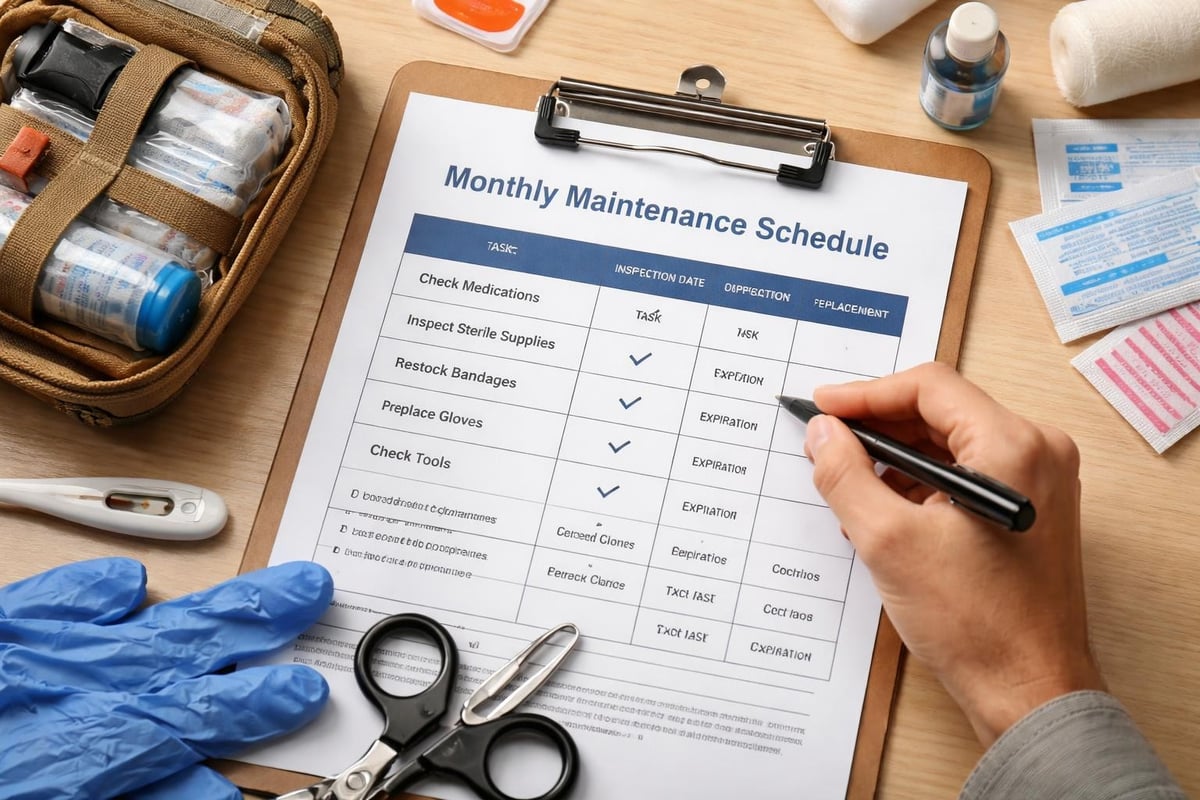
Quarterly inspections represent the minimum acceptable frequency for personal 1st aid pouches, while professional responders often inspect monthly or after each use. First aid resupply protocols should address both routine replacement and post-incident restocking.
Monthly inspection checklist:
- Verify all packaging remains sealed and sterile
- Check medication expiration dates
- Confirm gloves haven't degraded or torn
- Test zipper and closure functionality
- Ensure all items remain properly organized
- Replace any missing or depleted supplies
Temperature and Storage Considerations
Extreme temperatures compromise medical supply integrity. Adhesives fail in cold conditions, while heat degrades medications and plastics. Store your 1st aid pouch in climate-controlled environments whenever possible, avoiding vehicle trunks during summer or winter extremes.
When temperature control isn't feasible, select supplies rated for wider temperature ranges and inspect them more frequently for degradation signs. Rotating temperature-sensitive items ensures fresh supplies remain available.
Building Your Custom 1st Aid Pouch
Pre-assembled kits offer convenience, but custom-built pouches ensure contents match your specific training, environment, and anticipated scenarios. Medical professionals recommend building pouches around the principle of treating threats in priority order: massive hemorrhage, airway obstruction, breathing difficulties, circulation problems, and then everything else.
Training-Based Supply Selection
Never carry supplies you haven't been trained to use properly. A tourniquet incorrectly applied causes more harm than benefit. Your 1st aid pouch contents should align with your certification level and practical skills.
Training considerations include:
| Skill Level | Appropriate Supplies | Training Sources |
|---|---|---|
| Basic First Aid | Bandages, basic wound care, CPR barrier | American Red Cross, AHA |
| Wilderness First Aid | Extended care supplies, improvisation | NOLS, WMA |
| EMT/Paramedic | Advanced airways, medications, monitoring | State certification programs |
| Tactical Medicine | Combat casualty care, tactical extraction | TCCC, TECC courses |
Component Selection and Quality
Medical supply quality varies dramatically across manufacturers. Professional-grade components from established medical suppliers offer superior reliability compared to generic alternatives. When lives depend on your equipment, quality represents the only acceptable standard.
Individual components allow you to select exactly what you need while avoiding unnecessary bulk. This approach also enables upgrading specific items as technology improves or your training advances.
Integration with Comprehensive Emergency Preparedness
Your 1st aid pouch functions as one component within a broader preparedness strategy. Coordinating your pouch with family emergency planning ensures coverage across all likely scenarios rather than duplicating supplies inefficiently.
Layered Response Capabilities
Emergency medicine professionals recommend a tiered approach to first aid preparedness:
- Personal EDC pouch: Minimal trauma and basic supplies carried daily
- Vehicle kit: Expanded capabilities including splinting and environmental protection
- Home station: Comprehensive supplies for extended care scenarios
- Specialized kits: Activity-specific additions for hiking, shooting sports, etc.
This layered strategy ensures appropriate supplies remain accessible regardless of where emergencies occur. Your 1st aid pouch represents the most accessible tier, emphasizing immediate life-saving interventions.
Communication and Documentation
Include emergency contact information, personal medical details, and medication lists within your pouch. Waterproof cards or laminated sheets survive harsh conditions while providing critical information to healthcare providers or other responders.
Document any first aid rendered using the information in your pouch. Basic incident reports help improve your skills, identify supply needs, and provide valuable information for continuing medical care.
Advanced Considerations for Professional Responders
Professional emergency responders require enhanced capabilities within their 1st aid pouches beyond basic citizen preparedness. These additions reflect advanced training, expanded scope of practice, and mission-specific requirements.
Medication and Pharmaceutical Supplies
Licensed providers may carry prescription medications including epinephrine auto-injectors, aspirin for cardiac events, glucose for hypoglycemia, and naloxone for opioid overdoses. These medications require proper storage conditions and regular expiration monitoring.
Over-the-counter medications appropriate for professional pouches include pain relievers, antihistamines, anti-diarrheal medications, and antacids. Individual packaging prevents contamination while enabling precise dosing.
Advanced Airway and Breathing Equipment
Beyond basic CPR barriers, professional responders often carry nasopharyngeal airways, bag-valve masks, and pulse oximetry devices. These items enable more sophisticated respiratory support during extended transport times or delayed advanced care.
Airway management equipment selection depends on training level, scope of practice, and typical response scenarios. Urban providers with rapid ambulance access require different capabilities than wilderness responders facing prolonged evacuations.
Assembling an effective 1st aid pouch requires balancing portability with comprehensive emergency response capabilities, ensuring you're prepared for the most critical scenarios while maintaining practical everyday carry. Whether you're a professional responder or a prepared citizen, the right combination of quality supplies, proper organization, and regular maintenance creates a reliable foundation for emergency medical care. Medical Gear Outfitters provides paramedic-selected supplies, expert guidance, and professional-grade equipment to help you build and maintain a 1st aid pouch that meets your specific needs, backed by the knowledge and training to use these tools effectively when seconds count.

