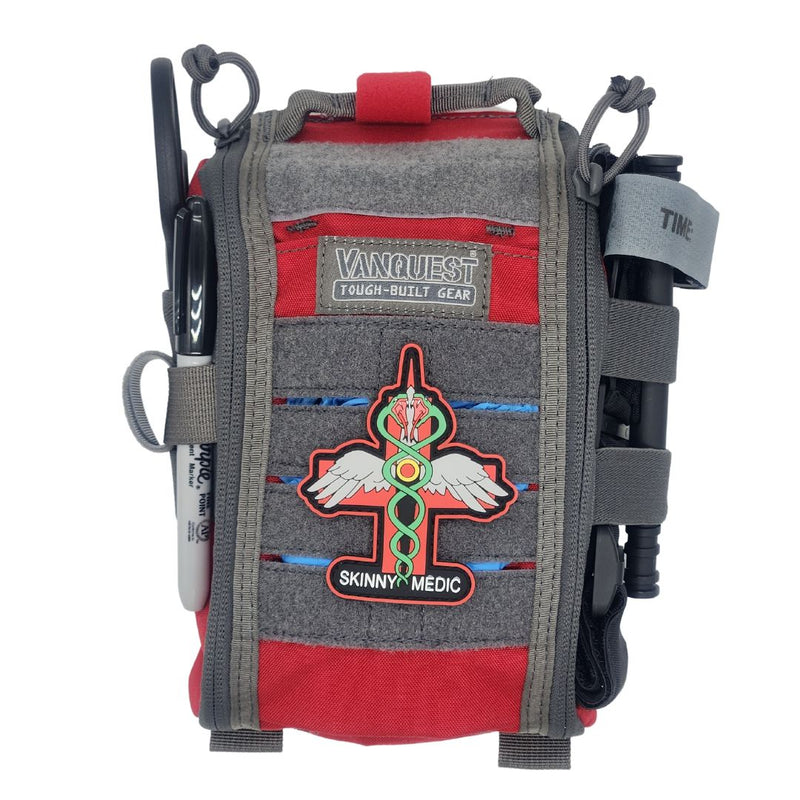
Motorcycle Medical Kit: Essential Gear for Riders in 2026
Motorcyclists face unique risks every time they hit the road, making proper emergency preparedness not just advisable but essential. Unlike car drivers who have more protection and storage space, riders must carefully balance carrying comprehensive medical supplies with the limited space available on their bikes. A well-assembled motorcycle medical kit can mean the difference between a minor incident and a life-threatening situation, particularly when riding in remote areas or during long-distance trips. The specialized nature of motorcycle accidents, which often involve road rash, fractures, and severe trauma, demands specific medical supplies that differ from standard automotive first aid kits.
Understanding the Unique Risks Motorcyclists Face
Motorcycle accidents present distinct injury patterns that require targeted medical responses. Road rash represents one of the most common injuries, occurring when riders slide across pavement during a crash. This type of abrasion can be extensive and requires immediate cleaning and proper dressing to prevent infection.
Riders also face increased risks of traumatic injuries compared to automobile passengers. The lack of protective barriers means direct impact with vehicles, road surfaces, or objects becomes more likely. Understanding these specific threats helps determine which supplies belong in your motorcycle medical kit.
Space Constraints and Storage Solutions
The limited storage capacity on motorcycles creates unique challenges for carrying medical equipment. Unlike cars with spacious trunks, riders must maximize every cubic inch of available space. Tank bags, saddlebags, and tail packs offer various mounting options, each with distinct advantages and limitations.
Waterproof containers protect supplies from weather exposure during rides. Hard-shell cases provide superior protection against impact but take up more space, while soft pouches offer flexibility and easier packing. Building a motorcycle first aid kit requires careful consideration of both space constraints and content priorities.
Critical Components Every Motorcycle Medical Kit Needs
Building an effective medical kit requires selecting supplies that address the most common and severe injuries riders encounter. The following categories represent essential coverage areas that should guide your selection process.
Bleeding Control Supplies
Severe bleeding represents the most immediate life-threatening condition in motorcycle accidents. Your kit must include multiple methods for controlling hemorrhage at different severity levels.
Essential bleeding control items include:
- Combat Application Tourniquet (CAT) or similar approved tourniquet
- Israeli pressure bandages for extremity wounds
- Hemostatic gauze like QuikClot or Celox
- Standard gauze pads in various sizes
- Elastic bandages for compression
Tourniquets deserve special attention as they can prevent death from extremity hemorrhage. Quality tourniquets from trusted manufacturers ensure reliable performance when seconds count. Training on proper tourniquet application is equally important as having the equipment itself.
Wound Care and Infection Prevention
After controlling bleeding, preventing infection becomes the next priority. Road rash and other abrasions create large wound surfaces vulnerable to contamination from road debris, dirt, and bacteria.
Your motorcycle medical kit should contain these wound care essentials:
- Sterile saline solution for irrigation
- Antiseptic wipes or solution
- Non-adherent dressings for road rash
- Adhesive bandages in multiple sizes
- Medical tape and closure strips
- Antibiotic ointment
Proper wound cleaning significantly reduces infection risk and promotes faster healing. Carrying enough supplies to adequately clean and dress larger wounds matters more than having numerous small bandages.
Trauma Response Equipment
Serious accidents may involve chest injuries, fractures, or other trauma requiring specialized equipment. While you cannot carry an entire emergency room, certain items dramatically improve outcomes for critical injuries.
| Item | Purpose | Priority Level |
|---|---|---|
| Chest seals | Treat penetrating chest wounds | High |
| SAM splint | Stabilize fractures | Medium |
| Triangular bandages | Slings, wraps, tourniquets | High |
| Trauma shears | Cut clothing and materials | High |
| Emergency blanket | Prevent shock and hypothermia | Medium |
Chest seals designed for penetrating trauma provide critical intervention for life-threatening thoracic injuries. These vented seals allow air to escape while preventing it from entering the chest cavity.
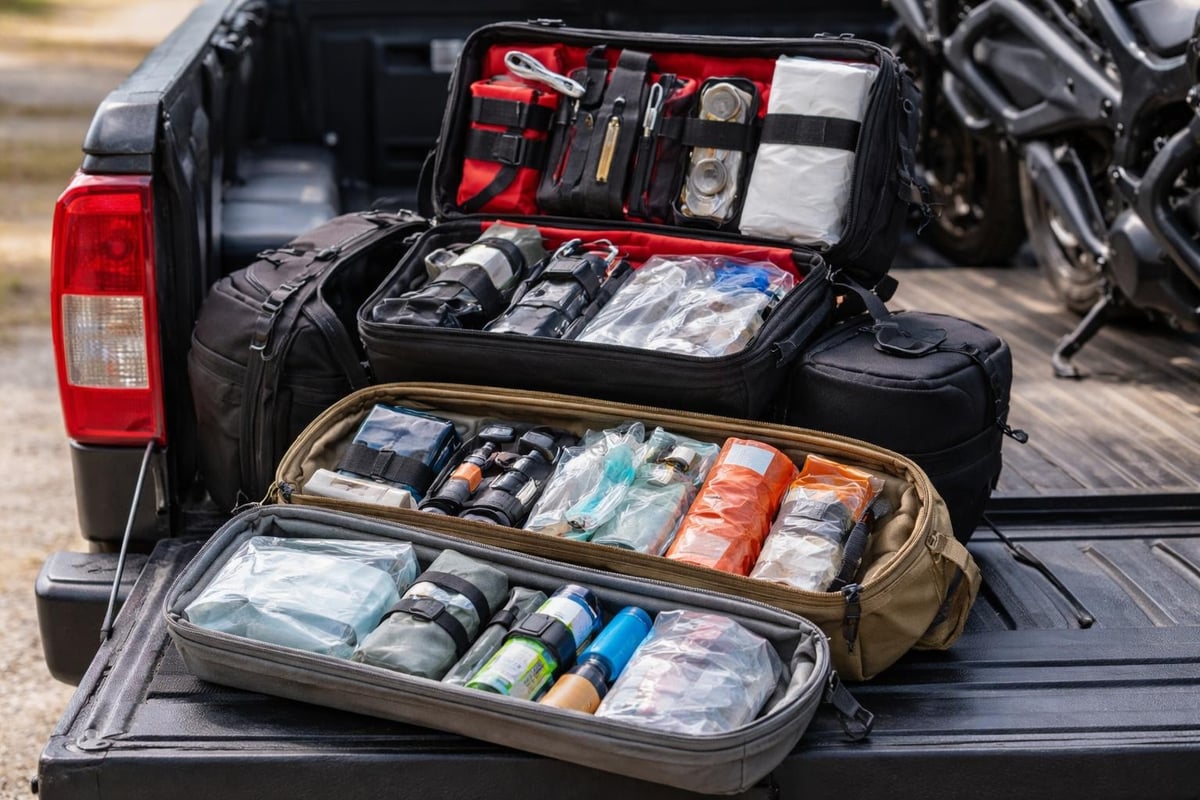
Personal Protective Equipment for Responders
Providing medical care at accident scenes exposes you to bloodborne pathogens and other hazards. Personal protective equipment (PPE) protects both the caregiver and the injured person from cross-contamination.
Essential PPE includes nitrile gloves, which offer better puncture resistance than latex and avoid allergy concerns. Medical gloves serve as indispensable barriers during emergency care. Carry multiple pairs since gloves can tear during treatment or when multiple casualties require assistance.
Face shields or CPR masks enable safe rescue breathing if needed. These barrier devices prevent disease transmission while allowing effective ventilation. Compact versions fit easily into motorcycle medical kits without consuming excessive space.
Medications and Supplies for Common Issues
Beyond trauma care, riders encounter various medical issues during trips. Pain management, allergic reactions, and minor illnesses can derail journeys or create dangerous situations if unaddressed.
Over-the-Counter Medications
Stock your kit with commonly needed medications:
- Pain relievers (ibuprofen, acetaminophen)
- Antihistamines for allergic reactions
- Anti-diarrheal medication
- Antacids
- Personal prescription medications
Keep medications in original packaging when possible to track expiration dates and dosing information. Waterproof pill containers protect medications from moisture damage during wet weather riding.
Special Considerations for Long Rides
Extended trips require additional supplies beyond basic trauma care. The Motorcycle Safety Institute recommends considering trip length and destination when selecting kit contents.
Riders venturing into remote areas should carry extra quantities of essential items. Cell service may be unavailable, and emergency response times could extend to hours rather than minutes. Self-sufficiency becomes crucial in these scenarios.
Kit Organization and Accessibility
How you organize and store your motorcycle medical kit affects its usefulness during emergencies. Supplies prove worthless if you cannot access them quickly or if critical items get damaged during normal riding.
Color-Coded Packaging Systems
Many riders adopt color-coding systems to identify supplies quickly under stress. Red pouches might contain bleeding control items, blue for airway equipment, and green for wound care supplies. This visual organization reduces time spent searching during critical moments.
Clear labeling also helps untrained bystanders assist if you become incapacitated. Simple instructions written on supply packages guide others in providing basic care until professional help arrives.
Mounting Locations and Quick Access
Consider accessibility when choosing mounting locations. Tank bags offer quick access but limited capacity. Saddlebags provide more space but require dismounting to reach. Five essential items should always remain in immediately accessible locations.
Some riders distribute supplies across multiple locations, keeping trauma essentials in quick-access positions and secondary items in less accessible storage. This tiered approach balances comprehensiveness with practicality.
Training and Knowledge Requirements
Carrying medical supplies without training is like owning tools without knowing their purpose. First aid training for motorcyclists transforms a collection of supplies into life-saving capability.
Recommended training includes:
- Basic First Aid and CPR certification
- Stop the Bleed training for hemorrhage control
- Wilderness first aid for remote area riding
- Motorcycle-specific emergency response courses
Regular practice maintains skills and builds confidence. Many riders review techniques annually and refresh certifications every two years. Training also reveals gaps in equipment or knowledge that need addressing.
Scenario-Based Practice
Mental rehearsal and physical practice prepare you for actual emergencies. Visualize responding to common accident scenarios and mentally walk through each step. Physical practice with training dummies or willing volunteers builds muscle memory.
Consider practicing while wearing riding gear, as gloves and protective equipment affect dexterity and access to supplies. This realistic training reveals practical challenges you might not encounter in classroom settings.
Maintenance and Inspection Protocols
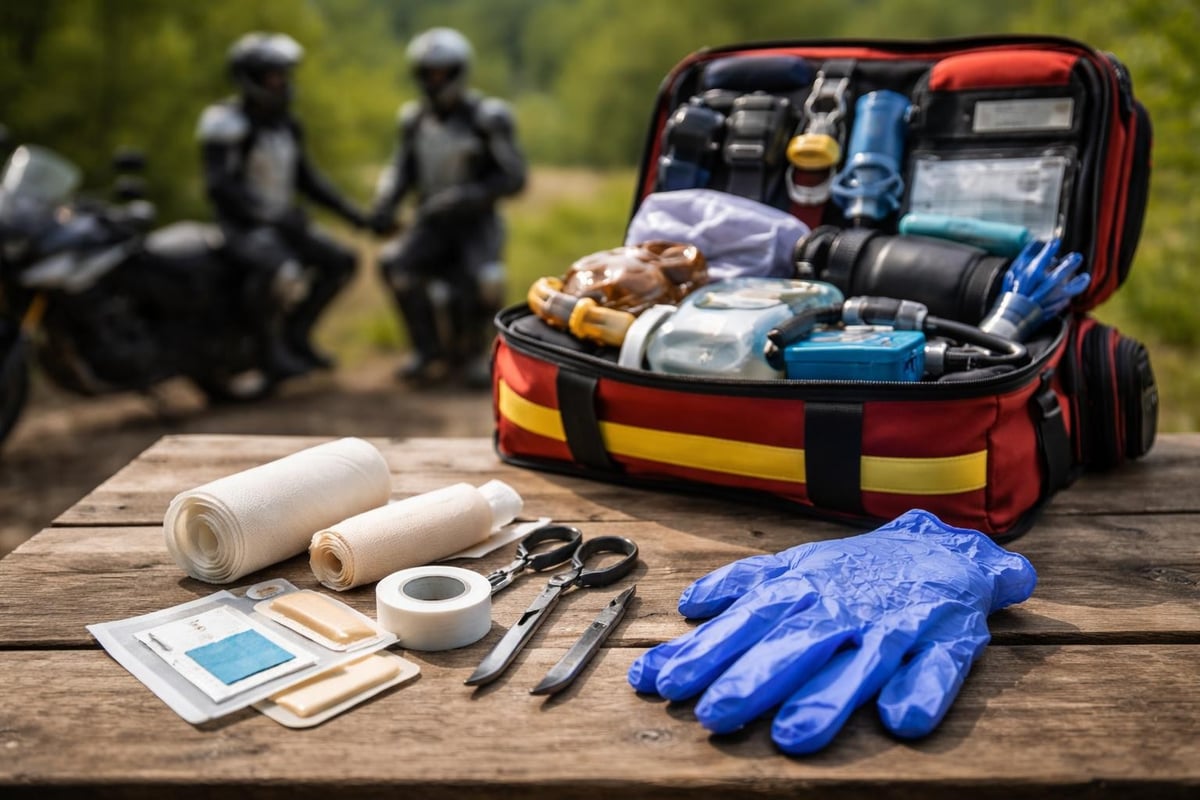
Medical supplies degrade over time, and vibration from riding can damage packaging or dislodge contents. Regular inspection ensures your motorcycle medical kit remains ready when needed.
Monthly Inspection Checklist
Perform quick monthly checks covering:
- Expiration dates on medications and sterile items
- Package integrity and seal condition
- Supply quantities and completeness
- Container waterproofing and closure function
- Overall organization and accessibility
Replace expired items immediately rather than waiting for complete kit overhaul. Dating your kit helps track when comprehensive replacement becomes necessary.
Annual Comprehensive Review
Once yearly, empty your entire kit and assess each component. This thorough review identifies hidden damage, verifies quantities, and allows reorganization based on experience or changing needs.
Technology advances and new products emerge regularly. Annual reviews provide opportunities to upgrade equipment or adopt improved supplies. Staying current with best medical kits ensures you carry the most effective tools available.
Legal and Insurance Considerations
Some jurisdictions mandate specific first aid equipment on motorcycles. European countries particularly have detailed requirements regarding kit contents and inspection dates. Research regulations for areas where you ride regularly.
Insurance implications also deserve consideration. Some policies offer premium reductions for riders who complete first aid training or carry approved medical kits. Document your kit contents and training certifications for potential insurance benefits.
Customizing Your Kit for Riding Style
Different riding styles and environments require kit adjustments. Sport riders on trackdays need different supplies than adventure riders exploring backcountry trails.
Urban Commuters
City riders benefit from compact kits focusing on immediate trauma care. Help usually arrives quickly in urban areas, so extensive supplies prove less critical. Priority items include bleeding control, basic wound care, and PPE.
Long-Distance Tourers
Extended trips require comprehensive kits with medications, extra supplies, and tools for self-sufficiency. Portable medical kits designed for extended use balance thoroughness with reasonable weight and size.
Off-Road and Adventure Riders
Remote riding demands the most comprehensive preparation. Communication limitations and difficult terrain for rescue vehicles mean extended self-care capability becomes essential. Splinting materials, extra gauze, and extended medication supplies justify their weight in these scenarios.
Building vs. Buying Pre-Assembled Kits
Riders face the choice between assembling custom kits or purchasing pre-made solutions. Each approach offers distinct advantages depending on knowledge, budget, and specific needs.
Pre-assembled kit advantages:
- Professionally curated contents
- Organized packaging systems
- Compliance with standards
- Immediate availability
Custom kit advantages:
- Tailored to specific risks
- Preferred brands and products
- Cost control
- Familiarity with contents
Many experienced riders start with quality pre-assembled kits and gradually customize based on experience and training. This hybrid approach combines professional curation with personal preferences. Complete trauma kits from Medical Gear Outfitters provide excellent foundations for customization.
Weight Distribution and Bike Balance
Medical kit weight and placement affect motorcycle handling characteristics. Improperly positioned loads create stability issues or discomfort during long rides.
| Mounting Location | Weight Limit | Balance Impact | Access Speed |
|---|---|---|---|
| Tank bag | 5-8 lbs | Minimal | Immediate |
| Saddlebags | 15-20 lbs per side | Moderate | Quick |
| Tail bag | 10-15 lbs | Low | Moderate |
| Backpack | 15-20 lbs | High (rider fatigue) | Immediate |
Distribute weight evenly between sides when using saddlebags. Keep heavier items low and centered to maintain optimal center of gravity. Test handling after adding or relocating equipment, especially before long trips.
Communication and Emergency Notification
Your motorcycle medical kit should integrate with broader emergency preparedness including communication devices. Satellite messengers or personal locator beacons prove invaluable in areas without cell coverage.
Emergency contact information should be readily accessible to responders. Many riders wear medical alert tags or carry wallet cards detailing allergies, medical conditions, and emergency contacts. Include this information in your kit documentation as well.
Group Riding Considerations
Riding with others creates opportunities for pooling resources and coordinating emergency response. Designate one rider as primary medical responder and ensure they carry the most comprehensive kit.
Brief riding partners on kit locations and basic contents before trips. If you become incapacitated, others need to know where supplies are stored and how to access them. Simple pre-ride briefings take minutes but could save lives.
Consider carrying complementary supplies rather than duplicate kits. One rider might carry advanced trauma equipment while another focuses on extended care supplies. This distribution maximizes coverage while minimizing individual weight burdens.
Seasonal and Weather Adaptations
Environmental conditions affect both injury patterns and supply requirements. Summer riding increases dehydration and heat-related illness risks, while winter brings hypothermia and cold injury concerns.
Summer additions include:
- Extra water and electrolyte solutions
- Sunburn treatment supplies
- Insect sting relief
- Heat exhaustion response items
Winter modifications require:
- Additional emergency blankets
- Chemical heat packs
- Cold weather medications
- Enhanced waterproofing
Adjust your motorcycle medical kit seasonally to address changing risks. Some riders maintain separate summer and winter configurations, swapping kits as weather patterns shift.
Assembling a comprehensive motorcycle medical kit requires careful consideration of riding risks, available space, and personal skill levels, but this preparation significantly improves your ability to respond effectively during roadside emergencies. Whether you're a daily commuter or long-distance tourer, having the right supplies and training transforms you into a capable first responder when accidents occur. Medical Gear Outfitters provides paramedic-selected equipment and expert guidance to help riders build effective medical kits tailored to their specific needs, backed by professional knowledge and quality supplies designed for real-world emergency response. Visit Medical Gear Outfitters to explore comprehensive kit options and individual components that keep you prepared for whatever the road brings.