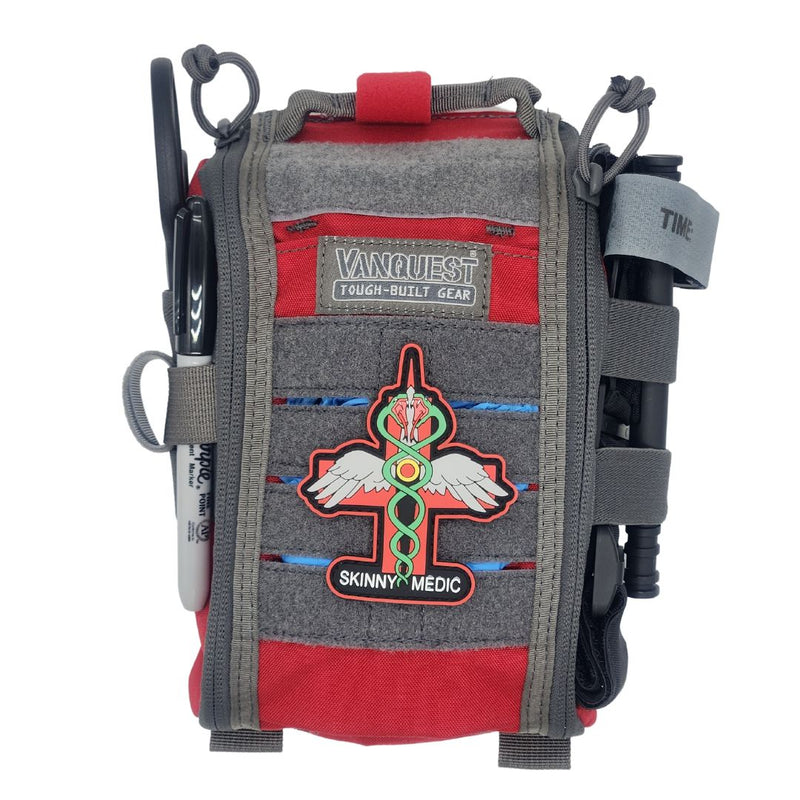
Kitchen First Aid Kit: Essential Guide for Home Safety
The kitchen ranks among the most hazardous rooms in any home, with sharp knives, hot surfaces, boiling liquids, and electrical appliances creating constant risk for injury. Whether you're preparing a simple weeknight dinner or hosting an elaborate gathering, accidents can happen in seconds. Having a well-stocked kitchen first aid kit within arm's reach transforms you from a helpless bystander into an effective first responder when burns, cuts, or other common cooking injuries occur. This comprehensive guide explores the essential components, strategic placement, and maintenance practices that ensure your kitchen safety system is ready when seconds count.
Understanding Kitchen-Specific Injury Risks
Kitchen environments present unique hazards that differ significantly from other household areas. The combination of heat, sharp implements, wet surfaces, and rushing movements creates a perfect storm for accidents.
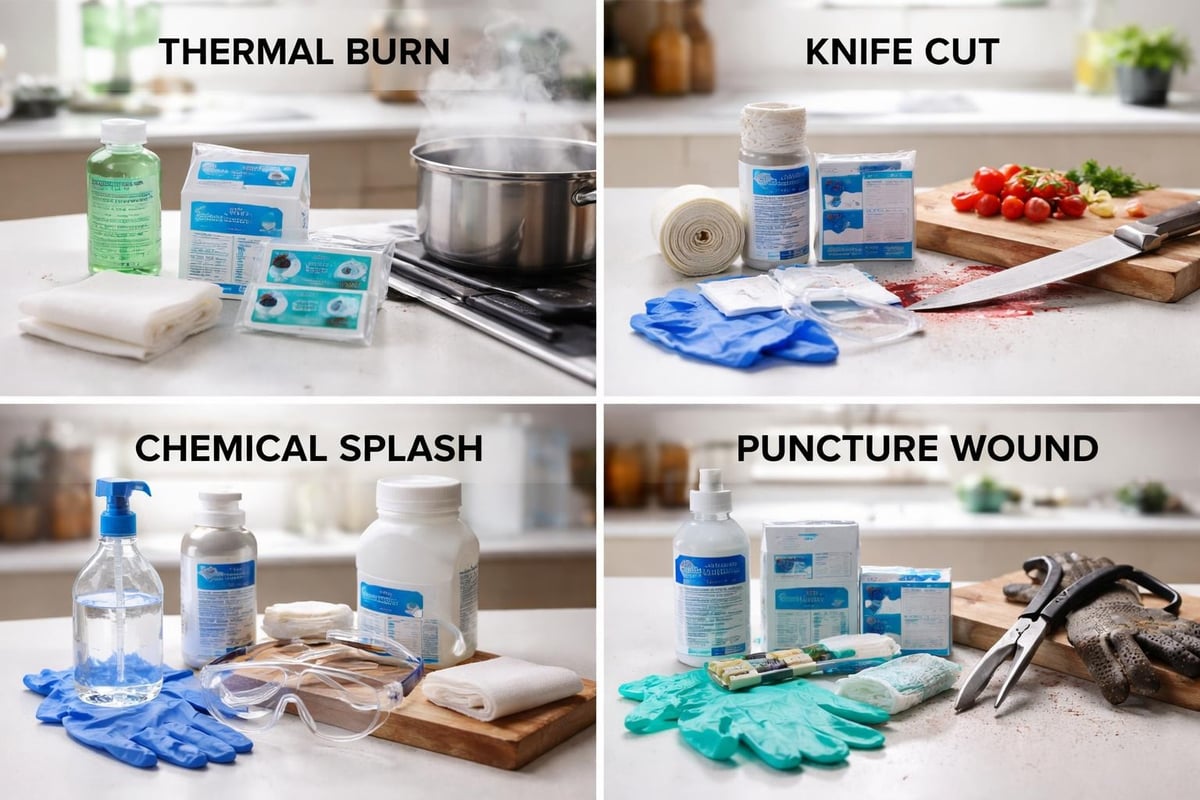
Thermal injuries lead the list of kitchen-related emergencies. Hot oil splatters, steam burns from lifting pot lids, and contact with heated cookware cause thousands of emergency room visits annually. Professional chefs emphasize the critical importance of immediate burn care, noting that proper first aid within the first minutes dramatically affects recovery outcomes.
Lacerations from knives, mandolins, graters, and broken glass represent another major category. These injuries range from superficial cuts requiring basic bandaging to deep wounds demanding immediate pressure and professional medical attention.
Common Kitchen Injuries Requiring First Aid
- Burns (first, second, and occasionally third degree)
- Lacerations from knives, broken glass, and can lids
- Puncture wounds from kitchen tools and appliances
- Chemical exposure from cleaning products
- Eye injuries from splashes and steam
- Minor scalds from hot liquids
Understanding these specific risks helps you build a comprehensive first aid system tailored to kitchen environments rather than relying on generic household supplies.
Essential Components for Your Kitchen First Aid Kit
Building an effective kitchen first aid kit requires strategic selection of supplies that address the most common and severe injuries you're likely to encounter. Quality matters significantly when treating kitchen injuries, as contamination risks run higher in food preparation environments.
Burn Treatment Supplies
Thermal injuries demand immediate attention and specialized supplies. Your kit should include:
- Burn dressings (sterile, non-adherent pads specifically designed for thermal injuries)
- Hydrogel burn gel (provides cooling relief and creates protective barrier)
- Burn sheets in various sizes for larger surface areas
- Sterile saline for irrigation and cooling
Professional-grade burn treatment supplies offer superior performance compared to improvised solutions. The right dressing prevents adherence to damaged tissue while maintaining moisture balance critical for healing.
Wound Care and Bleeding Control
Knife injuries and lacerations require robust bleeding control capabilities. Include these items:
| Supply Category | Specific Items | Primary Use |
|---|---|---|
| Pressure Dressings | Israeli bandages, trauma pads | Severe bleeding control |
| Gauze | 4x4 sterile pads, rolled gauze | Wound packing, absorption |
| Bandages | Various sizes, knuckle/fingertip styles | Minor cuts, abrasions |
| Hemostatic Agents | QuikClot or similar products | Rapid bleeding control |
| Closure Strips | Butterfly closures, wound closure strips | Laceration management |
Hemostatic gauze and advanced dressings represent critical upgrades for serious bleeding that standard bandages cannot control effectively.
Personal Protective Equipment
Cross-contamination presents serious risks in kitchen environments where you're handling both injuries and food. Essential protective gear includes:
- Nitrile gloves (multiple pairs, powder-free)
- Eye protection (for chemical exposure)
- Face shields (for severe bleeding situations)
- Protective aprons (waterproof, disposable)
Medical gloves are indispensable for maintaining hygiene when treating injuries in food preparation areas. Nitrile options provide superior protection and work well for individuals with latex sensitivities.
Strategic Kit Placement and Accessibility
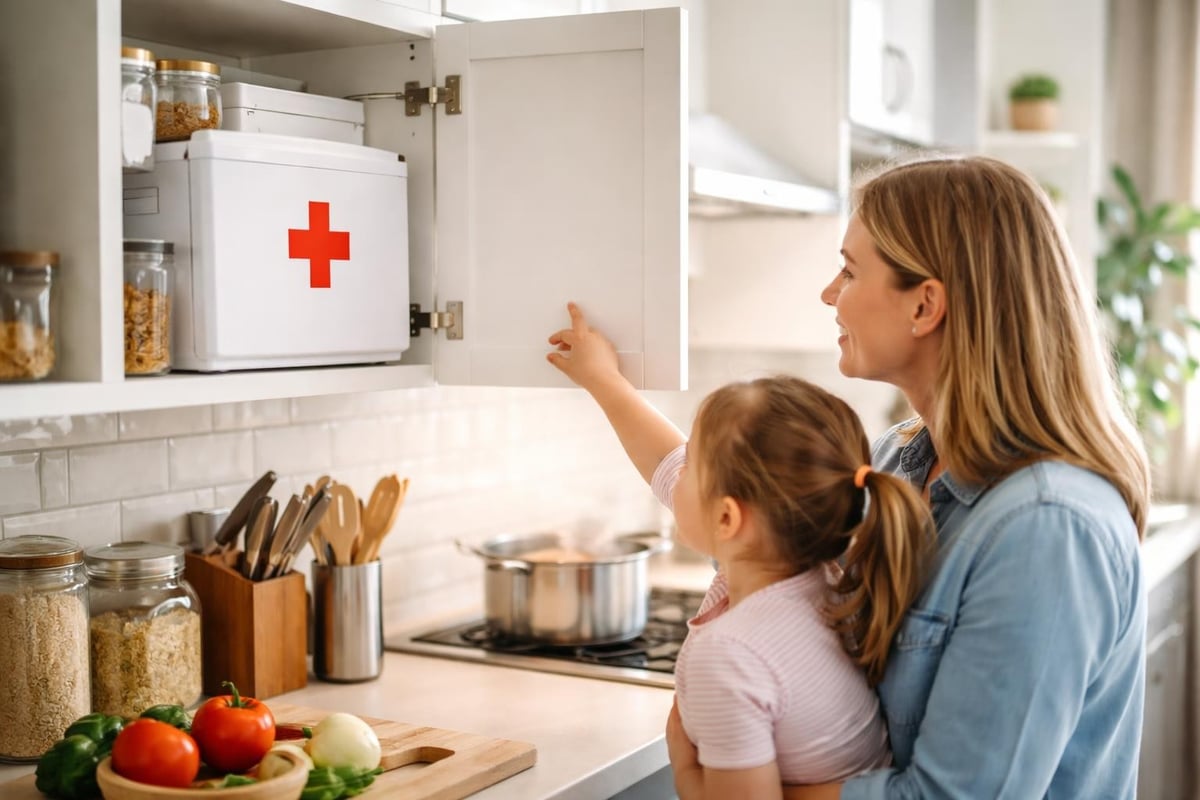
Location determines whether your kitchen first aid kit serves as an effective emergency resource or remains an unused safety theater. Accessibility during crisis moments requires thoughtful placement and family education.
Position your primary kitchen first aid kit in a consistent, easily remembered location that all household members know. Ideal spots include:
- Upper cabinets near the primary cooking area (but away from stove heat)
- Dedicated drawer at counter height for quick access
- Wall-mounted cabinet with clear labeling
- Pantry shelf at eye level (never floor level where contamination risks increase)
Avoid storing your kit under the sink where moisture and cleaning chemicals create contamination hazards. Similarly, proximity to the stove exposes supplies to excessive heat that degrades materials over time.
Secondary Supply Staging
For larger kitchens or households with multiple cooks, consider a tiered approach:
Primary Kit: Comprehensive supplies for major injuries, centrally located Secondary Supplies: Basic bandages and burn gel near high-risk zones Backup Stock: Replacement supplies stored separately to refresh used items
This redundancy ensures you're never caught without critical supplies during an emergency. Restaurant first aid kits often employ this multi-station approach to maintain coverage across extensive kitchen operations.
Specialized Supplies for Serious Kitchen Emergencies
Beyond basic cuts and minor burns, certain kitchen injuries demand advanced intervention capabilities. While you'll call emergency services for severe trauma, proper initial care during those critical minutes before help arrives can be lifesaving.
Severe Bleeding Control
Deep lacerations from chef's knives or broken glass can sever blood vessels, creating life-threatening hemorrhage. Your kitchen first aid kit should include:
- Tourniquets (CAT or SOFT-T models for extremity injuries)
- Hemostatic dressings (combat-proven clotting agents)
- Pressure bandages (Israeli-style with built-in pressure bars)
- Trauma shears (for cutting clothing away from wounds)
These trauma kit components represent the difference between controlled bleeding and medical emergency. Proper training in application techniques ensures you can deploy them effectively under stress.
Chemical Exposure Management
Cleaning products, drain openers, and oven cleaners present serious chemical hazards. Include:
- Eye wash solution (sterile saline in squeeze bottles)
- Chemical burn treatment (specialized neutralizing agents)
- Emergency contact information (Poison Control: 1-800-222-1222)
Document the specific chemicals stored in your kitchen and research appropriate first aid responses for each product family.
Maintenance and Inspection Protocols
A kitchen first aid kit provides zero protection if supplies have expired, been used without replacement, or degraded from environmental exposure. Systematic maintenance ensures readiness when emergencies strike.
Monthly Inspection Checklist
Establish a recurring maintenance schedule:
- Check expiration dates on all sterile supplies and medications
- Verify seal integrity on packaged items
- Test squeeze bottles for proper function
- Inspect packaging for moisture damage or deterioration
- Replace used items immediately after incidents
- Update emergency contact numbers as needed
Set a calendar reminder for the first day of each month to perform this ten-minute review. Workplace first aid kit guidelines recommend even more frequent inspections for high-traffic environments.
Environmental Considerations
Kitchen conditions challenge first aid supply longevity:
| Environmental Factor | Impact on Supplies | Mitigation Strategy |
|---|---|---|
| Heat | Adhesive failure, material degradation | Store away from appliances |
| Humidity | Packaging compromise, sterility loss | Use moisture-resistant containers |
| Light exposure | Chemical breakdown in medications | Choose opaque storage containers |
| Contamination | Cross-infection risks | Seal kit properly after each use |
Invest in a quality storage container with gasket seals that protect contents from kitchen environmental stresses. Hard-shell cases offer superior protection compared to soft bags in high-traffic cooking environments.
Training Family Members and Kitchen Users
Equipment without knowledge creates false confidence. Everyone who uses your kitchen should understand basic first aid principles and know how to access and deploy supplies correctly.
Essential Training Components
Organize a family training session covering:
- Kit location and contents (hands-on familiarization)
- Burn care procedures (cooling, covering, avoiding ice)
- Bleeding control techniques (direct pressure, elevation, pressure points)
- When to call 911 (severity assessment criteria)
- Cross-contamination prevention (glove use, hand hygiene)
Surprisingly, research indicates that 37% of professional chefs don't know where first aid kits are kept in their kitchens, highlighting how critical basic awareness training proves even in professional environments.
Children old enough to use the kitchen should receive age-appropriate instruction on emergency response, including how to alert adults and when to call for help.
Building Your Kit: Step-by-Step Assembly
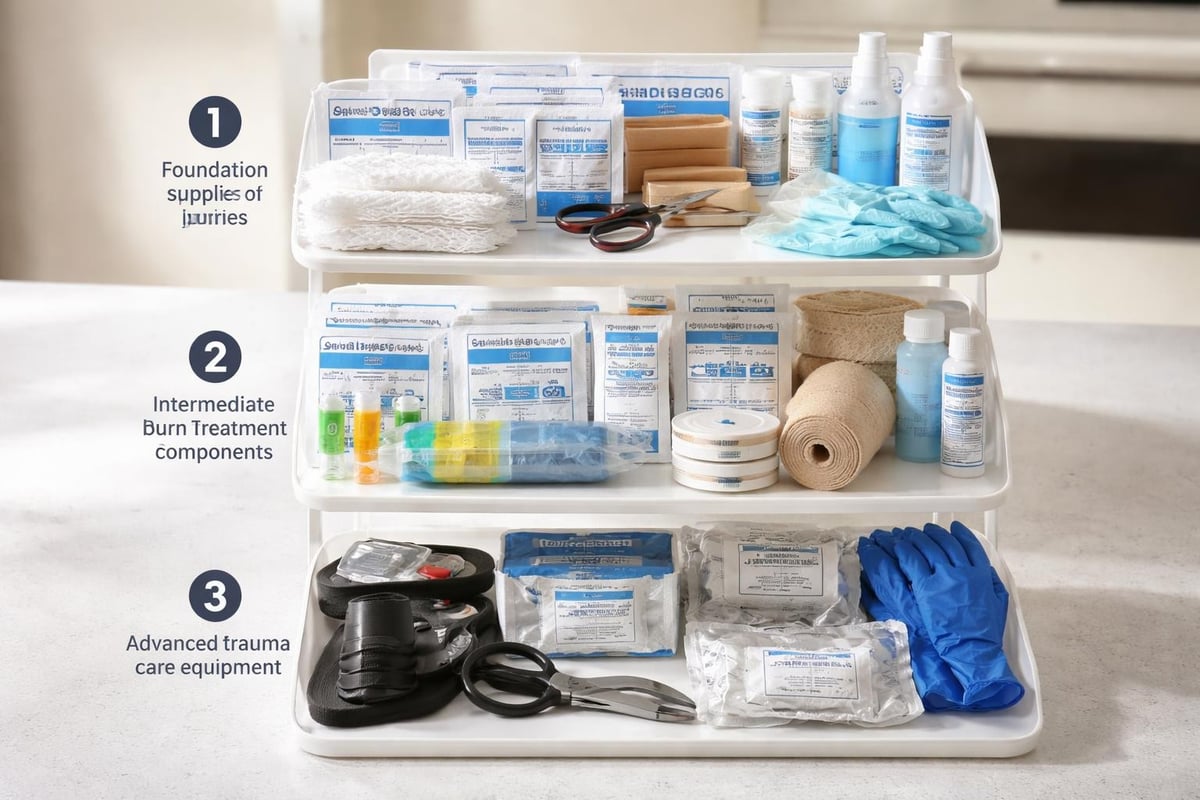
Creating an effective kitchen first aid kit requires methodical selection and organization of supplies. Follow this systematic approach:
Foundation Layer: Basic Wound Care
Start with supplies addressing minor injuries:
- Adhesive bandages in assorted sizes (minimum 40 pieces)
- Sterile gauze pads, 2x2 and 4x4 inch (10 each)
- Rolled gauze bandages (3 rolls)
- Medical tape, 1-inch width
- Antiseptic wipes or solution
- Triple antibiotic ointment
These items handle the majority of minor kitchen mishaps that don't require professional medical attention.
Intermediate Layer: Thermal Injuries
Add specialized burn treatment:
- Burn gel packets or tube (water-based formula)
- Non-adherent burn dressings (multiple sizes)
- Burn sheets for larger surface areas
- Instant cold packs (chemical activation type)
Quality burn supplies make the difference between minor discomfort and serious complications from improperly treated thermal injuries.
Advanced Layer: Serious Trauma
Complete your kit with life-saving interventions:
- Hemostatic gauze (QuikClot or equivalent)
- Pressure bandage with application bar
- Tourniquet (CAT Gen 7 or SOFT-T Wide)
- Trauma shears (7.25-inch preferred)
- Emergency blanket (prevents shock)
These advanced components transform your kit from basic wound care to comprehensive emergency response capability.
Supporting Supplies
Don't overlook these critical additions:
- Irrigation syringe (for wound cleaning)
- Tweezers (splinter and debris removal)
- Safety pins (securing bandages)
- Emergency contact card (laminated, with poison control number)
- First aid manual (quick reference guide)
- Flashlight (for examining injuries)
- Disposable thermometer (checking for shock, fever)
Organization determines usability under stress. Use clear zip-lock bags to group supplies by category, clearly labeled for rapid identification during emergencies.
Customizing for Specific Household Needs
Generic approaches miss important individual requirements. Customize your kitchen first aid kit based on your household's unique circumstances and risk factors.
Family Composition Considerations
Adjust contents based on who uses your kitchen:
Families with young children need additional supplies for common pediatric injuries including finger pinch treatments and smaller bandage sizes. Children exploring cooking present different risk profiles than experienced adult cooks.
Elderly household members may require specialized consideration for skin fragility, medication interactions with first aid treatments, and mobility limitations affecting emergency response.
Individuals with specific medical conditions such as diabetes or bleeding disorders need customized supplies and special protocols documented within the kit.
Cooking Style and Equipment
Your culinary practices influence injury risk profiles:
- High-heat cooking (wok, grilling) increases burn severity risks
- Extensive knife work demands robust bleeding control
- Pressure cooker use requires steam burn preparedness
- Deep frying necessitates oil burn treatment capabilities
A comprehensive room-by-room approach to home first aid helps identify specific kitchen hazards based on your equipment and cooking methods.
Integration with Household Emergency Planning
Your kitchen first aid kit functions as one component within broader household emergency preparedness. Integration ensures comprehensive coverage without redundancy or gaps.
Coordinate kitchen supplies with other household first aid resources:
- Bathroom medicine cabinet (medications, basic bandages)
- Primary household first aid kit (comprehensive general supplies)
- Vehicle emergency kit (for transportation emergencies)
- Outdoor/garage kit (for workshop and yard injuries)
Document the location and contents of each kit so family members know where to find specific supplies based on emergency type and location. This systematic approach prevents the panicked searching that wastes critical response time.
Consider how your kitchen first aid kit supports evacuation scenarios. Waterproof storage containers and grab-and-go organization allow you to incorporate these supplies into emergency evacuation plans if necessary.
Cost-Effective Sourcing and Quality Balance
Building a comprehensive kitchen first aid kit requires investment, but smart sourcing strategies maximize value without compromising quality on critical items.
Where to Invest Premium Dollars
Prioritize quality for supplies where performance directly affects outcomes:
- Hemostatic agents (proven brands like QuikClot)
- Tourniquets (only CAT or SOFT-T, never improvised)
- Burn dressings (specialized medical-grade products)
- Sterile supplies (compromise risks infection)
These items justify higher costs because inferior alternatives fail when you need them most. Industry standards and certifications help identify quality products that meet professional requirements.
Acceptable Economy Options
Save money on supplies where brand names provide minimal advantage:
- Basic adhesive bandages (store brands perform adequately)
- Medical tape (generic versions work well)
- Gauze pads (standardized production quality)
- Antiseptic wipes (active ingredients matter, not brands)
Balance cost concerns against the reality that your kitchen first aid kit represents insurance against potentially devastating injuries. The few hundred dollars invested in comprehensive supplies pales compared to medical bills from inadequately treated emergencies.
Buying complete kits from medical supply specialists often provides better value than piecing together individual components, while ensuring you don't overlook critical items.
Beyond Basic Supplies: Skills and Knowledge
Physical supplies represent only half of effective emergency response. The knowledge to deploy those supplies correctly determines actual outcomes when injuries occur.
Recommended Training Programs
Invest time in structured first aid education:
- Basic First Aid certification (American Red Cross or equivalent)
- CPR/AED training (kitchen cardiac emergencies do occur)
- Bleeding control courses (Stop the Bleed programs)
- Burn management workshops (specialized thermal injury care)
Many community organizations offer these courses at minimal cost. Practical tips for kitchen first aid preparedness complement formal training with real-world application guidance.
Online resources and video tutorials provide valuable refresher training between formal certification renewals. Practice applying bandages, tourniquets, and burn dressings on training aids to build muscle memory that persists under stress.
Documentation and Quick Reference
Include laminated instruction cards in your kit covering:
- Step-by-step bleeding control procedures
- Burn care protocol (cooling time, dressing application)
- Choking response (Heimlich maneuver steps)
- Shock prevention (positioning, warmth, reassurance)
- When to call 911 (severity criteria)
Visual guides work better than text-heavy instructions when you're managing an emergency. Simple diagrams and bulleted steps facilitate rapid reference during high-stress situations.
Having a properly equipped and maintained kitchen first aid kit represents the difference between confident emergency response and helpless panic when cooking injuries occur. From minor cuts requiring simple bandages to serious burns or lacerations demanding advanced intervention, the right supplies positioned for immediate access protect your household every day. Medical Gear Outfitters brings paramedic-level expertise to helping families and professionals assemble comprehensive emergency response systems that transform ordinary citizens into capable first responders. Whether you need individual components to customize your kit or complete ready-to-deploy systems, their professional-grade supplies and expert guidance ensure you're prepared when seconds matter most.