IFAK Med Kit: Essential Components and Setup Guide
When seconds count in a life-threatening emergency, having the right medical supplies immediately accessible can mean the difference between life and death. An ifak med kit serves as a compact, purpose-driven collection of trauma care supplies designed to address the most critical injuries during the crucial first minutes after an incident. Originally developed for military use, these specialized kits have evolved to serve law enforcement, first responders, and prepared civilians who understand that traumatic injuries demand immediate intervention. Unlike traditional first aid kits focused on minor cuts and scrapes, an ifak med kit targets massive hemorrhage, airway obstruction, tension pneumothorax, and other immediately life-threatening conditions that require rapid treatment before professional medical care arrives.
Understanding the Purpose of an IFAK Med Kit
The Individual First Aid Kit represents a fundamental shift in emergency medical thinking. Rather than relying solely on medics or paramedics to provide care, the IFAK philosophy empowers individuals to perform critical interventions on themselves or others during the initial moments after injury.
This concept emerged from military experience where combat injuries require immediate treatment to prevent death from hemorrhage or airway compromise. The U.S. military's adoption of standardized IFAK contents has demonstrably improved survivability rates among service members, leading to widespread adoption across tactical and emergency response communities.
Core Principles Behind IFAK Design
Every component in a properly configured ifak med kit addresses one of the leading causes of preventable death in trauma:
- Massive hemorrhage control through tourniquets and pressure dressings
- Airway management with basic adjuncts and decompression tools
- Respiratory function preservation using chest seals
- Shock prevention through proper wound management
The kit's compact size ensures it stays with the individual rather than remaining in a vehicle or facility. This personal carry requirement drives every design decision, from component selection to packaging configuration.
Essential Components of an IFAK Med Kit
Building an effective ifak med kit requires understanding both the items included and their specific applications. Each component serves a distinct purpose in the trauma treatment sequence.
Hemorrhage Control Equipment
Uncontrolled bleeding represents the number one cause of preventable death in trauma scenarios. Your ifak med kit must prioritize bleeding control above all other functions.
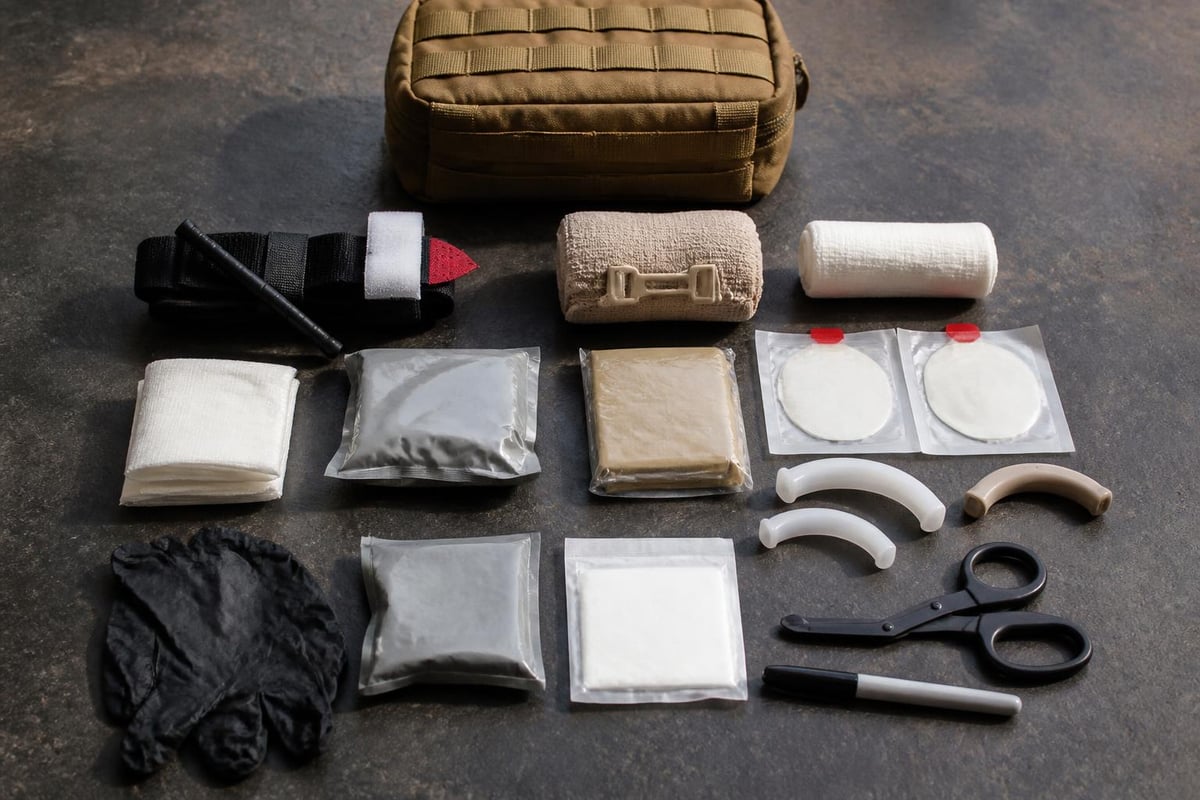
Tourniquet selection deserves careful consideration. The Combat Application Tourniquet (CAT) has become the gold standard for extremity hemorrhage control. Modern tourniquets feature windlass mechanisms that allow one-handed application, critical when self-treating or when an extra hand isn't available. Understanding common errors in major bleed management ensures you can apply these devices correctly under stress.
Hemostatic agents provide critical capability for wounds in areas where tourniquets cannot be applied. Combat gauze impregnated with kaolin or chitosan accelerates clotting when packed directly into wound cavities. These products have revolutionized junctional hemorrhage control for injuries to the groin, armpit, and neck regions.
Pressure bandages like the Israeli Emergency Bandage combine wound coverage with direct pressure application. Their integrated pressure bar and securing mechanism allow effective one-handed use while maintaining consistent pressure on the wound site.
Airway and Respiratory Management
Maintaining an open airway and adequate respiratory function ranks second only to hemorrhage control in the priority of treatment.
| Component | Primary Use | Secondary Benefit |
|---|---|---|
| Nasopharyngeal Airway | Unconscious patient airway | Prevents tongue obstruction |
| Chest Seals (Vented) | Sucking chest wounds | Tension pneumothorax prevention |
| Decompression Needle | Tension pneumothorax | Restores respiratory function |
| Face Shield/Mask | Barrier protection | Disease transmission prevention |
Chest seals deserve particular attention in any ifak med kit configuration. Penetrating chest injuries create openings that compromise the chest cavity's negative pressure, leading to lung collapse. Vented chest seals allow air to escape while preventing inward flow, addressing both open pneumothorax and potential tension pneumothorax development.
Wound Management and Protection
Beyond immediate life threats, your ifak med kit should include supplies for wound coverage and protection.
Sterile gauze pads in various sizes provide versatile wound coverage options. Combat gauze in compressed rolls offers maximum wound packing capability in minimal space. These items work in conjunction with hemostatic agents when treating deep or irregular wounds.
Occlusive dressings create moisture-proof barriers essential for certain wound types. Medical tape secures dressings and allows improvisation when standard supplies run short. Trauma shears with blunted tips safely cut through clothing, seat belts, and gear without risking additional injury.
Configuring Your IFAK Med Kit for Different Scenarios
The specific contents and organization of an ifak med kit vary based on the user's environment, training level, and likely threat scenarios. Law enforcement personnel face different considerations than military operators or civilian prepared citizens.
Tactical and Professional Use
Military and law enforcement professionals require ifak med kits optimized for ballistic trauma and hostile environments. These configurations typically include:
- Minimum two tourniquets (one for immediate use, one backup)
- Hemostatic combat gauze rated for arterial bleeding
- Two vented chest seals for entry and exit wounds
- Nasopharyngeal airway sized appropriately for the user
- Decompression needle (for trained personnel)
- Compact pressure bandage
- Medical gloves and protective barriers
Detailed guidance on tactical IFAK contents emphasizes redundancy for critical items and ruggedized packaging that withstands harsh operational environments.
Civilian and General Preparedness
Civilians building an ifak med kit benefit from focusing on common injury patterns while maintaining trauma care capability. Vehicle accidents, industrial injuries, and outdoor incidents drive civilian IFAK design.
A civilian-focused configuration might include:
- One military-grade tourniquet for extremity hemorrhage
- Hemostatic gauze for wound packing
- Pressure bandage with securing mechanism
- Chest seal pair for penetrating injuries
- Trauma shears for clothing removal
- Nitrile gloves for barrier protection
- Compressed gauze for general wound care
- Medical tape for securing dressings
This setup addresses life-threatening trauma while remaining accessible to users with varying training levels. Understanding essential medical kit components helps civilians make informed choices about their personal safety equipment.
Training and Proficiency with Your IFAK Med Kit
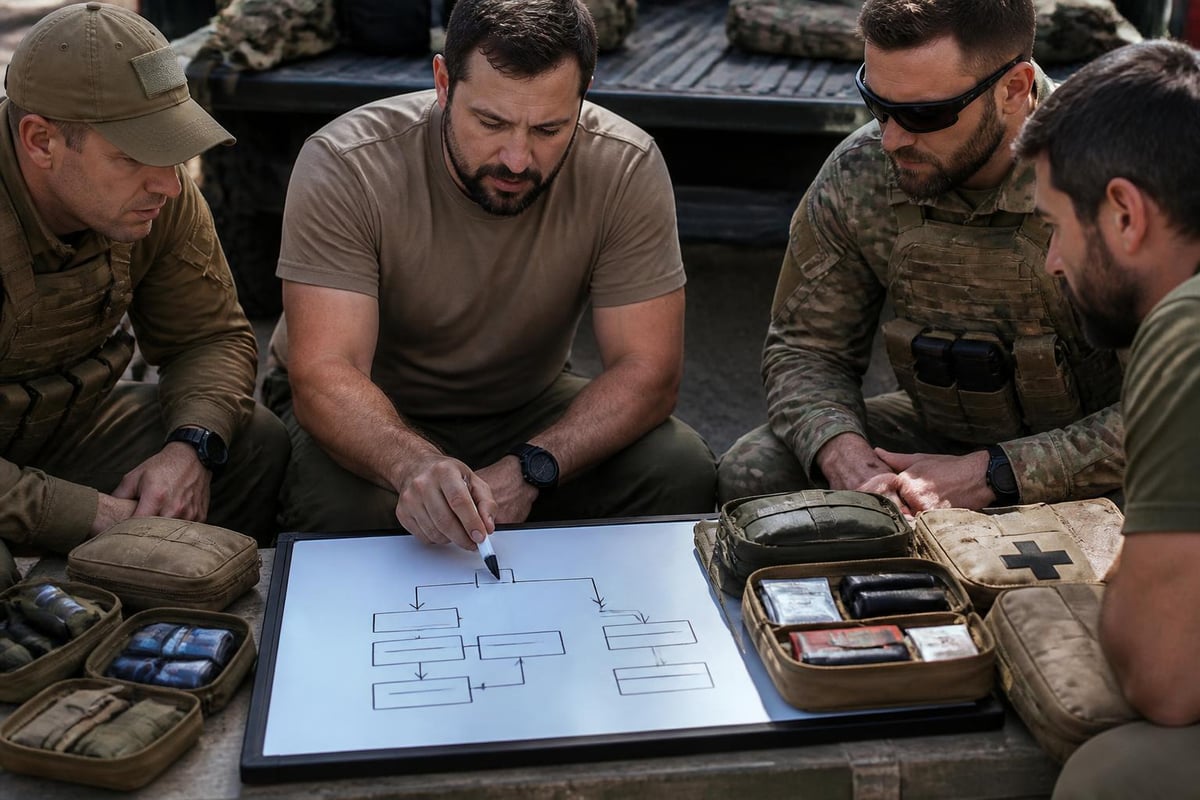
Owning an ifak med kit provides no benefit without the knowledge and skills to use it effectively. Proper training in IFAK use transforms a collection of supplies into life-saving capability.
Fundamental Skills Required
Operating under stress during a medical emergency demands practiced, automatic responses. Training should cover:
Tourniquet application under various conditions including self-aid, one-handed use, and application over clothing. Practice builds muscle memory that functions even when fine motor skills deteriorate under stress. Training tourniquets allow repeated practice without consuming expensive operational equipment.
Wound packing techniques require specific instruction. Proper hemostatic gauze application involves packing the entire wound cavity while maintaining pressure directly on the bleeding source. Inadequate packing or incorrect placement wastes critical seconds and compromises hemorrhage control.
Chest seal application must account for patient positioning, wound location, and potential for multiple injuries. Understanding when to burp a chest seal versus when to apply a second seal requires knowledge beyond simply sticking it on the wound.
Maintenance and Inspection Protocols
An ifak med kit serves no purpose if its contents have expired, degraded, or gone missing when needed. Establishing regular inspection intervals ensures readiness.
Monthly quick checks verify:
- Kit presence in designated location
- Packaging integrity (no tears, water damage, or compression)
- Visible components present without full inventory
- Securing straps and mounting systems functional
Quarterly detailed inspections include:
- Complete inventory against checklist
- Expiration date verification for all time-sensitive items
- Packaging seal integrity for sterile components
- Training currency review and skill refresher planning
Hemostatic gauze typically expires 3-5 years from manufacture. Chest seals and pressure bandages may have similar or longer shelf lives. Tourniquets have no expiration date but require inspection for material degradation, especially if exposed to UV light or temperature extremes.
Selecting the Right IFAK Med Kit Carrier
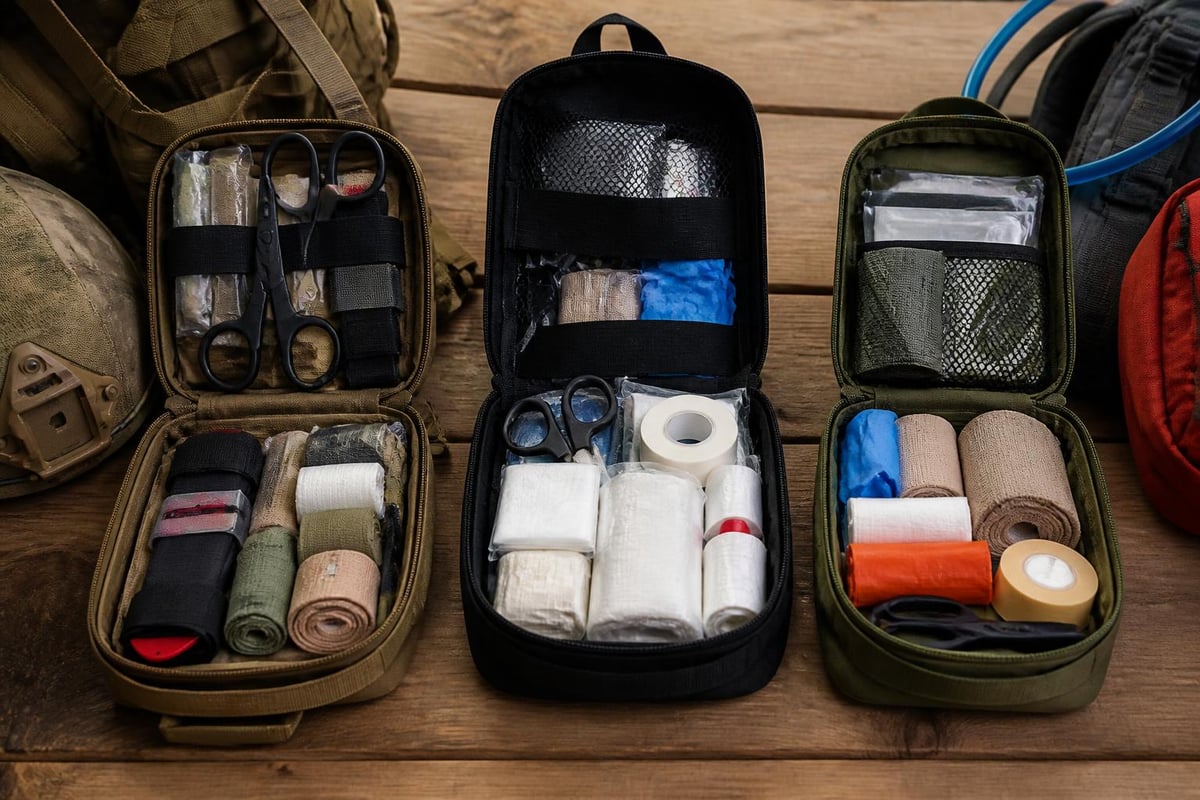
The carrier or pouch housing your ifak med kit determines accessibility, protection, and whether you'll actually have it when needed. Carrier selection depends on your carry method and operational environment.
Mounting and Carry Options
Different platforms suit different users and scenarios:
| Carry Method | Best For | Considerations |
|---|---|---|
| Belt-mounted pouch | Law enforcement, open carry | Quick access, visible deterrent |
| Plate carrier integration | Military, tactical teams | Protected, integrated with gear |
| Vehicle mounting | Civilian preparedness | Accessible, protected from elements |
| Low-profile concealment | Undercover, civilian carry | Discrete, limited capacity |
| Backpack/bag integration | Outdoor recreation, EDC | High capacity, requires bag access |
Belt-mounted carriers offer the fastest access for standing or mobile users. MOLLE-compatible designs integrate with tactical gear while remaining removable for transition between platforms. Pull-away panels allow the entire IFAK to detach for use away from the wearer.
Concealed carry options address situations where visible medical gear is inappropriate or dangerous. Low-profile pouches sized for ankle carry or inside-waistband mounting sacrifice some capacity for discretion. These work well for plainclothes law enforcement or civilians in restrictive environments.
Vehicle-specific mounting keeps supplies protected and accessible during the most common civilian emergency scenario. Dedicated mounting systems secure the IFAK against collision forces while allowing rapid extraction. Dashboard mounting, seat-back attachment, and center console integration all provide viable options depending on vehicle configuration.
Building vs. Buying Pre-Assembled IFAK Med Kits
Choosing between assembling your own ifak med kit and purchasing a complete package involves tradeoffs between customization, cost, and convenience.
Advantages of Custom Assembly
Building your own kit allows precise component selection matched to your training, threat assessment, and budget. You can prioritize specific items, choose preferred brands, and avoid paying for components you don't need or want.
Cost optimization becomes possible when purchasing components individually. Bulk purchasing of consumables like gauze and gloves reduces per-unit cost significantly. You can invest in premium items for critical components while selecting value options for less crucial supplies.
The assembly process itself provides valuable learning. Handling each component, understanding its purpose, and organizing the kit builds familiarity that pays dividends during actual use.
Benefits of Pre-Configured Kits
Pre-assembled ifak med kits from reputable manufacturers offer several advantages, particularly for new users. Complete trauma kits provide curated component selection based on expert guidance and field experience.
Quality pre-built kits ensure compatibility between components. Package sizes, storage requirements, and functional relationships between items receive professional consideration. This prevents common mistakes like including chest seals without tape or packing hemostatic gauze that doesn't fit the pouch.
Time savings matter significantly when equipping multiple people or transitioning to IFAK carry for the first time. Pre-built kits arrive ready for immediate use or deployment, requiring only inspection and familiarization rather than research, sourcing, and assembly.
Integrating IFAK Med Kits into Broader Preparedness
An ifak med kit represents one layer in comprehensive emergency preparedness. Understanding how it fits within larger medical response capability prevents gaps and redundancy.
Relationship to Other Medical Equipment
Your IFAK serves as immediate trauma intervention, while other medical supplies address different scenarios and timeframes:
Commercial first aid kits handle minor injuries, environmental concerns, and illness symptoms. These complement rather than replace IFAK capability. Combining trauma care supplies with general first aid creates comprehensive coverage.
Portable medical kits for extended care situations include supplies for sustained treatment when evacuation delays occur. These larger kits might incorporate IFAK contents while adding medications, diagnostic tools, and wound care supplies for ongoing management.
Camping emergency kits address wilderness-specific challenges including environmental injuries, extended care scenarios, and improvisation requirements when definitive care is hours or days away.
Understanding these distinctions prevents over-reliance on a single kit type while avoiding unnecessary duplication of supplies across multiple kits.
Coordination with Emergency Response Systems
Your ifak med kit provides capability during the critical minutes before professional help arrives. Effective use requires understanding your role in the broader emergency response system.
Scene safety takes absolute priority. The best-equipped IFAK provides no benefit if you become a second casualty. Assess threats, establish safety, and call for professional help before initiating treatment when possible.
Communication with responding units should include treatment already provided. Noting tourniquet application time, number of chest seals placed, and other interventions helps receiving medical personnel continue appropriate care.
Proper transfer of care involves clear communication of patient status, treatments provided, and any changes since initial injury. Your IFAK supplies the tools, but effective integration with EMS, fire, or military medical assets ensures continuity of care.
Legal and Regulatory Considerations
Carrying and using an ifak med kit involves legal considerations that vary by jurisdiction and user status. Understanding these issues prevents legal complications during already stressful emergencies.
Good Samaritan Protections
Most U.S. states provide legal protection for individuals providing emergency medical care in good faith. These Good Samaritan laws generally protect from liability when:
- An emergency exists requiring immediate action
- Care provided matches the responder's training level
- No gross negligence or intentional harm occurs
- No compensation is received for providing care
Limitations exist, particularly regarding scope of practice. Using advanced interventions without appropriate training may exceed Good Samaritan protections. This reality emphasizes the importance of formal training matching the capabilities of your ifak med kit.
Professional Requirements and Restrictions
Medical professionals, law enforcement, and military personnel often operate under different legal frameworks than civilian Good Samaritans. Department policies, professional practice acts, and military regulations may specify required IFAK contents, mandatory training, and approved use scenarios.
Off-duty professionals should understand how their professional status affects legal obligations and protections. Some jurisdictions impose duty-to-act requirements on medical professionals even when off duty, while others treat them as any other civilian responder.
Organizational policies for uniformed services typically mandate specific IFAK configurations and regular training. Standardized IFAK contents for service members ensure consistent capability and simplified training across units.
Advanced IFAK Med Kit Considerations
As users gain experience and training advances, ifak med kit configuration can evolve to incorporate additional capabilities while maintaining the core focus on immediate life threats.
Supplementary Components for Trained Users
Advanced training opens possibilities for additional IFAK components:
- Cricothyrotomy kits for surgical airway access when other methods fail
- Hemostatic dressings in various formulations optimized for specific wound types
- Hypothermia prevention through compact emergency blankets sized for IFAK inclusion
- Medication additions including pain management and antibiotics for extended care
These additions make sense only when accompanied by appropriate training and regular skills maintenance. Including advanced components without proficiency creates false confidence and wastes limited space.
Environmental Adaptations
Operating environments influence IFAK configuration significantly:
Cold weather operations require protecting liquid components from freezing and ensuring glove compatibility with all procedures. Packaging modifications prevent cold-induced brittleness in plastic components.
Maritime environments demand waterproof packaging and rust-resistant components. Vacuum-sealed packages protect sterile supplies while compressed air considerations affect chest seal selection.
High-temperature environments accelerate degradation of some components. Hemostatic agents and adhesives particularly suffer in extreme heat. Modified inspection schedules and temperature-resistant component selection address these challenges.
Integration with Advanced Medical Capabilities
Response teams with extended care missions may integrate IFAK capability with larger medical response packages. This layered approach maintains rapid access to trauma essentials while providing expanded capability for sustained operations.
The individual IFAK remains personal equipment for self-aid and immediate buddy care. Team medical packs supplement this with supplies for multiple casualties, extended treatment duration, and broader injury patterns. Clear delineation between personal and team equipment prevents confusion during high-stress incidents.
Quality Standards and Component Selection
Not all IFAK components meet the same quality standards. Understanding certifications, testing protocols, and manufacturer reputations helps ensure your ifak med kit contains reliable supplies.
Critical Quality Indicators
Military specification compliance for components like tourniquets indicates rigorous testing for strength, durability, and effectiveness. While civilian users don't require military-spec items, these standards provide objective quality benchmarks.
FDA approval for hemostatic agents and other medical devices ensures basic safety and efficacy standards. Approved products have undergone testing and manufacturing oversight that uncertified alternatives may lack.
Manufacturer reputation within the tactical and emergency medical communities indicates field-proven performance. Products used by military special operations, federal law enforcement, and professional EMS providers have demonstrated real-world effectiveness.
Warning Signs of Inferior Products
Several red flags indicate potentially unreliable IFAK components:
- Significantly lower pricing than established brands without clear explanation
- Lack of manufacturing information or country of origin
- Absence of lot numbers or expiration dates on time-sensitive items
- Vague or exaggerated marketing claims without supporting data
- Components packaged together with no individual sterile wrapping
Saving money on inferior components defeats the purpose of carrying an IFAK. When lives depend on equipment performance, investing in quality-verified supplies makes sense.
Properly configured and maintained, an ifak med kit provides critical capability during the minutes that matter most in trauma emergencies. The right combination of hemorrhage control, airway management, and respiratory support equipment, paired with appropriate training, transforms bystanders into effective first responders capable of preventing otherwise survivable injuries from becoming fatalities. Whether you're a medical professional seeking professional-grade equipment, a civilian committed to personal preparedness, or someone responsible for team safety, Medical Gear Outfitters offers paramedic-selected IFAK components and complete kits backed by the expertise to ensure you're truly prepared when seconds count.

