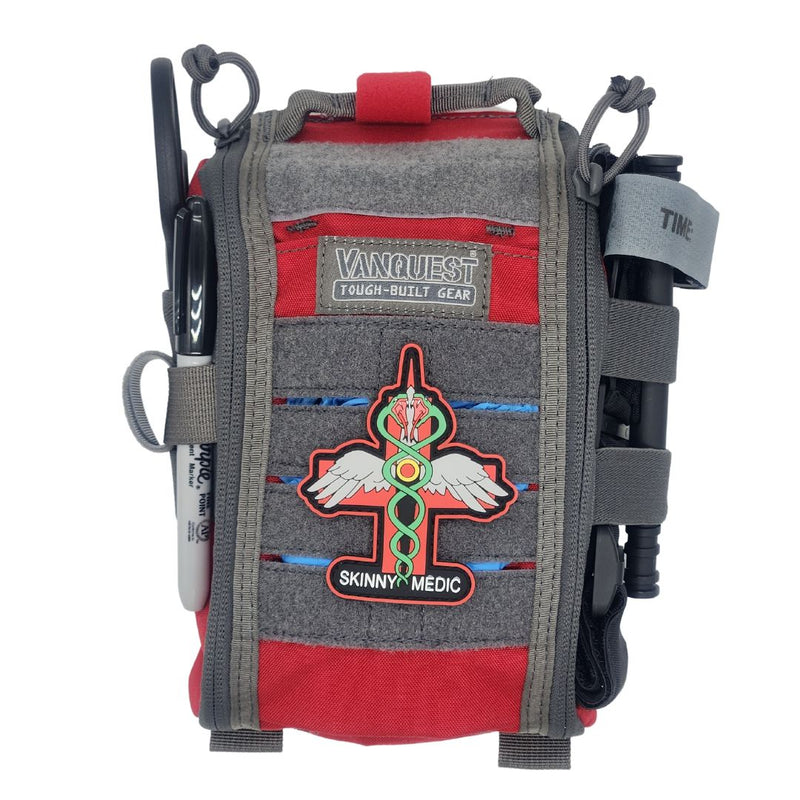
Good Home First Aid Kit: Essential Supplies Guide 2026
Every household faces unexpected medical situations, from minor cuts and burns to more serious injuries requiring immediate attention before professional help arrives. A good home first aid kit serves as your first line of defense in these critical moments, providing the essential supplies needed to address injuries effectively and potentially save lives. As a paramedic-owned company, we understand that preparedness isn't about fear but about empowerment through proper equipment and knowledge. Building and maintaining a comprehensive first aid kit ensures you're ready to respond when seconds matter most.
Understanding What Makes a Good Home First Aid Kit
A good home first aid kit differs significantly from basic commercial kits that often contain minimal supplies. The foundation of an effective kit lies in addressing the most common household injuries while preparing for more serious emergencies. According to the American College of Emergency Physicians, tailoring your kit to your family's specific medical needs creates a more functional and reliable resource.
The best kits balance comprehensiveness with practicality. You need sufficient supplies to handle multiple injuries or treat one serious incident without running out of critical materials. Consider the size of your household, ages of family members, and any chronic medical conditions when determining quantities.
Core Categories of Supplies
Every good home first aid kit should include supplies across several essential categories:
- Wound care materials for cuts, scrapes, and punctures
- Burn treatment supplies for thermal and chemical injuries
- Medications for pain, allergies, and common ailments
- Diagnostic tools to assess injuries and vital signs
- Protective equipment to prevent contamination
These categories form the skeleton of your kit, ensuring you can respond to diverse emergency scenarios. Understanding first aid kit fundamentals helps you make informed decisions about what belongs in your home supply.
Essential Wound Care Components
Wound care represents the most frequent use case for household first aid kits. A comprehensive selection of bandages and dressings enables you to address everything from minor scrapes to significant lacerations.
Bandages and Dressings
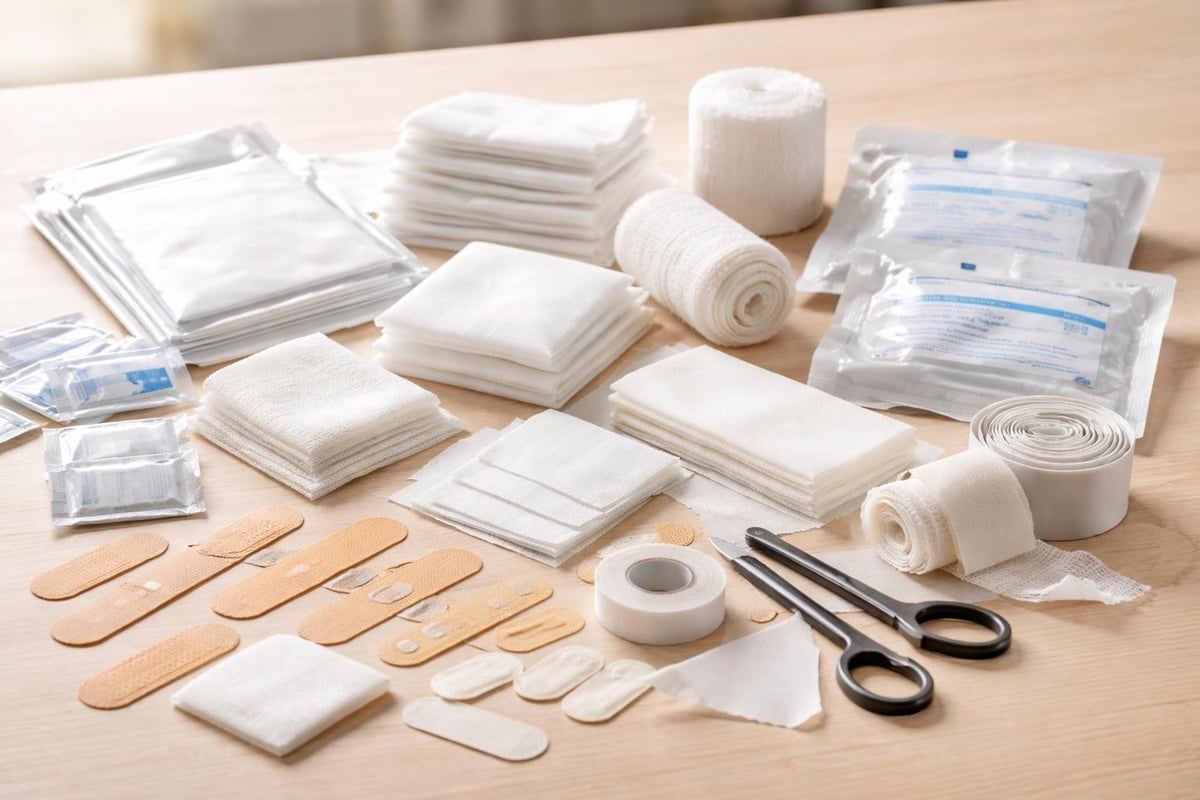
Your good home first aid kit should include multiple bandage types to accommodate various wound sizes and locations. Stock adhesive bandages in assorted sizes, from small fingertip bandages to larger rectangular strips. Include at least 25 adhesive bandages in various dimensions.
Sterile gauze pads provide essential coverage for wounds too large for adhesive bandages. Keep multiple sizes available: 2x2 inch, 3x3 inch, and 4x4 inch pads. Include at least a dozen of each size. Gauze rolls allow for wrapping injuries and securing dressings in place.
For more serious bleeding situations, specialized supplies become critical. Israeli compression bandages offer superior pressure application compared to standard gauze, making them valuable additions to advanced home kits.
| Wound Care Item | Minimum Quantity | Primary Use |
|---|---|---|
| Adhesive bandages (assorted) | 25 pieces | Minor cuts and scrapes |
| Sterile gauze pads (2x2, 3x3, 4x4) | 12 each size | Wound coverage |
| Gauze rolls | 3 rolls | Wrapping and securing |
| Medical tape | 2 rolls | Securing dressings |
| Butterfly closures | 10 strips | Closing small lacerations |
Cleaning and Antiseptic Supplies
Proper wound cleaning prevents infection and promotes healing. Antiseptic wipes provide convenient cleansing for minor injuries, while antibiotic ointment helps protect against bacterial infection. Include at least 20 antiseptic wipes and multiple tubes or packets of antibiotic ointment.
Hydrogen peroxide or saline solution offers additional cleaning options for wounds requiring irrigation. Disposable gloves protect both the caregiver and patient from cross-contamination. Stock at least five pairs of nitrile gloves in multiple sizes.
Medications and Treatments
A good home first aid kit contains medications addressing common symptoms and conditions. Organize medications by category and check expiration dates quarterly.
Over-the-Counter Medications
Pain relievers form the foundation of your medication supply. Include both acetaminophen and ibuprofen to address different pain types and provide options for individuals with medication sensitivities. Stock adult and children's formulations if you have young family members.
Antihistamines treat allergic reactions ranging from mild environmental allergies to insect stings. Sting and bite relief pads provide immediate topical treatment for insect encounters.
- Pain relievers: Acetaminophen and ibuprofen in adult and pediatric doses
- Antihistamines: Diphenhydramine for allergic reactions
- Anti-diarrheal medication: For gastrointestinal distress
- Antacids: For heartburn and indigestion
- Hydrocortisone cream: For rashes and minor skin irritations
Burn and Skin Care Products
Burn gel packets or spray provide immediate cooling relief for thermal burns. Include multiple packets in your kit, as burns often require repeated application. Aloe vera gel serves double duty for burns and sunburn treatment.
Calamine lotion addresses poison ivy, poison oak, and other contact dermatitis situations. Keep a bottle readily available during warmer months when outdoor exposure increases.
Tools and Equipment
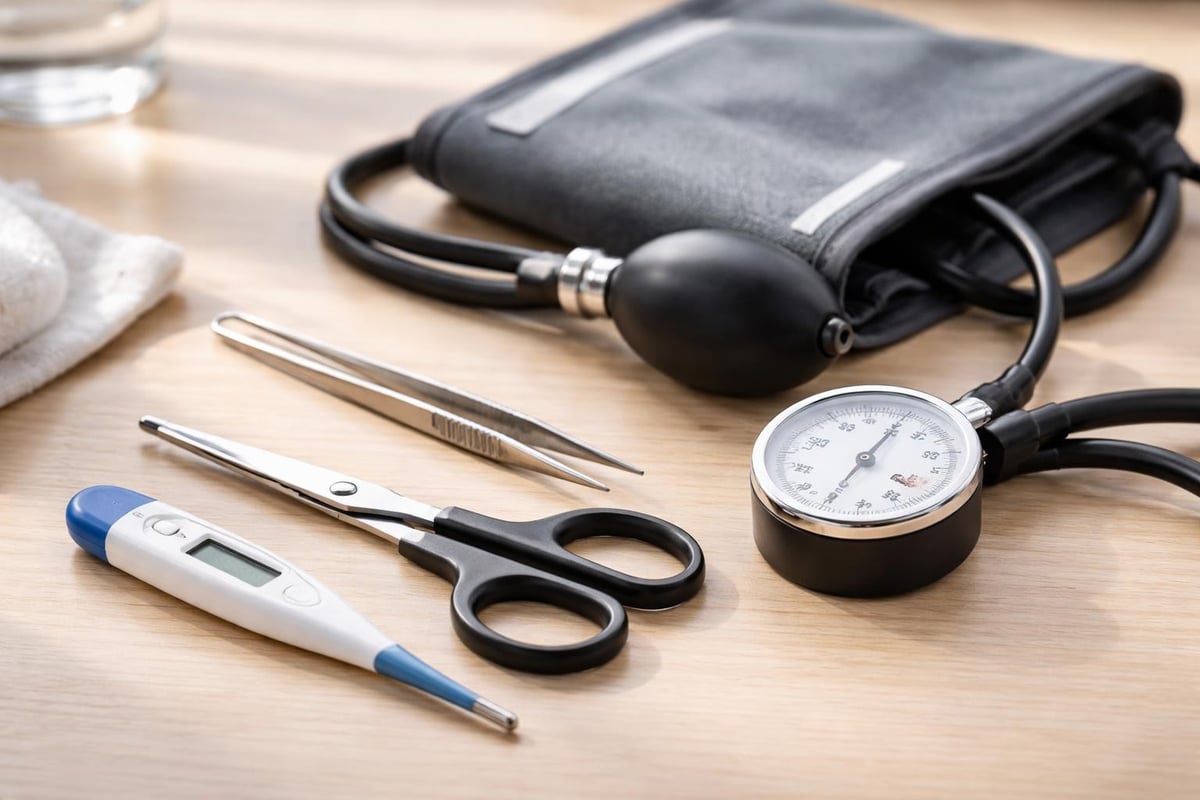
Quality tools enable proper injury assessment and treatment. A good home first aid kit includes instruments that help you evaluate conditions and apply supplies effectively.
Diagnostic Instruments
A digital thermometer provides quick, accurate temperature readings essential for monitoring fevers and potential infections. Choose a thermometer suitable for your family's age range. Some models offer multiple measurement sites including oral, rectal, and temporal readings.
Blood pressure monitors help track cardiovascular status, particularly important for family members with hypertension or cardiac conditions. While not essential for every household, they provide valuable data during emergencies.
Penlight or small flashlight assists in examining wounds, checking pupil response, and working in low-light conditions. Include spare batteries or choose rechargeable options.
Application and Extraction Tools
Sharp scissors designed for medical use cut through clothing, tape, and bandages cleanly. Choose scissors with rounded tips to minimize injury risk during use. Some models feature specialized cutting surfaces for tough materials.
Tweezers remove splinters, ticks, and debris from wounds. Select tweezers with fine, precise tips that close completely. Include both pointed and flat-tipped versions for different extraction needs.
Safety pins secure slings and bandages while helping remove splinters at angle. Include various sizes from small to large. The American Red Cross recommends keeping at least five safety pins in assorted sizes.
| Tool | Purpose | Key Features |
|---|---|---|
| Medical scissors | Cutting bandages and clothing | Rounded tips, sharp blades |
| Tweezers | Splinter and tick removal | Fine tips, good closure |
| Thermometer | Temperature monitoring | Digital, fast reading |
| Penlight | Examination and visibility | Compact, bright beam |
| Cold pack | Reducing swelling | Instant activation or reusable |
Specialized Emergency Supplies
Beyond basic wound care and medications, a truly comprehensive good home first aid kit addresses serious emergency scenarios that may occur before professional medical help arrives.
Bleeding Control
Significant bleeding represents one of the most time-critical emergencies. Standard bandages prove inadequate for severe arterial bleeding or large wounds. Hemostatic gauze accelerates clotting and can be life-saving in serious bleeding situations.
Compression bandages apply consistent pressure to control bleeding while allowing continued assessment. These specialized dressings combine padding with integrated pressure mechanisms superior to improvised solutions.
For extreme bleeding emergencies, tourniquets provide definitive hemorrhage control. While controversial for general public use in previous decades, modern training emphasizes their importance in civilian trauma response. Quality tourniquets designed for medical use differ significantly from improvised alternatives.
Respiratory and Cardiac Support
CPR face shields or pocket masks enable safe rescue breathing while protecting rescuers from bodily fluids. These compact devices fold into small packages suitable for home storage.
For households with members at risk for severe allergic reactions, epinephrine auto-injectors represent life-saving equipment. While requiring a prescription, they belong in first aid kits for at-risk individuals. Mark them clearly and ensure all household members know their location and use.
Aspirin deserves special mention for its role in cardiac emergencies. A single dose of aspirin during suspected heart attack can improve outcomes significantly. Include non-coated, regular strength aspirin specifically for this purpose, separate from your general pain reliever supply.
Storage and Organization Strategies
The most comprehensive supply collection becomes useless if you can't quickly locate needed items during emergencies. Strategic organization transforms your good home first aid kit from a jumbled box into an efficient emergency resource.
Container Selection
Choose a container that balances portability with capacity. Hard-sided cases protect contents from damage but add weight. Soft-sided bags offer flexibility and lighter weight but provide less protection. Consider where you'll store the kit and how you might need to transport it.
Clear compartments or see-through panels let you quickly assess contents without unpacking everything. Some containers include built-in organization systems with labeled pockets for different supply categories.
Water-resistant or waterproof materials protect supplies from moisture damage. This proves particularly important in humid climates or if you store the kit in bathrooms or other potentially damp locations.
Organization Systems
Organize supplies by category using smaller bags, pouches, or dividers within your main container. Group all wound care items together, medications in another section, and tools in a third area. This categorization speeds retrieval during stressful situations.
Effective organization methods include:
- Clear ziplock bags labeled by category
- Color-coded pouches for different supply types
- Hanging organizers with multiple compartments
- Stackable containers within a larger case
- Labeled drawers for stationary home storage
Create an inventory list stored inside the kit lid. This list helps during restocking and ensures you notice when supplies run low. Include expiration dates for medications and perishable items. Seattle Children's Hospital recommends including emergency contact information alongside your supply inventory.
Maintenance and Restocking
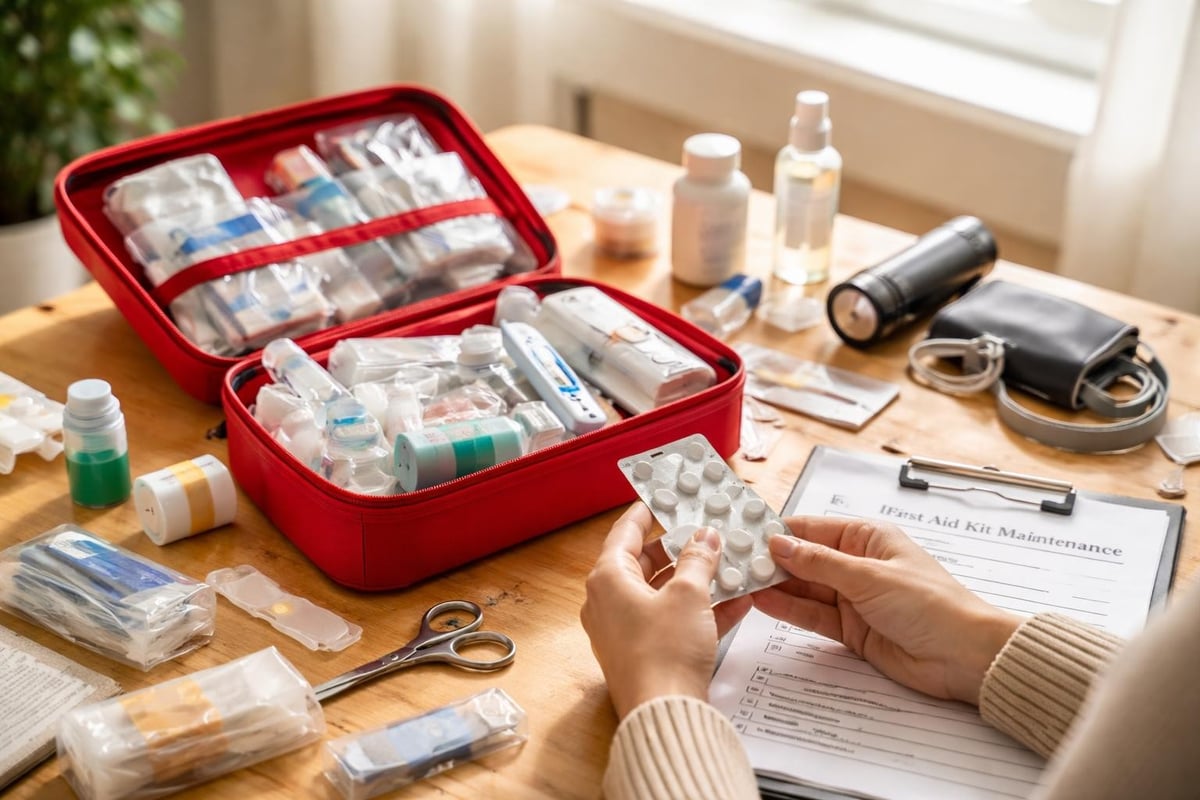
A good home first aid kit requires regular attention to remain effective. Neglected kits contain expired medications, depleted supplies, and outdated equipment that fails when needed most.
Regular Inspection Schedule
Inspect your kit quarterly, checking for expired medications, damaged packaging, and depleted supplies. Mark inspection dates on your calendar to establish a routine. Many families coordinate first aid kit checks with seasonal activities like changing smoke detector batteries.
During each inspection, verify that:
- All medications remain within expiration dates
- Sterile packages show no tears or damage
- Ointments and creams haven't dried out or separated
- Tools and equipment function properly
- Batteries maintain charge in electronic devices
Replace expired items immediately rather than waiting for the next scheduled check. Even non-perishable items degrade over time. Adhesive bandages lose stickiness, and elastic wraps lose elasticity.
Restocking After Use
Replenish supplies immediately after use rather than waiting for scheduled inspections. When you use gauze pads treating a child's scraped knee, replace them that day or week. This practice ensures your kit remains ready for the next emergency.
Keep a running list of used items attached to your kit. When restocking, purchase slightly more than you used to build reserve quantities. This approach gradually expands your supplies beyond minimum levels.
Comprehensive first aid supply guides help you understand appropriate quantities and quality standards for various items, ensuring your restocking efforts maintain kit effectiveness.
Customization for Your Household
While basic first aid kit recommendations provide solid foundations, truly effective kits reflect your household's unique needs and circumstances. A good home first aid kit adapts to your family rather than following a rigid universal template.
Family-Specific Considerations
Households with young children require additional pediatric supplies including children's pain relievers, smaller bandages, and items addressing common childhood injuries. Families with elderly members need supplies supporting chronic condition management and age-related injury risks.
Pet owners should consider basic veterinary first aid supplies, though these typically warrant a separate dedicated kit. Athletic families need additional sports injury supplies including instant cold packs, elastic wraps, and blister treatment.
If family members have known medical conditions, include condition-specific supplies. Diabetics need glucose tablets or gel. Individuals with severe allergies require epinephrine auto-injectors. Those with asthma need backup inhalers.
Environmental and Activity Factors
Your geographic location influences kit contents. Households in areas with venomous snakes or spiders need specific bite treatment supplies. Coastal residents should include supplies for marine creature stings. Northern climates warrant cold injury treatment capabilities.
Consider your family's activities and hobbies. Woodworking enthusiasts face cut and puncture risks requiring robust wound care supplies. Gardeners need enhanced treatment for plant-related injuries and insect encounters. ABC News recommends tailoring kits to reflect your lifestyle and risk exposure.
Training and Knowledge Development
The most comprehensive good home first aid kit provides limited benefit without knowledge of proper use. Equipment and supplies represent only half the preparedness equation; training completes your readiness.
Essential Skills and Education
Basic first aid and CPR training should be considered mandatory for all adults in your household. These courses teach fundamental response techniques including:
- Assessing emergency situations safely
- Performing CPR and using AEDs
- Controlling bleeding with direct pressure
- Treating burns, fractures, and sprains
- Recognizing signs of serious medical conditions
Many organizations offer certification courses ranging from basic first aid to wilderness medicine. Choose training appropriate for your household's needs and likely emergency scenarios. The University of Rochester Medical Center provides educational resources covering first aid kit contents and basic emergency response.
Refresh your training every two years minimum. Skills degrade without practice, and protocols evolve as medical knowledge advances. Consider practicing scenarios with family members during kit inspections, reinforcing both skills and supply locations.
Documentation and Quick References
Include printed first aid guides in your kit covering common emergencies. While smartphones provide access to information, dedicated printed materials remain accessible during power outages or when devices are unavailable.
Create quick reference cards for time-critical emergencies including severe bleeding, choking, and cardiac arrest. Laminate these cards for durability and attach them inside your kit lid. Include emergency contact numbers for poison control, local emergency services, and family physicians.
Document any family member's specific medical needs, allergies, or chronic conditions. This information proves invaluable if emergency responders need to treat unconscious or incapacitated family members. Update this documentation whenever medical situations change.
Advanced Considerations
As your confidence and knowledge grow, consider expanding your good home first aid kit beyond basic recommendations. Advanced supplies address serious trauma and medical emergencies with professional-level equipment adapted for trained civilians.
Trauma Response Capabilities
Tourniquets, chest seals, and hemostatic agents represent advanced trauma supplies increasingly recommended for civilian use. These items address life-threatening injuries that basic first aid supplies cannot manage effectively.
Quality matters significantly in trauma equipment. Substandard tourniquets fail under pressure, while inferior chest seals don't maintain adequate adhesion. Research equipment thoroughly and choose products meeting military or EMS specifications. Understanding equipment selection criteria helps you make informed purchasing decisions.
Advanced supplies require proper training. Taking a Stop the Bleed course or tactical emergency casualty care class teaches appropriate use of trauma equipment. Never include equipment in your kit without understanding its application, limitations, and potential complications.
Communication and Documentation Tools
Include waterproof notebooks and permanent markers for documenting treatment provided, timing of interventions, and patient condition changes. This information proves valuable when transferring care to emergency medical services.
Consider adding emergency communication devices to your preparedness setup. While technically separate from your first aid kit, they ensure you can summon help when needed. Battery-powered or hand-crank radios provide information access during power outages.
Multiple Kit Strategy
Rather than relying on a single comprehensive kit, consider maintaining several strategically located kits serving different purposes. This approach ensures appropriate supplies remain accessible regardless of where emergencies occur.
Location-Specific Kits
A primary household kit should contain your most comprehensive supply collection. Store it in a central, accessible location known to all family members. Kitchens, main bathrooms, or mudrooms often serve as ideal locations.
Smaller secondary kits positioned in bathrooms, bedrooms, or workshops provide immediate access to basic supplies. These kits address minor injuries without requiring trips to the main kit.
Vehicle kits ensure preparedness while traveling. Car kits face temperature extremes, requiring more frequent inspection and specialized storage containers. Include supplies addressing automotive emergency scenarios like road rash from motorcycle accidents or injuries from collisions.
Recommended kit locations include:
- Primary comprehensive kit in central household location
- Secondary basic kit in master bathroom
- Small kit in children's bathroom or playroom
- Workshop or garage kit near tools and equipment
- Vehicle emergency kit in each car
- Portable kit for camping, hiking, and outdoor activities
Each kit should match its intended use. Workshop kits emphasize wound care for cuts and punctures. Vehicle kits include trauma supplies for serious accidents. Outdoor kits address wilderness injuries and extended care scenarios.
Coordination and Inventory Management
Maintaining multiple kits requires organizational discipline. Create a master inventory tracking all kit locations and contents. During quarterly inspections, rotate through all kits systematically rather than checking them simultaneously.
Standardize organization systems across kits when possible. Using similar containers and organization methods for all kits reduces confusion during emergencies. Someone grabbing the vehicle kit will find supplies in familiar locations matching the household kit layout.
Share inventory responsibilities among household members. Assign different family members to maintain specific kits, distributing the inspection workload while ensuring multiple people understand kit contents and locations.
Building a good home first aid kit represents a fundamental aspect of household preparedness that empowers you to respond effectively when injuries occur. By selecting quality supplies, organizing them strategically, maintaining them properly, and developing the knowledge to use them confidently, you transform from passive bystander to capable first responder in your own home. Whether you're starting with a basic kit or upgrading to advanced trauma capabilities, Medical Gear Outfitters provides the professional-grade equipment and expert guidance you need, backed by paramedic experience and a commitment to ensuring families are prepared to act decisively when emergencies strike.