
First Aid Bandages and Dressings: Complete Guide 2026
When an injury occurs, the right wound covering can mean the difference between proper healing and complications. Understanding first aid bandages and dressings equips both medical professionals and everyday responders with the knowledge to address wounds effectively. These essential supplies protect injuries from contamination, control bleeding, and create optimal conditions for tissue repair. Whether you're stocking a home first aid kit or preparing a comprehensive trauma kit, knowing which materials to select and how to apply them properly forms the foundation of competent emergency care.
Understanding the Difference Between Bandages and Dressings
Many people use these terms interchangeably, but first aid bandages and dressings serve distinct functions in wound management. A dressing is the sterile material that makes direct contact with the wound surface. It absorbs blood and other fluids, protects the injury from contamination, and maintains the appropriate moisture level for healing.
Bandages, by contrast, secure dressings in place and may provide additional compression or support. They don't typically touch the wound directly. Common bandage types include elastic wraps, roller gauze, and adhesive tape. Understanding this distinction helps responders select the right combination of materials for each injury scenario.
Primary Functions of Wound Coverings
Dressings perform several critical roles:
- Absorb blood, exudate, and other wound fluids
- Protect the wound bed from external contamination
- Maintain appropriate moisture balance
- Promote autolytic debridement when needed
- Deliver medications or hemostatic agents in specialized cases
Bandages provide structural support:
- Secure dressings in place without tape on the wound
- Apply compression to control bleeding
- Immobilize injured areas to prevent further damage
- Protect the covered area from environmental factors
Types of First Aid Dressings
Selecting appropriate dressings requires understanding the various options available and their specific applications. The proper selection of wound dressings depends on wound characteristics including depth, exudate level, and infection risk.
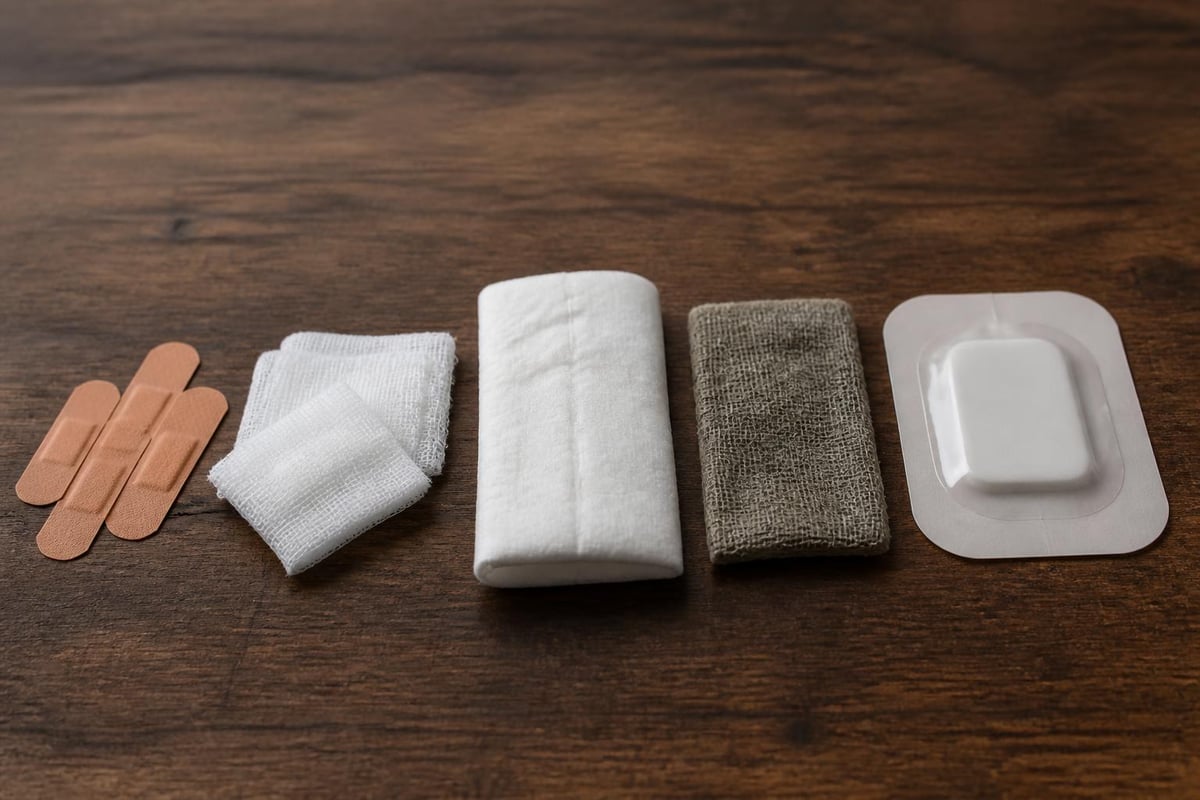
Gauze Dressings
Traditional gauze remains a versatile choice for numerous wound types. These woven or non-woven materials come in various sizes and thicknesses. Standard gauze pads work well for general wound coverage, while petrolatum-impregnated gauze prevents adherence to delicate tissue. The dressings and gauze collection includes options suitable for different injury severities.
Non-adherent gauze features a coating that prevents the material from sticking to the wound bed. This design minimizes pain and tissue damage during dressing changes. For wounds with moderate to heavy drainage, multiple layers of gauze provide adequate absorption.
Adhesive Bandages
For minor cuts, scrapes, and punctures, adhesive bandages offer convenient single-unit solutions. These combine a small absorbent pad with attached adhesive strips. Available in numerous sizes and shapes, they accommodate injuries on fingers, knees, and other challenging areas.
Flexible fabric versions conform better to joints and high-movement areas. Waterproof options protect wounds during bathing or exposure to moisture. However, adhesive bandages have limitations with larger wounds or significant bleeding.
Trauma Dressings
Also known as emergency bandages or Israeli bandages, trauma dressings address severe injuries with heavy bleeding. These sophisticated devices combine an absorbent pad with an integrated pressure applicator and securing mechanism. The design allows single-handed application, crucial when the responder is injured or working alone.
| Trauma Dressing Feature | Purpose | Application Advantage |
|---|---|---|
| Large absorbent pad | Covers extensive wounds | Handles significant blood loss |
| Pressure bar | Applies focused compression | Controls bleeding effectively |
| Elastic wrap | Secures dressing | One-handed operation possible |
| Closure clip | Maintains tension | No tape required |
Hemostatic Dressings
For life-threatening hemorrhage from wounds that don't respond to direct pressure, hemostatic dressings provide advanced clotting capability. These specialized materials contain agents like kaolin or chitosan that accelerate the body's natural clotting cascade. The American Heart Association guidelines describe when hemostatic dressings become necessary for severe external bleeding.
Combat and tactical medicine have driven significant advances in hemostatic technology. Modern formulations work effectively without generating heat, a concern with earlier versions. When stopping a major bleed, these dressings save lives in situations where traditional methods fail.
Occlusive Dressings
Chest injuries and certain abdominal wounds require occlusive dressings that create an airtight seal. These prevent air from entering body cavities where it doesn't belong. Specialized chest seals feature one-way valves that allow air to escape during exhalation while preventing inward flow during inhalation.
The chest seals collection includes both vented and non-vented options. Vented designs reduce the risk of tension pneumothorax development. For sucking chest wounds, these dressings are potentially life-saving interventions.
Categories of Bandages for Securing Dressings
After applying the appropriate dressing, proper bandaging ensures it remains in place and functions as intended. Different bandage types suit various anatomical locations and wound characteristics.
Roller Bandages
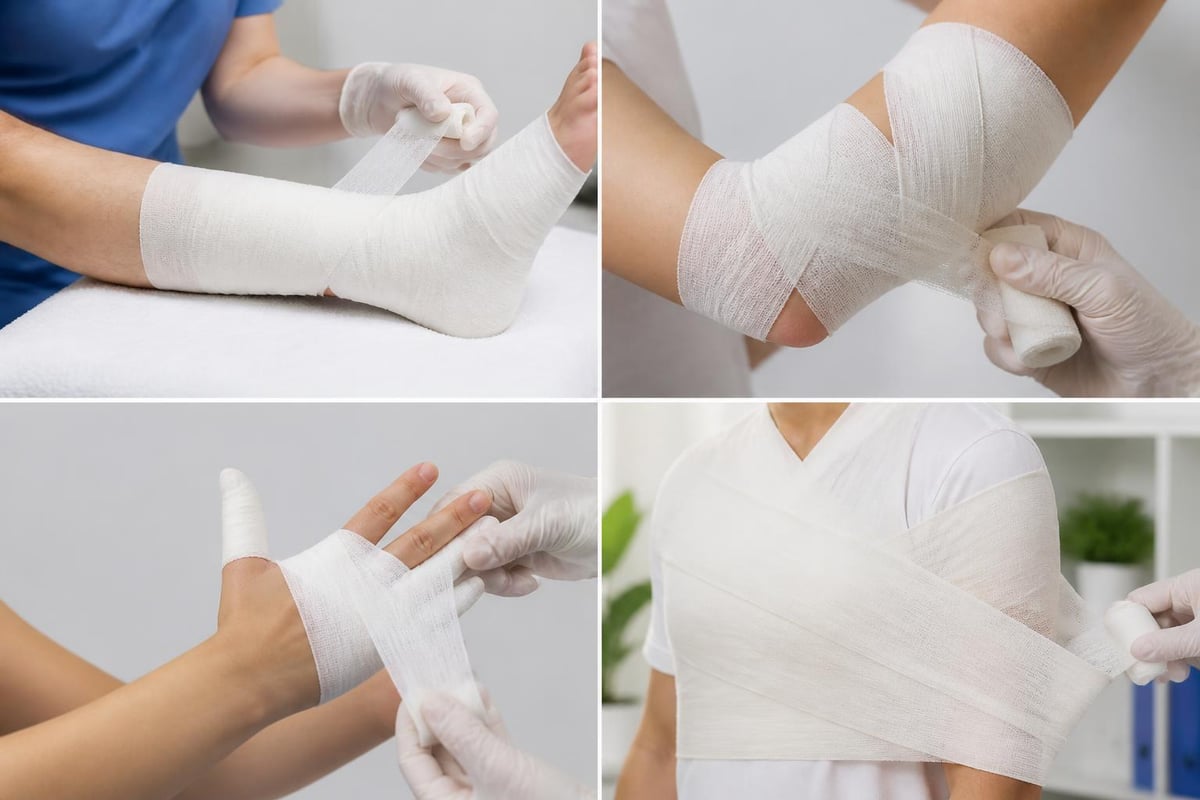
These continuous strips of material wrap around limbs or the torso to secure dressings. Conforming roller bandages stretch slightly to accommodate body contours and movement. Standard gauze roller bandages offer basic securing capability without compression.
Common roller bandage widths:
- 2 inches for fingers and hands
- 3 inches for arms and legs
- 4 inches for larger limbs
- 6 inches for torso applications
Elastic Compression Wraps
When wound management requires compression alongside securing, elastic wraps provide both functions. These bandages help control swelling, support sprains and strains, and maintain pressure on bleeding injuries. Proper technique prevents excessive tightness that could compromise circulation.
The versatility of elastic wraps makes them valuable additions to any comprehensive kit. They adapt to numerous emergency scenarios beyond simple wound coverage. Understanding first aid kit necessities includes recognizing when compression bandages become essential.
Triangular Bandages
Large triangular pieces of cloth serve multiple purposes in emergency care. As bandages, they create slings, secure splints, and hold dressings on challenging areas like the scalp or shoulder. Their adaptability makes them particularly valuable in austere environments with limited supplies.
A single triangular bandage can be folded into various configurations for different applications. This versatility explains their inclusion in most trauma kits despite the availability of more specialized options.
Specialized First Aid Bandages and Dressings
Beyond basic wound coverage, specialized products address specific injury types and scenarios. These advanced options enhance care quality and outcomes in targeted situations.
Burn Dressings
Thermal injuries require specialized treatment to prevent infection and promote healing. Burn dressings typically incorporate cooling gels and non-adherent surfaces. Some versions contain silver compounds with antimicrobial properties. The burn treatment collection offers various options for different burn severities.
Water-based burn gels draw heat from the tissue while providing a protective barrier. These dressings should never use adhesive that contacts burned skin. Proper sizing ensures coverage extends beyond the burn margins.
Pressure Bandages
Specifically designed for bleeding control, pressure bandages combine absorbent pads with built-in compression mechanisms. These products streamline the process of applying and maintaining pressure on wounds. Color-coded pressure indicators on some models help responders achieve appropriate compression levels.
The integrated design reduces application time compared to assembling separate dressing and bandage components. In time-critical bleeding scenarios, this efficiency proves invaluable.
Splint Bandages
Combining immobilization with wound protection, splint bandages secure rigid materials to injured limbs. Some versions incorporate moldable splinting material within the bandage itself. This combination approach simplifies fracture and dislocation management in emergency situations.
Selection Criteria for First Aid Bandages and Dressings
Choosing appropriate wound covering materials requires systematic assessment of multiple factors. The UMass Memorial Health guidance on bandaging emphasizes matching materials to wound characteristics.
Wound Assessment Factors
| Assessment Criteria | Considerations | Material Implications |
|---|---|---|
| Size and depth | Superficial vs. deep wounds | Pad thickness and coverage area |
| Bleeding severity | Minor oozing vs. arterial hemorrhage | Absorbency level, hemostatic agents |
| Location | Joint vs. flat surface | Flexibility and securing method |
| Contamination risk | Clean vs. dirty wound | Barrier properties, sterility |
| Expected duration | Quick professional care vs. prolonged field care | Durability and moisture management |
Sterility Requirements
For wounds penetrating beyond the skin surface, sterile dressings prevent introducing additional pathogens. Packaging should remain intact until application. Expired sterile supplies lose their guaranteed sterility and should be replaced. Maintaining proper inventory rotation ensures supplies remain within their usable period.
Non-sterile bandages that don't contact the wound directly pose less infection risk. Elastic wraps and roller gauze used over sterile dressings need not be sterile themselves.
Absorbency Needs
Different injuries produce varying amounts of drainage. Minor abrasions require minimal absorption, while larger wounds or burns generate significant exudate. Selecting appropriately absorbent materials prevents saturation that could lead to maceration or leakage.
Highly absorbent trauma pads handle heavy bleeding without requiring frequent changes. For wounds with minimal drainage, standard gauze pads suffice. The American Heart Association's first aid guidelines provide recommendations for addressing different bleeding levels.
Proper Application Techniques
Even superior first aid bandages and dressings fail without correct application. Technique determines whether wound coverings protect effectively or cause complications.
Preparing the Wound
Before applying any covering, wound preparation maximizes treatment effectiveness:
- Control active bleeding through direct pressure
- Irrigate with clean water to remove debris when possible
- Pat dry the skin surrounding the wound
- Avoid touching the wound bed directly with bare hands
For contaminated wounds requiring extensive cleaning, proper wound care may necessitate professional medical evaluation. Field treatment focuses on stabilization and contamination prevention.
Dressing Application Steps
- Open sterile packaging without touching the wound-contact surface
- Place the dressing to fully cover the wound with margins extending beyond edges
- Avoid sliding the dressing across the skin after initial placement
- Ensure no gaps exist where contaminants could enter
For hemostatic dressings, direct contact with the bleeding source proves essential. Pack the material into the wound if depth allows, maintaining firm pressure throughout application.
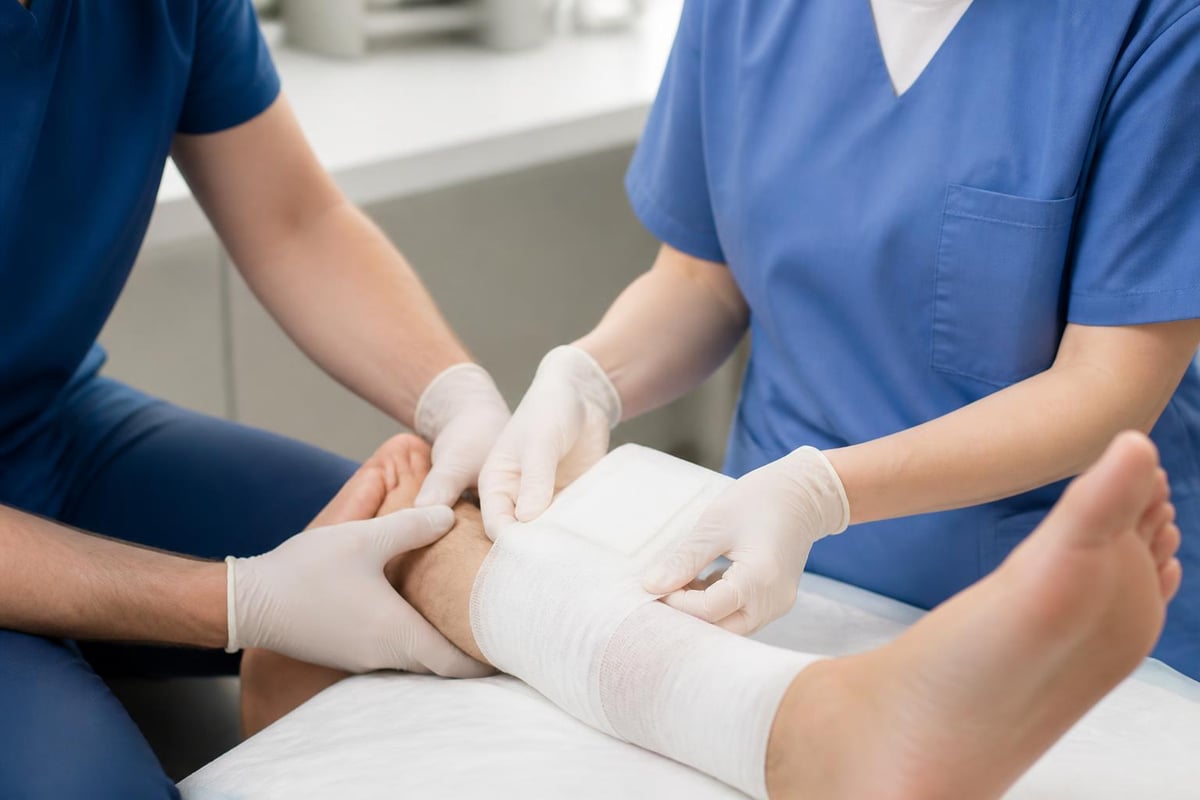
Bandage Securing Methods
After dressing placement, securing bandages maintain coverage and provide additional functions:
For roller bandages:
- Begin below the wound and wrap upward in overlapping spirals
- Maintain consistent tension without constricting circulation
- Secure the end with tape or integrated fasteners
- Check distal pulse and sensation after application
For compression applications:
- Apply firm, even pressure throughout the wrapped area
- Use figure-eight patterns around joints for better conformity
- Monitor for signs of excessive tightness including numbness or color changes
Building Comprehensive Supply Inventories
Stocking appropriate first aid bandages and dressings requires planning for diverse scenarios. Whether assembling a home first aid kit or an IFAK, balanced selection ensures readiness.
Essential Items for Basic Kits
Minimum dressing inventory:
- Assorted adhesive bandages (various sizes)
- Sterile gauze pads (2x2, 3x3, and 4x4 inch)
- Non-adherent dressing pads
- Large trauma pad (minimum 5x9 inch)
Basic bandage needs:
- Roller gauze (2-inch and 3-inch widths)
- Elastic wrap (3-inch or 4-inch)
- Triangular bandage
- Medical tape (cloth or paper)
Advanced Supplies for Trauma Response
Professional responders and those preparing for serious emergencies should include specialized items. First responder kits typically contain:
- Hemostatic gauze or dressings
- Pressure bandages with integrated applicators
- Occlusive dressings for chest wounds
- Burn dressings with cooling properties
- Additional quantities of all basic items
The complete kits collection offers pre-assembled options meeting various needs and skill levels.
Storage and Maintenance Considerations
First aid bandages and dressings deteriorate when stored improperly. Environmental factors affect both sterility and material integrity.
Optimal Storage Conditions
| Factor | Requirement | Reason |
|---|---|---|
| Temperature | 59-86°F (15-30°C) | Prevents adhesive degradation and material breakdown |
| Humidity | Below 60% relative humidity | Reduces mold growth and packaging compromise |
| Light exposure | Dark or opaque containers | Prevents UV damage to materials |
| Contamination | Sealed, clean environment | Maintains sterility and cleanliness |
Inspection and Replacement Protocols
Regular inventory checks identify supplies requiring replacement:
- Verify packaging integrity on all sterile items
- Check expiration dates quarterly
- Replace items showing discoloration or deterioration
- Replenish used supplies immediately after incidents
Proper rotation using first-in, first-out principles prevents waste from expiration. Dating supplies upon acquisition facilitates tracking.
Training for Effective Use
Possessing quality first aid bandages and dressings provides no benefit without the knowledge to apply them correctly. Training transforms supplies into effective tools.
Skill Development Areas
Essential competencies include:
- Wound assessment and severity determination
- Appropriate material selection for different injuries
- Sterile technique maintenance
- Proper bandaging methods for various body areas
- Recognizing complications requiring advanced care
Hands-on practice with actual materials builds muscle memory and confidence. Training scenarios should replicate realistic stress and environmental challenges.
Continuing Education
Medical knowledge and product technology evolve continuously. Responders should:
- Review updated guidelines annually
- Practice skills regularly to maintain proficiency
- Familiarize themselves with new products as they become available
- Participate in formal refresher courses every two years
The paramedic-operated Medical Gear Outfitters provides not only supplies but also the expertise to use them effectively.
Common Mistakes to Avoid
Even experienced responders sometimes make errors when applying first aid bandages and dressings. Awareness of common pitfalls improves care quality.
Application Errors
Frequent mistakes include:
- Using non-sterile dressings on penetrating wounds
- Applying bandages too tightly and compromising circulation
- Failing to extend dressing coverage beyond wound margins
- Removing dressings to inspect wounds unnecessarily
- Using expired or damaged sterile supplies
Selection Misjudgments
Choosing inappropriate materials wastes time and may worsen outcomes. Common selection errors involve using adhesive bandages for wounds requiring larger coverage, applying standard dressings to severe hemorrhage needing hemostatic agents, or selecting non-occlusive materials for chest wounds.
Understanding the specific capabilities and limitations of each product type prevents these mistakes. Reference materials and quick guides help responders make sound decisions under pressure.
Integration with Complete Emergency Response
First aid bandages and dressings form just one component of comprehensive emergency care. Effective wound management integrates with broader treatment priorities.
Primary Survey Considerations
Life-threatening conditions take precedence over wound coverage. Airway, breathing, and circulation issues require immediate attention. Once critical functions stabilize, appropriate dressing and bandaging protect injuries while other interventions continue.
The systematic approach taught in emergency medical training ensures responders address problems in order of severity. Wound coverage fits within this structured methodology rather than occurring in isolation.
Transition to Advanced Care
Even expertly applied first aid bandages and dressings provide only temporary management. Most significant injuries require professional medical evaluation and treatment. Field dressings stabilize patients during transport and initial hospital assessment.
Clear documentation of wound characteristics, treatment provided, and time of application helps receiving medical personnel. When possible, avoid disturbing well-applied dressings during handoff.
Mastering first aid bandages and dressings empowers you to provide effective care when injuries occur, whether at home, work, or in the field. The right knowledge combined with quality supplies creates the foundation for confident emergency response. At Medical Gear Outfitters, our paramedic-owned company provides both the high-quality first aid supplies and expert guidance you need to prepare for any emergency situation. Explore our comprehensive selection of dressings, bandages, and complete kits designed to equip you as an effective first responder.

