Emergency Medical Equipment: Essential Gear Guide 2026
When seconds count during a medical emergency, having the right emergency medical equipment can mean the difference between life and death. Whether you're a medical professional, first responder, or concerned citizen preparing for unexpected situations, understanding what equipment to have on hand and how to use it effectively is paramount. The landscape of emergency response has evolved significantly, with modern equipment becoming more accessible, user-friendly, and effective for both trained professionals and lay responders. This comprehensive guide explores the essential categories of emergency medical equipment, helping you make informed decisions about what to include in your emergency preparedness strategy.
Critical Categories of Emergency Medical Equipment
Emergency medical equipment falls into several distinct categories, each serving vital functions during medical crises. Understanding these categories helps responders prioritize their equipment selections based on likely scenarios and skill levels.
Airway Management Tools
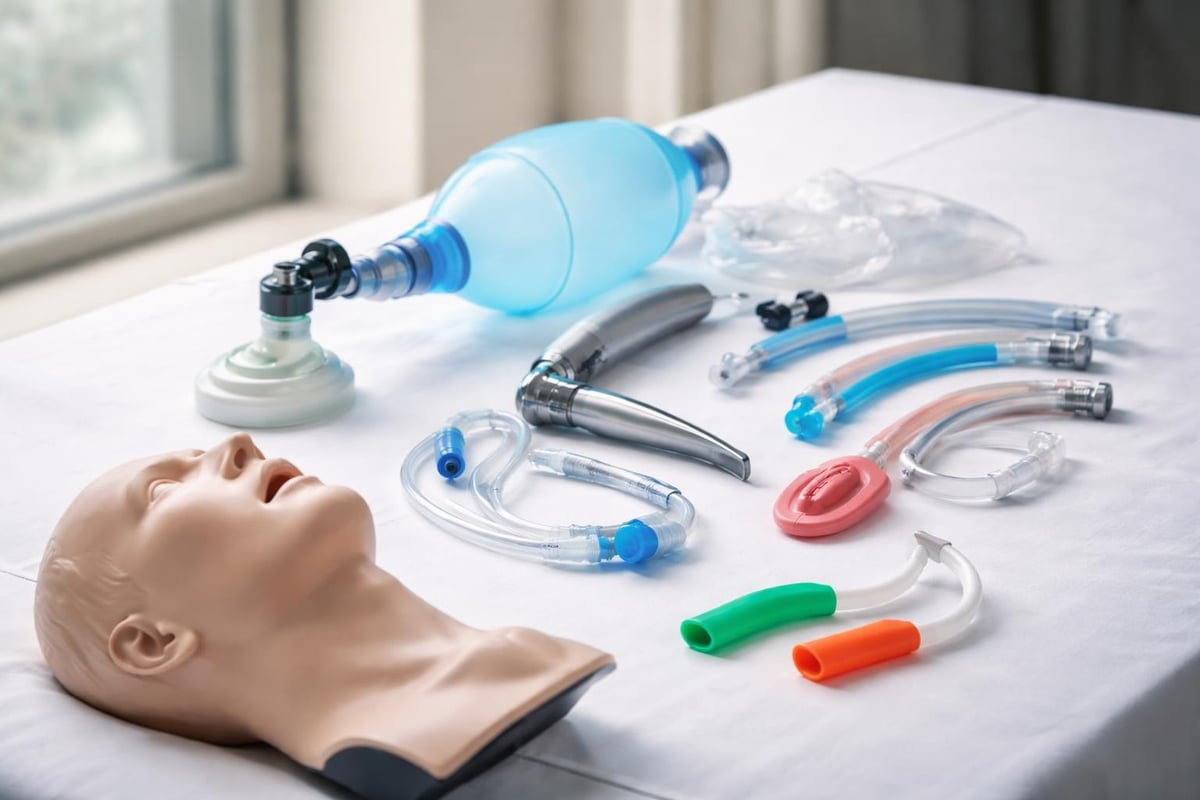
Airway compromise represents one of the most immediate life threats in emergency situations. Oropharyngeal airways (OPAs) and nasopharyngeal airways (NPAs) serve as basic adjuncts to maintain patent airways in unconscious patients. These simple devices prevent the tongue from obstructing the airway, buying crucial time until advanced care arrives.
Bag-valve-mask (BVM) devices enable manual ventilation when patients cannot breathe adequately on their own. Modern BVMs come in adult, pediatric, and infant sizes, featuring one-way valves that prevent cross-contamination and oxygen reservoirs that increase delivered oxygen concentrations.
For more advanced providers, supraglottic airway devices offer alternatives to endotracheal intubation. These include:
- King LT airways
- i-gel supraglottic devices
- Laryngeal mask airways (LMAs)
- Combitube devices
Hemorrhage Control Equipment
Uncontrolled bleeding ranks among the leading preventable causes of death in trauma situations. Modern emergency medical equipment for bleeding control has advanced dramatically, particularly following lessons learned from military medicine.
Tourniquets represent the gold standard for extremity hemorrhage control. The Combat Application Tourniquet (CAT) and SOF Tactical Tourniquet (SOFTT-W) have proven track records in both combat and civilian settings. When applied correctly within the "golden hour," tourniquets save lives without significant complication rates.
Hemostatic dressings contain agents like kaolin or chitosan that accelerate clotting. Products such as QuikClot Combat Gauze and Celox Gauze prove invaluable for wounds in junctional areas where tourniquets cannot be applied, such as the groin, neck, or axilla.
| Hemorrhage Control Device | Primary Use | Skill Level Required | Average Application Time |
|---|---|---|---|
| Combat Application Tourniquet | Extremity bleeding | Basic | 30-60 seconds |
| Hemostatic Gauze | Junctional hemorrhage | Intermediate | 2-3 minutes |
| Pressure Dressings | Moderate bleeding | Basic | 1-2 minutes |
| Chest Seals | Penetrating thoracic trauma | Intermediate | 30-90 seconds |
Understanding how to know if bleeding is serious helps responders make rapid decisions about which hemorrhage control methods to deploy.
Trauma Response Equipment
Trauma scenarios demand specialized emergency medical equipment designed to address multiple life-threatening injuries simultaneously. Comprehensive contents of IFAK (Individual First Aid Kits) provide excellent templates for trauma equipment selection.
Chest Trauma Management
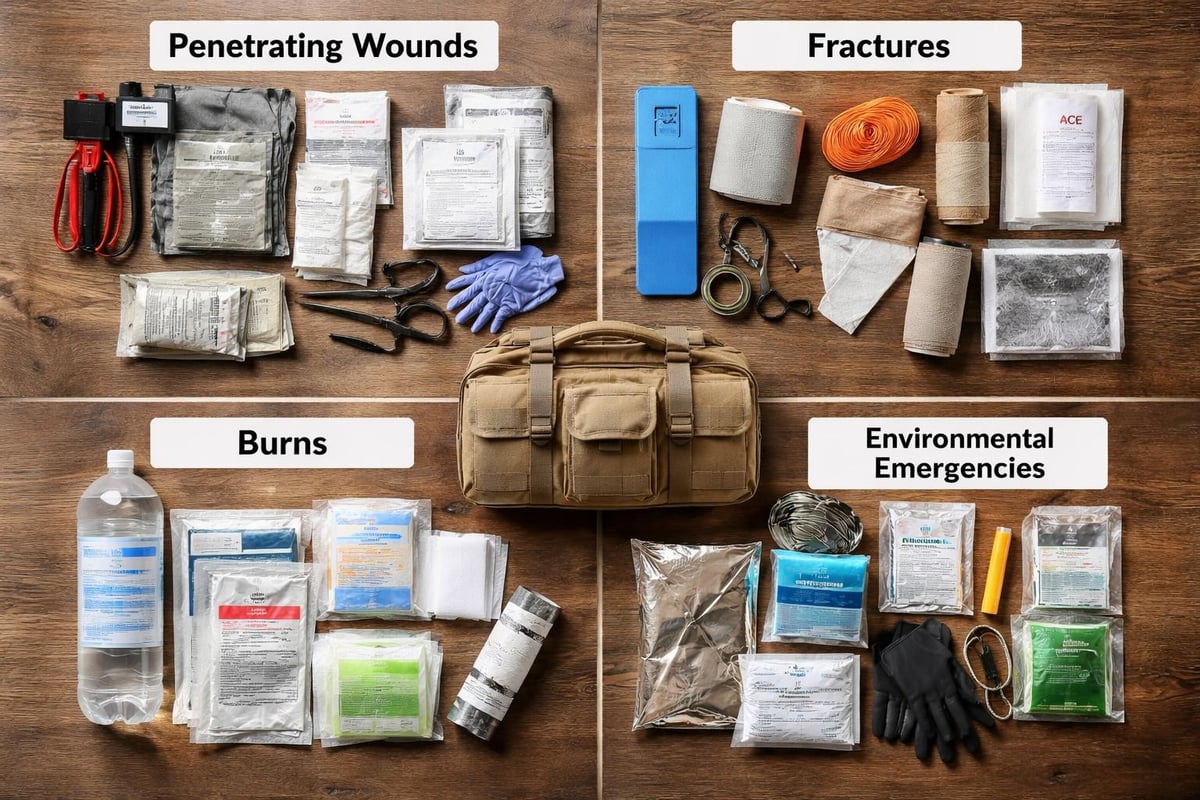
Penetrating chest injuries create unique challenges requiring specific interventions. Vented chest seals address open pneumothorax (sucking chest wounds) by creating one-way valves that allow air to escape the pleural space while preventing atmospheric air entry. Leading products include HyFin Vent and Bolin chest seals, both featuring dual-seal designs for entrance and exit wounds.
Needle decompression kits allow trained providers to address tension pneumothorax, a rapidly fatal condition where air accumulates in the pleural space, collapsing the lung and shifting mediastinal structures. These kits typically include 14-gauge angiocatheters designed for insertion at the second intercostal space, midclavicular line.
Fracture Stabilization
Splinting equipment ranges from simple to sophisticated:
- SAM splints offer moldable aluminum construction that adapts to virtually any extremity
- Vacuum splints conform to limb contours and provide excellent immobilization
- Traction splints address femur fractures, reducing pain and bleeding
- Cervical collars protect the cervical spine in trauma patients
Triangular bandages serve multiple purposes beyond simple bandaging. These versatile tools function as triangular bandages for slings, swathes, or pressure dressings, making them indispensable in resource-limited environments.
Diagnostic and Monitoring Equipment
Effective emergency response requires accurate patient assessment. Modern emergency medical equipment includes portable diagnostic tools that provide critical information guiding treatment decisions.
Vital Sign Monitoring
Pulse oximeters measure oxygen saturation non-invasively, alerting responders to respiratory compromise before visible cyanosis develops. Compact fingertip models now cost less than fifty dollars while providing hospital-grade accuracy.
Blood pressure cuffs in multiple sizes ensure accurate readings across patient populations. Aneroid sphygmomanometers remain popular for their durability and reliability without batteries, though automated devices offer convenience for less experienced users.
Thermometers help identify fever or hypothermia. Digital models provide rapid readings, while infrared temporal artery thermometers offer non-contact options reducing cross-contamination risks.
Diagnostic Tools
- Stethoscopes for auscultating breath sounds, heart tones, and blood pressure
- Penlight or pupil gauge for neurological assessment
- Glucometers for checking blood glucose levels
- Portable ECG devices for cardiac rhythm analysis (advanced providers)
Medication and Fluid Administration
Many emergency medical situations require pharmacological interventions. The specific medications available depend on provider certification level and local protocols.
Basic Medications
Over-the-counter medications appropriate for emergency medication boxes include:
- Aspirin for suspected cardiac events
- Diphenhydramine for allergic reactions
- Acetaminophen and ibuprofen for pain and fever
- Glucose tablets for hypoglycemia
- Activated charcoal for certain ingestions
Advanced Interventions
Paramedics and other advanced providers carry emergency medical equipment for medication delivery including:
Epinephrine auto-injectors treat anaphylaxis, with both adult (0.3mg) and pediatric (0.15mg) doses. These devices require minimal training and prove critical for severe allergic reactions.
Intravenous access equipment enables fluid resuscitation and medication administration. This includes IV catheters in multiple gauges, administration sets, various crystalloid solutions, and intraosseous devices for situations where venous access proves difficult.
| Medication Delivery Method | Onset Time | Skill Level | Primary Indications |
|---|---|---|---|
| Oral administration | 20-60 minutes | Basic | Non-emergent conditions |
| Auto-injector | 5-10 minutes | Basic | Anaphylaxis, seizures |
| Intravenous | 1-3 minutes | Advanced | Shock, cardiac arrest |
| Intraosseous | 1-3 minutes | Advanced | Failed IV access |
Kit Configuration and Organization
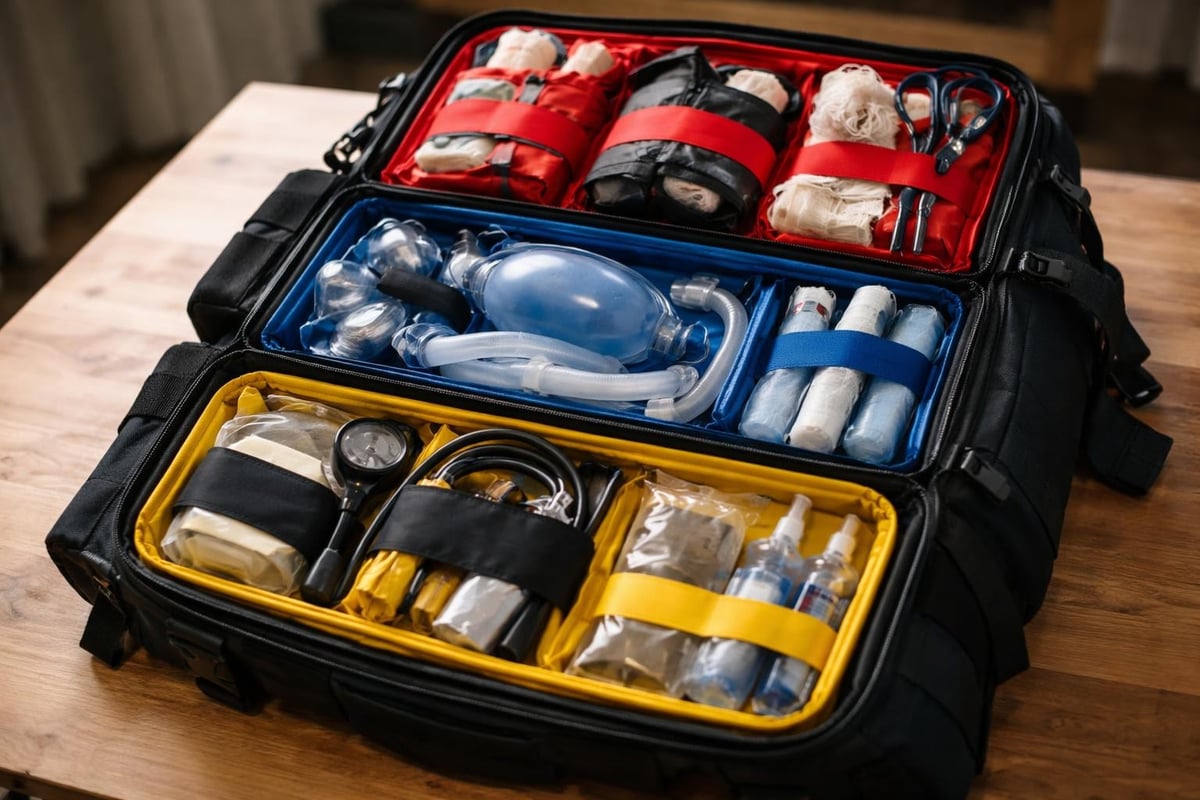
Proper organization of emergency medical equipment dramatically improves response efficiency during high-stress situations. The configuration should reflect the MARCH algorithm: Massive hemorrhage, Airway, Respiration, Circulation, and Hypothermia prevention.
Personal vs. Professional Kits
Personal medical kits for civilians should focus on:
- Immediate hemorrhage control (tourniquet, pressure dressing)
- Basic wound care (gauze, tape, bandages)
- Common medications
- Personal protective equipment (gloves, face shields)
Professional kits require comprehensive equipment spanning all emergency categories. Best medical kits balance portability with capability, often using modular systems allowing responders to scale equipment to anticipated scenarios.
Portability Considerations
Different situations demand different equipment configurations:
Jump bags provide maximum capacity for first responders arriving in vehicles. These typically weigh 20-40 pounds fully stocked and contain equipment for multiple patients.
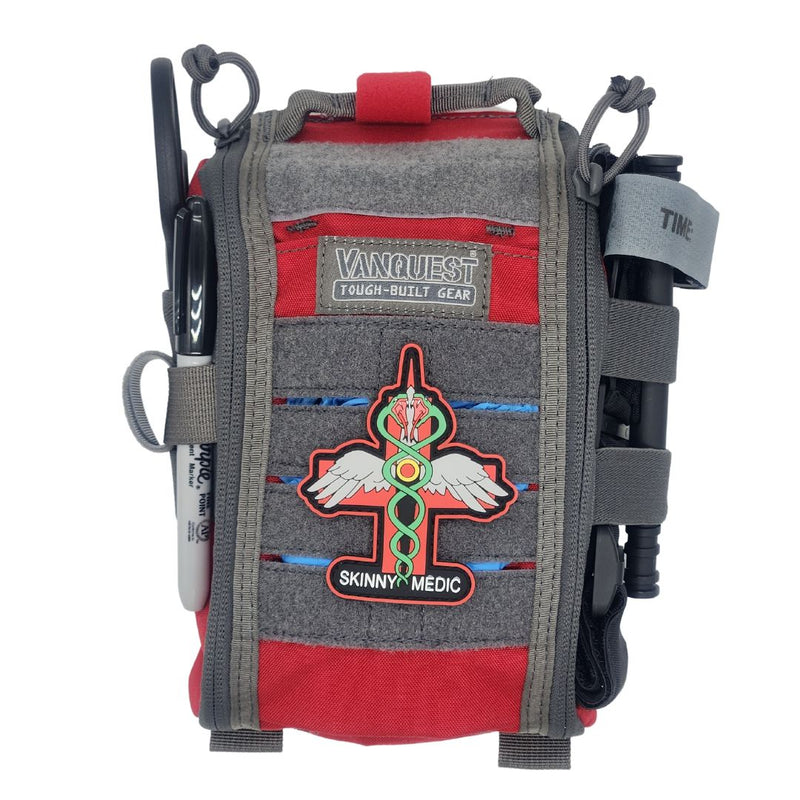
Tactical medical packs emphasize portability for austere or dangerous environments. Worn on the body, these portable medical kits contain only essential life-saving equipment prioritizing lightweight, durable components.
Pocket-sized individual kits ensure every team member carries basic hemorrhage control. Minimally, these include a tourniquet, compressed gauze, and gloves.
Environmental and Specialty Equipment
Certain environments or patient populations require specialized emergency medical equipment beyond standard trauma and medical supplies.
Wilderness Medicine Equipment
Remote settings where evacuation times exceed one hour necessitate additional equipment:
- Hypothermia prevention: space blankets, heat packs, insulated shelters
- Extended care supplies: additional wound dressings, antibiotics (if certified)
- Improvisation tools: duct tape, safety pins, paracord
- Communication devices: satellite messengers, whistles, signal mirrors
Pediatric Considerations
Children require appropriately sized emergency medical equipment. Broselow tapes help providers quickly determine appropriate equipment sizes and medication doses based on patient length. Pediatric-specific items include smaller blood pressure cuffs, pediatric BVM masks, and appropriately dosed medications.
Water Rescue Equipment
Aquatic emergencies demand waterproof emergency medical equipment and specialized interventions. Dry bags protect equipment while floating throw bags and rescue tubes enable safe victim retrieval before medical care begins.
Quality Standards and Regulations
Understanding regulatory requirements ensures your emergency medical equipment meets professional standards and legal requirements.
Certification Standards
Various organizations establish equipment standards:
- ISO 13485 governs medical device quality management systems
- FDA approval validates safety and effectiveness for medical devices sold in the United States
- ASTM standards address performance requirements for specific equipment types
- NFPA guidelines outline ambulance equipment requirements
Professional responders should verify their emergency medical equipment meets applicable standards for their jurisdiction and practice level.
Maintenance and Expiration Management
Regular inspection prevents equipment failure during emergencies:
Monthly checks should verify:
- All items present and properly stored
- No damage to packaging or equipment
- Oxygen tanks adequately pressurized
- Battery-powered devices functional
Expiration tracking proves critical since medications, hemostatic agents, and certain dressings degrade over time. Implementing rotation systems ensures oldest items get used first during training or replaced before expiration.
Training and Competency
Possessing emergency medical equipment without proper training creates false confidence and potential liability. Equipment effectiveness depends entirely on user competency.
Certification Levels
Different training levels authorize different interventions:
Basic First Aid courses teach laypersons fundamental care including wound management, basic splinting, and CPR. These typically require 4-8 hours of instruction.
Wilderness First Responder certification provides extended care skills for remote environments where definitive care may be hours or days away. These intensive courses span 70-80 hours.
EMT and Paramedic programs prepare professional responders with comprehensive emergency medical knowledge. EMT courses require 120-150 hours while paramedic programs demand 1,200-1,800 hours of didactic and clinical training.
Practical Skills Development
Classroom knowledge must translate into practical competency:
- Hands-on practice with actual equipment builds muscle memory and confidence
- Scenario-based training develops decision-making under pressure
- Regular refresher courses maintain skills that degrade without use
- Stress inoculation through realistic simulations prepares responders for actual emergencies
Legal and Ethical Considerations
Deploying emergency medical equipment carries legal implications varying by jurisdiction and provider status.
Good Samaritan Laws
Most jurisdictions protect laypersons providing emergency care in good faith. However, protection typically requires:
- Acting within one's training level
- Obtaining consent when possible
- Providing care meeting reasonable standards
- Not abandoning the patient once care begins
Professional responders face higher standards of care and must operate within their certification scope. Using equipment or performing procedures beyond one's training level risks both patient harm and legal liability.
Documentation Requirements
Professional responders must document emergency medical equipment usage and patient care thoroughly. Proper documentation:
- Creates legal protection demonstrating appropriate care
- Enables continuity of care at receiving facilities
- Supports quality improvement processes
- Satisfies regulatory and billing requirements
Selecting and maintaining appropriate emergency medical equipment requires careful consideration of likely scenarios, user training levels, and regulatory requirements. Whether building a basic home first aid kit or outfitting professional responders, prioritizing quality equipment and comprehensive training ensures readiness when emergencies strike. Medical Gear Outfitters combines paramedic expertise with high-quality emergency response supplies, providing both the equipment and knowledge necessary to act confidently as a first responder. Our mission centers on ensuring you're prepared with professional-grade gear and proper training to make a difference when seconds matter most.