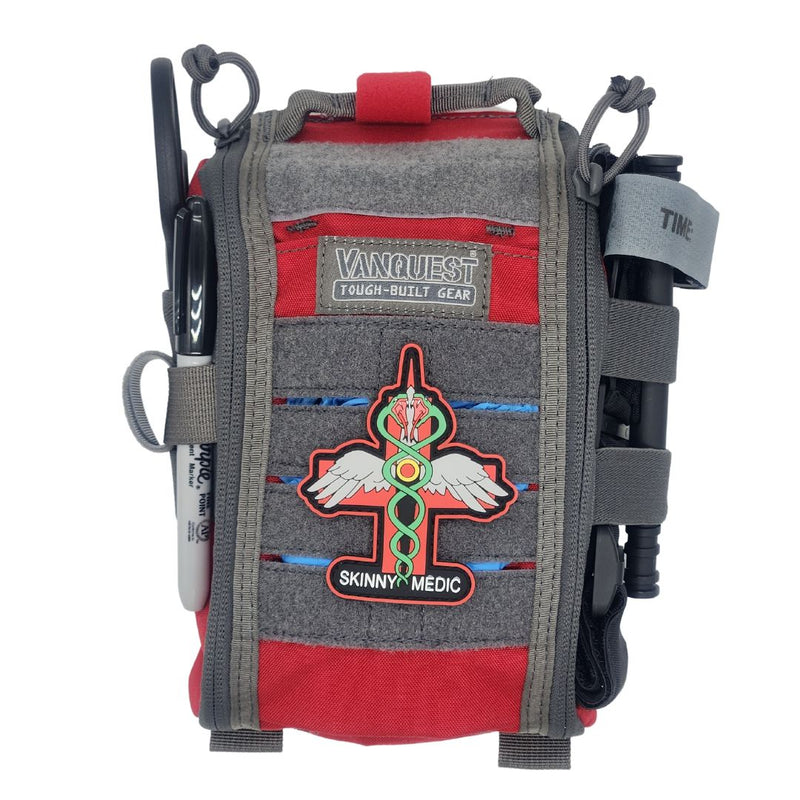
Boo Boo Kit Guide: Essential Minor Injury First Aid
When minor injuries happen at home, on the trail, or during everyday activities, having the right supplies immediately available can make all the difference. A boo boo kit serves as your first line of defense against the small cuts, scrapes, burns, and bruises that occur regularly but don't require emergency medical attention. Unlike comprehensive trauma kits designed for life-threatening situations, these compact kits focus specifically on the minor injuries that constitute the majority of household medical needs. Understanding what belongs in a properly stocked boo boo kit and how to organize these supplies ensures you're prepared to handle everyday mishaps effectively.
Understanding the Purpose of a Boo Boo Kit
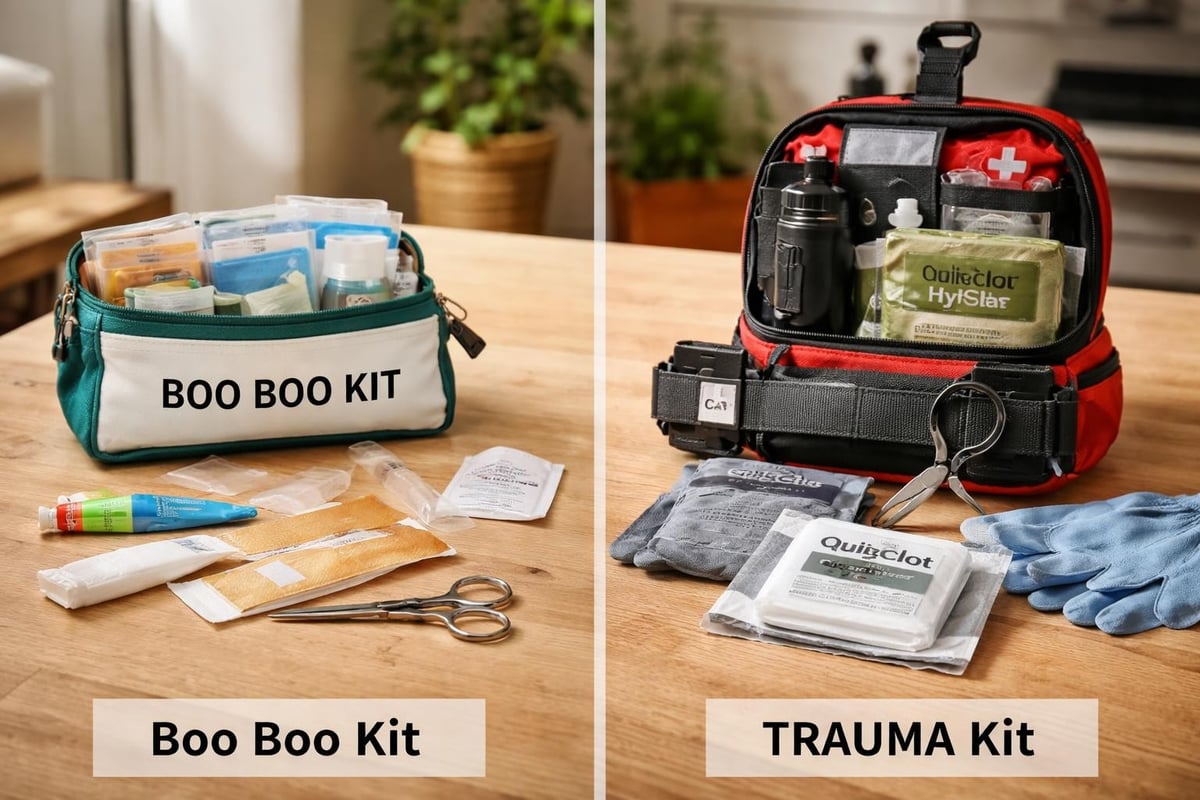
A boo boo kit fills a specific niche in your overall preparedness strategy. While trauma kits address severe bleeding, airway compromise, and other critical injuries, a boo boo kit handles the minor medical situations you encounter most frequently.
These kits typically address common scenarios including minor cuts and abrasions, small burns from cooking or crafting, splinters and foreign object removal, insect bites and stings, minor bruising and swelling, and small blisters from friction. The goal is quick access to appropriate supplies without sorting through larger medical kits designed for more serious emergencies.
Differentiating Minor Care from Emergency Response
The distinction between boo boo kits and emergency medical supplies is important for proper preparedness. A boo boo kit contains items for self-limiting injuries that will heal with basic first aid, while emergency kits focus on stabilizing patients until professional medical help arrives.
Key differences include:
- Supply focus: Adhesive bandages versus tourniquets and hemostatic agents
- Injury severity: Scraped knees versus arterial bleeding
- Treatment goal: Comfort and infection prevention versus life preservation
- User skill level: Minimal training required versus advanced first aid knowledge
- Response time: Immediate self-treatment versus bridging to EMS arrival
This specialization allows you to maintain organized, efficient medical supplies rather than searching through comprehensive kits for simple solutions. Many families and outdoor enthusiasts maintain both types of kits, ensuring they're prepared for any situation.
Essential Contents for an Effective Boo Boo Kit
Building or selecting a boo boo kit requires understanding which supplies address the most common minor injuries. The Boo-Boo 2.0 Basic First Aid Kit demonstrates how comprehensive these compact kits can be when thoughtfully assembled.
Wound Care Fundamentals
Every boo boo kit needs robust wound care supplies as the foundation. Adhesive bandages in multiple sizes handle everything from paper cuts to scraped knees, while butterfly closures or steri-strips help approximate wound edges for better healing.
| Supply Category | Recommended Items | Primary Use |
|---|---|---|
| Adhesive Bandages | Various sizes, fabric and waterproof | Minor cuts, abrasions |
| Wound Closure | Butterfly bandages, steri-strips | Keeping wound edges together |
| Gauze Products | 2x2 and 4x4 pads, rolled gauze | Covering larger abrasions |
| Antiseptics | Alcohol wipes, antiseptic spray | Cleaning wounds |
| Topical Treatments | Antibiotic ointment, burn gel | Preventing infection, soothing burns |
First aid kit supplies should always include cleaning agents before covering any wound. The compact boo-boo kit approach uses mesh organization to keep these items accessible and visible.
Specialty Items for Common Scenarios
Beyond basic wound care, several specialized items significantly enhance a boo boo kit's utility. Tweezers remove splinters and debris, while small scissors cut tape and gauze to appropriate sizes.
Additional valuable inclusions:
- Disposable gloves for hygienic treatment
- Pain relief medication (appropriate for all family members)
- Antihistamine for allergic reactions to bites or stings
- Instant cold packs for reducing swelling
- Burn dressing or gel for thermal injuries
- Medical tape in various widths
- Safety pins for securing bandages
Some specialized versions like the natural remedy boo boo kit incorporate alternative treatments such as herbal salves and natural anti-inflammatory products, appealing to those preferring non-pharmaceutical options.
Choosing the Right Size and Configuration
Boo boo kits come in various sizes and configurations to match different needs and environments. Selecting the appropriate kit depends on several factors including the number of people you need to serve, typical activities and associated injury risks, available storage space, and whether the kit remains stationary or travels with you.
Portable Versus Stationary Options
A home care kit that remains in a bathroom cabinet can be larger and more comprehensive than a portable version for your vehicle or backpack. Portable kits prioritize compact organization and durability.
Portable kit considerations:
- Attachment systems: MOLLE compatibility for tactical gear
- Weather resistance: Waterproof or water-resistant containers
- Weight: Light enough for extended carry
- Accessibility: Quick-open designs for rapid access
- Durability: Resistant to crushing and environmental exposure
The 38-piece compact design represents an excellent balance between comprehensive coverage and portability. For families with young children, solutions like the Boo Boo Ball concept combine familiar comfort items with medical supplies.
Scaling for Different Group Sizes
Individual versus family kits require different supply quantities. A personal boo boo kit might contain a dozen adhesive bandages, while a family kit serving four people should stock at least four dozen in various sizes.
Consider these scaling factors: multiply basic quantities by the number of regular users, add extra supplies for extended trips or remote locations, include age-appropriate items for children or elderly family members, and account for specific medical conditions or allergies within your group.
Organization and Accessibility Strategies
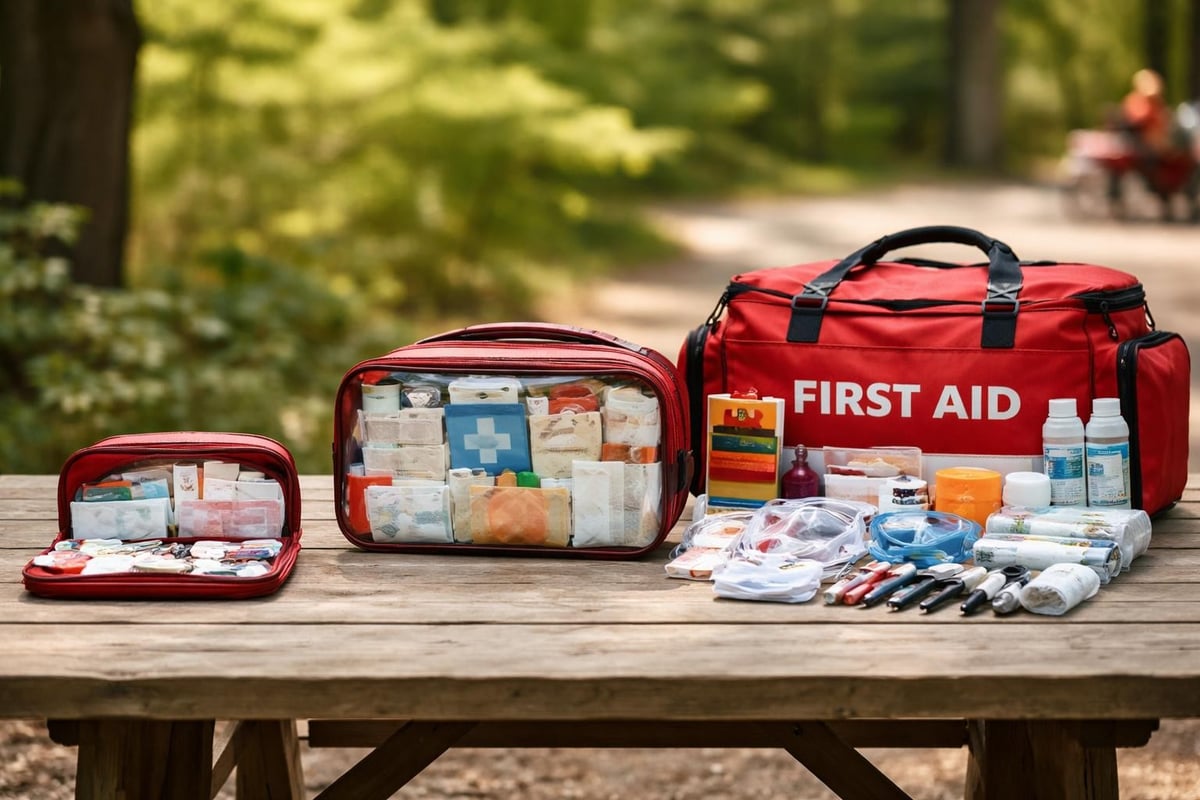
Even the best-stocked boo boo kit fails if you cannot quickly find needed supplies during an injury. Effective organization transforms a collection of medical items into a functional emergency response tool.
Internal Organization Methods
Clear compartmentalization prevents the frustrating jumble that develops in poorly organized kits. The mesh pocket system allows immediate visual identification of supplies without emptying the entire kit.
Different organization approaches include:
- Category separation: Group wound care, burn treatment, and medications separately
- Frequency-based placement: Position most-used items in easily accessed pockets
- Size coordination: Store similar-sized items together to maximize space
- Color coding: Use colored bags or labels for instant identification
- Inventory lists: Include a contents list on the kit exterior or inside lid
Transparent pouches or containers allow quick visual inventory checks, helping you identify when resupply becomes necessary. This visibility also helps during high-stress situations when fine motor skills may be compromised.
Maintenance and Expiration Tracking
Organizing a boo boo kit extends beyond initial setup to ongoing maintenance. Medical supplies have expiration dates that affect their efficacy and safety.
Establish a maintenance routine:
- Schedule quarterly inventory checks
- Mark expiration dates prominently on packaging
- Rotate stock using oldest items first
- Replace used items immediately after each incident
- Update contents based on lessons learned from actual use
The refill kit approach simplifies restocking by providing pre-packaged replacement supplies specifically designed for your kit model. This eliminates guesswork about which items need replacement and ensures compatibility with your existing organization system.
Customizing for Specific Activities and Environments
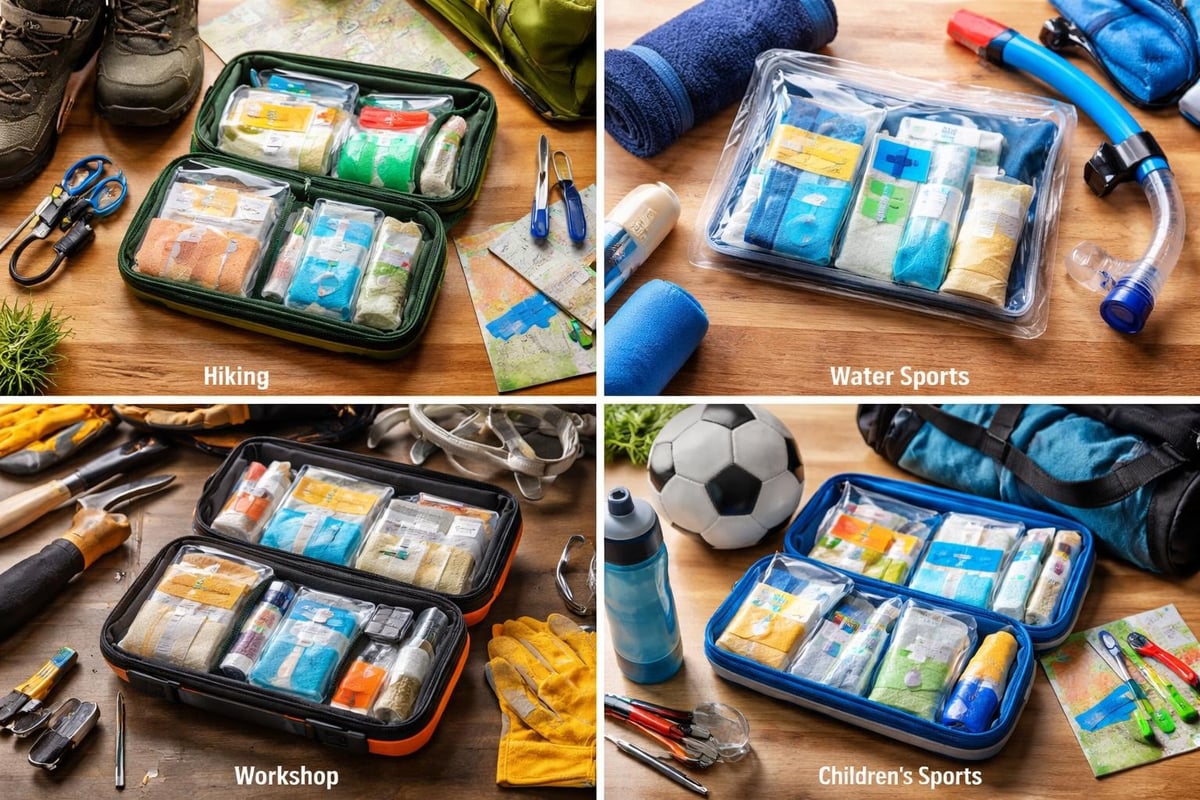
While basic boo boo kit contents remain relatively consistent, customization based on your specific activities and environments significantly improves effectiveness. A kit for hiking differs substantially from one designed for workshop use or children's sports.
Activity-Specific Modifications
Different activities present unique injury patterns that should influence kit contents. Outdoor recreation often involves blisters, insect encounters, and plant-related injuries, while workshop environments see more cuts, splinters, and minor burns.
| Activity Type | Additional Priority Items | Injury Focus |
|---|---|---|
| Hiking/Camping | Moleskin, tick removal tool, poison ivy treatment | Blisters, insect bites, plant contact |
| Water Sports | Waterproof bandages, jellyfish sting treatment | Cuts on rocks, marine life encounters |
| Workshop/Garage | Eye wash, burn gel, metal splinter removal | Wood/metal splinters, chemical exposure, burns |
| Children's Sports | Ice packs, elastic wraps, extra large bandages | Sprains, road rash, impact injuries |
| Cycling | Road rash supplies, extra gauze pads | Abrasions, hand injuries |
The MPA Bandage and Boo-Boo Kit includes medications for common ailments, making it particularly suitable for extended outdoor activities where various issues may arise beyond simple injuries.
Environmental Considerations
Your environment also dictates certain kit modifications. Desert environments require additional sun protection and treatments for heat-related issues, while cold climates necessitate chemical warmers and frostbite awareness supplies.
Climate-based additions:
- Hot climates: Electrolyte packets, extra burn gel, sunburn treatment
- Cold climates: Hand warmers, lip balm, cold injury recognition guide
- Humid areas: Antifungal treatments, moisture-wicking bandages
- Dry regions: Extra moisturizing ointments, saline for eye irrigation
- High altitude: Increased adhesive bandage quantities due to slower healing
Understanding your typical environment helps prevent both overpacking unnecessary items and lacking critical supplies when specific needs arise. The compact nature of a boo boo kit means every item should earn its place through probable utility.
Training and Proper Use
Possessing a well-stocked boo boo kit provides little benefit without understanding proper first aid techniques. Basic training ensures you can effectively use the supplies during actual injuries.
Basic First Aid Principles
Several fundamental principles apply across most minor injury scenarios. Always wash hands or use gloves before treating any wound to prevent infection introduction. Clean wounds thoroughly before applying dressings, and never assume a small wound is too minor for proper cleaning.
The basic wound care sequence follows these steps:
- Control bleeding by applying direct pressure with clean gauze
- Clean the wound using antiseptic wipes or clean water
- Remove debris carefully with cleaned tweezers if necessary
- Apply antibiotic ointment to reduce infection risk
- Cover appropriately with a bandage matching the wound size
- Monitor for complications including increased redness, swelling, or discharge
For burns, immediately cool the affected area with cool (not ice-cold) running water for several minutes before applying burn gel and covering loosely with a non-stick dressing. Never apply ice directly to burns, as this can cause additional tissue damage.
When to Escalate Care
Perhaps the most critical skill when using a boo boo kit involves recognizing when an injury exceeds the kit's scope. Certain warning signs indicate the need for professional medical evaluation rather than self-treatment.
Seek professional care when:
- Wounds won't stop bleeding after ten minutes of direct pressure
- Deep cuts expose underlying tissue, muscle, or bone
- Animal or human bites break the skin
- Burns cover large areas or involve the face, hands, or genitals
- Signs of infection develop despite proper initial treatment
- Numbness or loss of function occurs near the injury site
Understanding these limitations prevents delays in obtaining necessary professional care. A boo boo kit handles minor injuries effectively, but recognizing its boundaries protects against complications from undertreated serious injuries. Paramedic-owned companies like Medical Gear Outfitters provide not just supplies but also the educational resources needed for proper use.
Integrating Boo Boo Kits into Comprehensive Preparedness
A boo boo kit represents just one layer in a comprehensive medical preparedness strategy. Properly integrated with other emergency supplies, these minor injury kits enhance overall readiness without creating redundancy or confusion.
The Preparedness Pyramid
Medical preparedness can be visualized as a pyramid with different supply levels. At the base sit boo boo kits for frequent minor injuries, representing your most-used medical supplies. The middle layer contains standard first aid kits for moderate injuries requiring more intervention but not life-threatening. The top tier includes trauma kits with tourniquets, hemostatic agents, and airway management supplies for critical emergencies.
This layered approach ensures appropriate resources for different severity levels without the inefficiency of carrying full trauma kits everywhere. A family might keep a boo boo kit in the kitchen, a standard first aid kit in the main bathroom, and a trauma kit in the master bedroom or vehicle.
Multiple Kit Locations
Strategic placement of multiple boo boo kits throughout your home and vehicles provides immediate access when injuries occur. The time saved by not searching for supplies matters even with minor injuries, especially when treating distressed children.
Consider placing boo boo kits in:
- Each bathroom for easy access during daily routines
- The kitchen where cooking-related injuries commonly occur
- Garage or workshop areas near power tools and equipment
- Each vehicle for road trips and daily commuting
- Outdoor recreation gear bags or backpacks
- Home office or workspace areas
Maintaining multiple smaller kits often proves more practical than one large centralized kit, particularly in multi-story homes or when various family members engage in different activities simultaneously. The relatively low cost of basic boo boo kit supplies makes this distributed approach affordable.
Integration with Emergency Planning
Your boo boo kits should integrate with broader emergency planning including evacuation bags, shelter-in-place supplies, and communication strategies. While emergency hospital bags focus on sustained care during extended emergencies, boo boo kits provide immediate minor injury response during the chaotic initial phases.
Document kit locations in your family emergency plan so all household members know where to find supplies quickly. Include kit checks in your regular emergency preparedness reviews, updating contents based on changing family needs, new activities, or lessons learned from actual use.
Teaching Children About Boo Boo Kits
Educating children about basic first aid and boo boo kit use builds confidence while teaching valuable life skills. Age-appropriate training helps children respond calmly to minor injuries rather than panicking.
Age-Appropriate Education
Different age groups can handle varying levels of responsibility regarding boo boo kits. Preschool children can learn to identify when they need help and where the kit is located, while elementary students can begin learning to clean minor scrapes and apply adhesive bandages independently.
Progressive skill development:
- Ages 3-5: Identifying "boo boos" and asking adults for help
- Ages 6-8: Washing minor cuts and applying simple bandages with supervision
- Ages 9-12: Independently treating minor injuries and recognizing when adult help is needed
- Ages 13+: Full boo boo kit use and assisting younger siblings
Resources like safety songs for children make learning about first aid engaging and memorable. Creating positive associations with medical care reduces fear and promotes calm responses during actual injuries.
Making First Aid Kid-Friendly
Child-specific boo boo kits incorporate age-appropriate supplies and friendly designs that reduce medical anxiety. Character-themed bandages, colorful containers, and child-safe scissors make the kit less intimidating while maintaining full functionality.
Some families create "junior first aider" kits with children, allowing them to select certain items and decorate containers. This ownership increases their comfort level with the supplies and reinforces the importance of preparedness. Programs like the "Mommy and Me" first aid class provide structured learning environments where children can build their own kits while learning proper use.
Quality Considerations and Product Selection
Not all boo boo kits offer equal quality or value. Understanding what separates effective products from inadequate ones helps you make informed purchasing decisions or build superior custom kits.
Evaluating Pre-Made Kits
When purchasing complete boo boo kits, examine both the container quality and the individual component specifications. Durable, water-resistant cases protect supplies from environmental damage, while cheap containers may crack or allow moisture infiltration.
| Quality Factor | Premium Features | Budget Shortcuts |
|---|---|---|
| Container | Rigid, waterproof, reinforced seams | Soft fabric, water-resistant only |
| Bandages | Flexible fabric, strong adhesive | Plastic, weak adhesive |
| Antiseptics | Individual sealed packets, current dates | Bulk bottles, approaching expiration |
| Organization | Multiple compartments, clear pouches | Single chamber, mixed contents |
| Documentation | Included instruction guide | No guidance provided |
Premium kits may cost more initially but often provide better long-term value through superior durability and more effective supplies. Paramedic-designed kits typically reflect real-world experience about which items prove most useful during actual injury response.
Building Custom Kits
Assembling your own boo boo kit allows complete control over contents and quality while potentially reducing costs. Purchase individual components from reputable suppliers, selecting professional-grade supplies rather than consumer-market alternatives when quality differences exist.
Custom kit advantages:
- Precise tailoring to your specific needs
- Ability to select preferred brands for each item
- Opportunity to include higher-quality supplies
- Flexibility to adjust quantities based on experience
- Educational value from researching and assembling components
Small kits provide excellent starting points, allowing you to add specialized items while maintaining a proven foundation. Balance the time investment of custom assembly against the convenience of quality pre-made options based on your priorities and expertise.
A properly stocked and organized boo boo kit represents essential preparedness for the minor injuries that occur regularly in daily life, providing immediate access to appropriate supplies without the complexity of comprehensive trauma kits. Whether you choose a compact pre-made solution or build a custom kit tailored to your specific activities and environment, having these supplies readily available ensures prompt, effective treatment that prevents complications and promotes healing. Medical Gear Outfitters combines paramedic expertise with quality products to help you build comprehensive preparedness systems that address everything from everyday scrapes to critical emergencies, ensuring you're ready to respond effectively when others need your help.