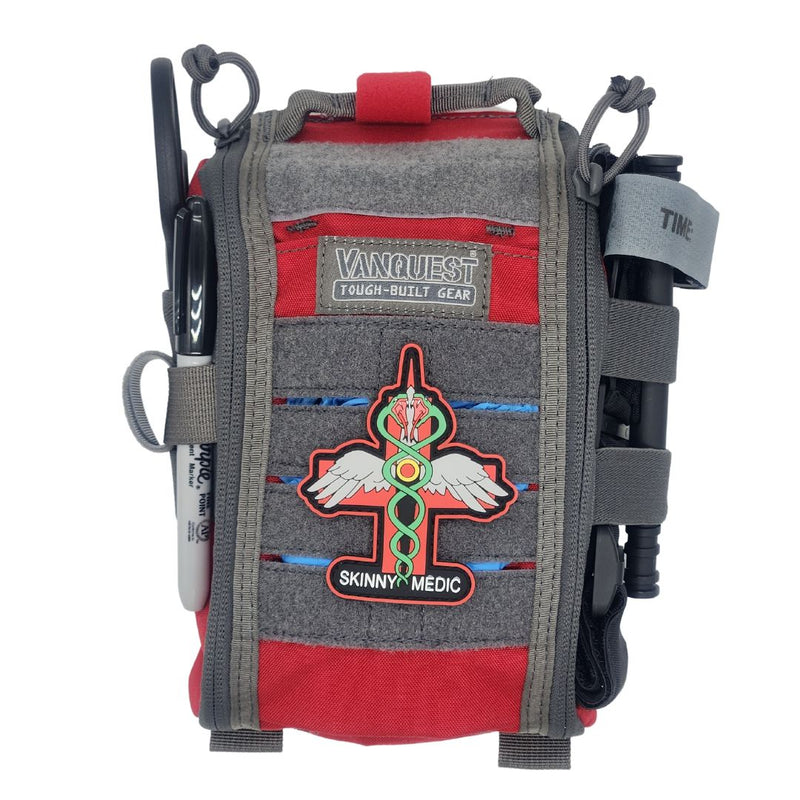
Military First Aid Pack: Essential Guide for 2026
When lives hang in the balance, the difference between survival and tragedy often comes down to immediate access to the right medical equipment. A military first aid pack represents decades of battlefield experience distilled into portable, mission-critical equipment designed for the most demanding emergency situations. These specialized kits have evolved through real-world combat scenarios, incorporating lessons learned from conflicts worldwide to maximize survival rates in austere environments. Whether you're a military professional, first responder, or civilian prepared to act in emergencies, understanding the components and principles behind military medical kits can dramatically improve your readiness to save lives.
Understanding Military First Aid Pack Standards
The modern military first aid pack follows strict guidelines established through Tactical Combat Casualty Care (TCCC) protocols, which emerged from extensive research into battlefield injuries and survival factors. These standards prioritize the most lethal, preventable causes of death in combat: massive hemorrhage, airway compromise, and tension pneumothorax.
Unlike civilian first aid kits designed primarily for minor injuries, a military first aid pack addresses life-threatening trauma. The Individual First Aid Kit (IFAK) serves as the baseline standard for military medical readiness, with research examining combat medics' aid bags confirming the critical importance of standardized equipment for implementing TCCC interventions effectively.
TCCC Guidelines and Their Impact
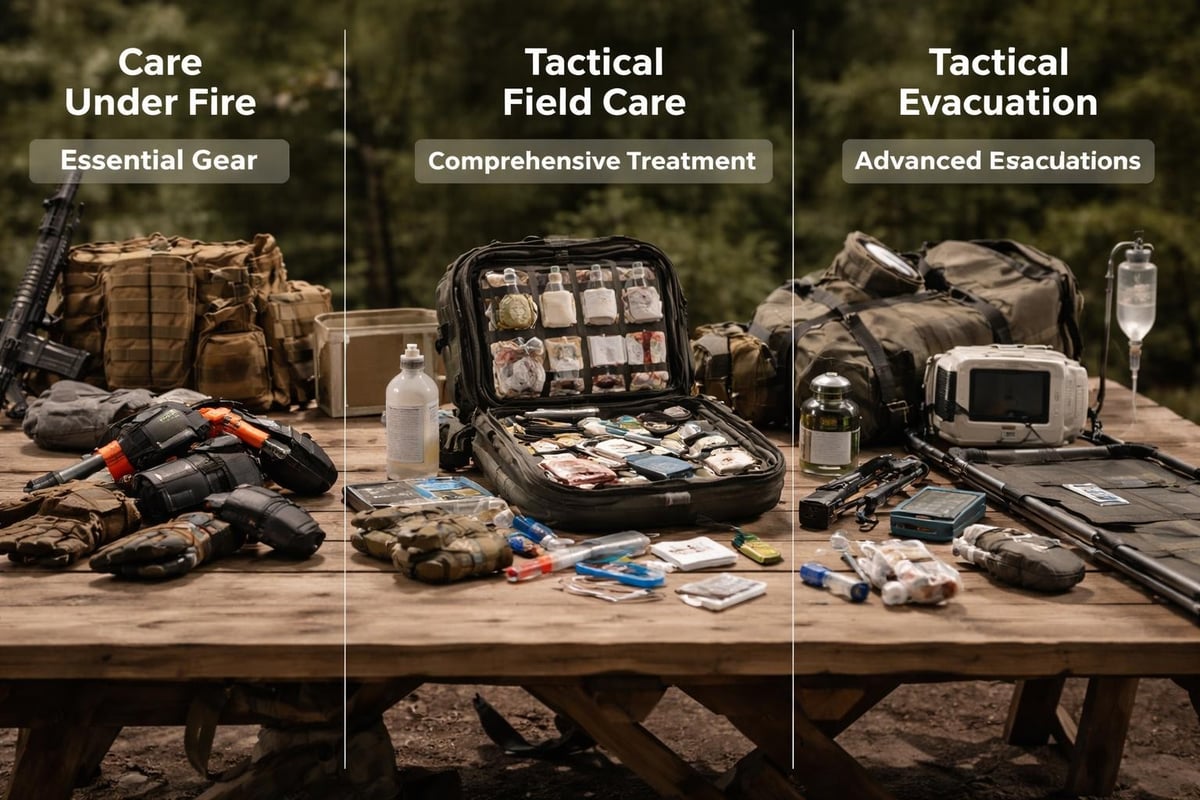
Tactical Combat Casualty Care divides emergency response into three distinct phases:
- Care Under Fire: Immediate actions while still under threat
- Tactical Field Care: Comprehensive treatment once the immediate threat is neutralized
- Tactical Evacuation Care: Advanced care during transport to medical facilities
Each phase requires specific equipment and techniques, all of which must fit within a compact, accessible package. The military first aid pack design reflects this phased approach, ensuring that the most critical interventions for each stage remain readily available.
Core Components of a Military First Aid Pack
A properly configured military first aid pack contains specific items selected for their proven effectiveness in treating combat injuries. The recommended contents of military IFAKs follow strict TCCC guidelines while allowing for some variation based on mission requirements and operational environment.
Hemorrhage Control Equipment
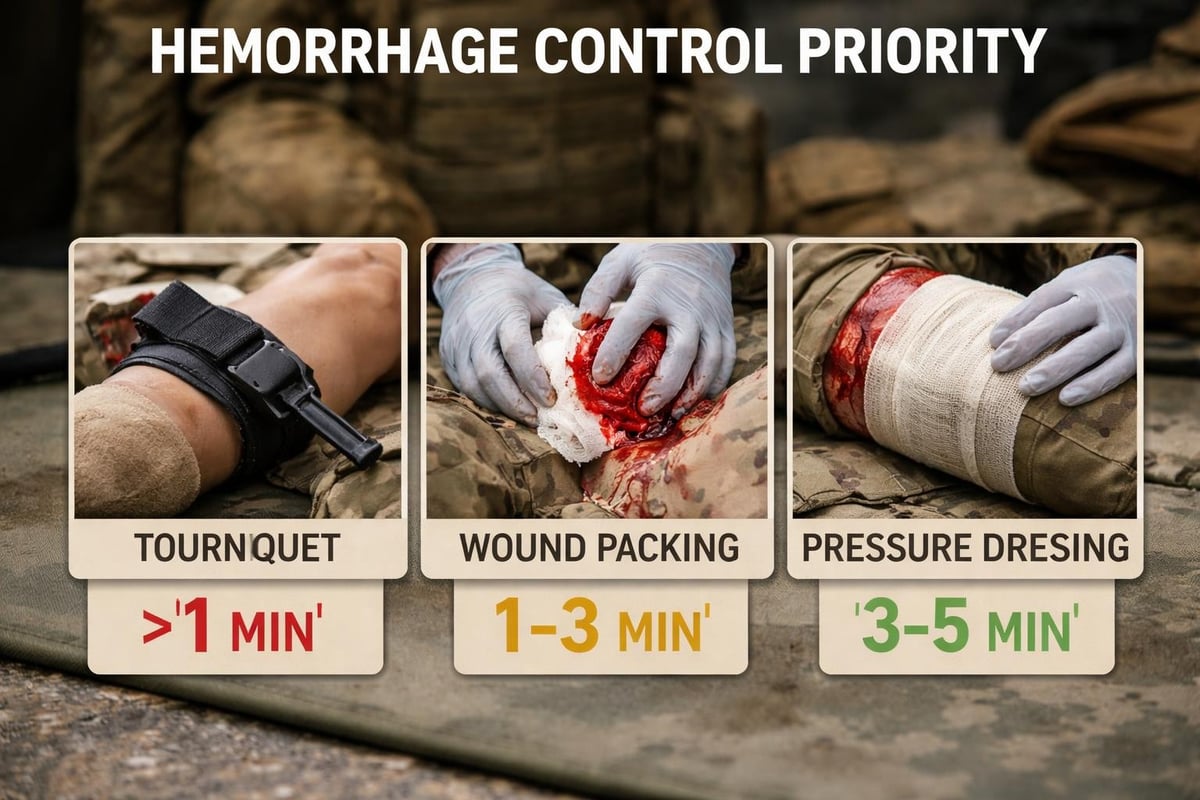
Massive bleeding represents the leading preventable cause of death on the battlefield, making hemorrhage control equipment the highest priority in any military first aid pack.
| Equipment Type | Primary Use | Key Features |
|---|---|---|
| Combat Application Tourniquet | Extremity hemorrhage control | One-handed application, windlass system |
| Compressed Gauze | Wound packing | High-density, rapid expansion |
| Pressure Dressing | Direct pressure application | Self-adhering, elastic wrap |
| Hemostatic Agents | Enhanced clotting | Kaolin or chitosan-based |
Tourniquets remain essential components for controlling life-threatening extremity bleeding, with proper selection and training critical for effective use. Modern hemostatic dressings have revolutionized battlefield medicine by accelerating clot formation even in challenging conditions.
Airway Management Supplies
Maintaining a patent airway ranks second in TCCC priorities. Military first aid packs include:
- Nasopharyngeal airways (NPAs): Lubricated, flexible tubes that maintain airway patency in unconscious casualties
- Chest seals: Vented or non-vented designs for treating open chest wounds and preventing tension pneumothorax
- Decompression needles: For trained personnel to relieve tension pneumothorax
The classification of military tactical first aid kits demonstrates how different operational roles require varied airway equipment based on training levels and anticipated medical threats.
Wound Care and Protection
Beyond immediate life-threats, military first aid packs address secondary concerns:
- Sterile gauze pads in multiple sizes
- Elastic bandages for securing dressings
- Medical tape (often duct tape serves dual purposes)
- Eye shields for ocular injuries
- Burn dressings for thermal injuries
These supplies enable proper wound management during the tactical field care phase, reducing infection risk and supporting recovery until definitive medical care becomes available.
Specialized Military First Aid Pack Configurations
Different military roles and missions demand tailored medical equipment. Understanding these variations helps civilians and professionals select appropriate gear for their specific needs.
Individual First Aid Kit (IFAK)
The IFAK represents personal medical equipment carried by each service member. Practical advice from an active-duty combat medic on IFAK assembly emphasizes the importance of standardization within units to facilitate buddy aid.
Standard IFAK Contents:
- One combat application tourniquet
- One compressed gauze roll
- One emergency trauma dressing (Israeli bandage)
- One pair of nitrile gloves
- One nasopharyngeal airway with lubricant
- Two chest seals
- One hemostatic gauze package
- Medical shears (trauma shears)
This configuration enables immediate self-aid or buddy aid for the most common life-threatening injuries encountered in combat.
Combat Medic Packs
Combat medics carry expanded military first aid packs with additional quantities and capabilities. These larger aid bags include:
- Multiple tourniquets for mass casualty situations
- Advanced airway equipment including cricothyrotomy kits
- IV supplies for fluid resuscitation
- Additional hemostatic agents and dressings
- Medications for pain management and infection prevention
- Splinting materials for fracture stabilization
The enhanced capability allows medics to treat multiple casualties and provide more comprehensive care during extended operations.
Adapting Military Principles for Civilian Use
The lessons embedded in military first aid pack design translate powerfully to civilian emergency preparedness. First aid kit supplies for civilian applications benefit tremendously from incorporating TCCC-based components.
Civilian Trauma Kits
Individuals preparing for emergencies can adapt military first aid pack principles by focusing on:
- High-threat environments: Active shooter response, natural disasters, remote wilderness activities
- Accessibility: Vehicle kits, home kits, personal carry options
- Training requirements: Equipment matched to skill level and available training
Modern trauma kits designed for civilian first responders increasingly mirror military configurations while accounting for different legal and operational contexts.
Training Considerations
Equipment proves worthless without proper training. The importance of field guides within military first aid kits highlights how reference materials support effective intervention, especially for less frequently performed procedures.
Essential Training Components:
| Skill Area | Key Learning Objectives | Practice Requirements |
|---|---|---|
| Tourniquet Application | Proper placement, adequate pressure | Monthly hands-on practice |
| Wound Packing | Deep wound hemostasis | Quarterly simulation training |
| Chest Seal Placement | Recognition, proper sealing | Semi-annual review |
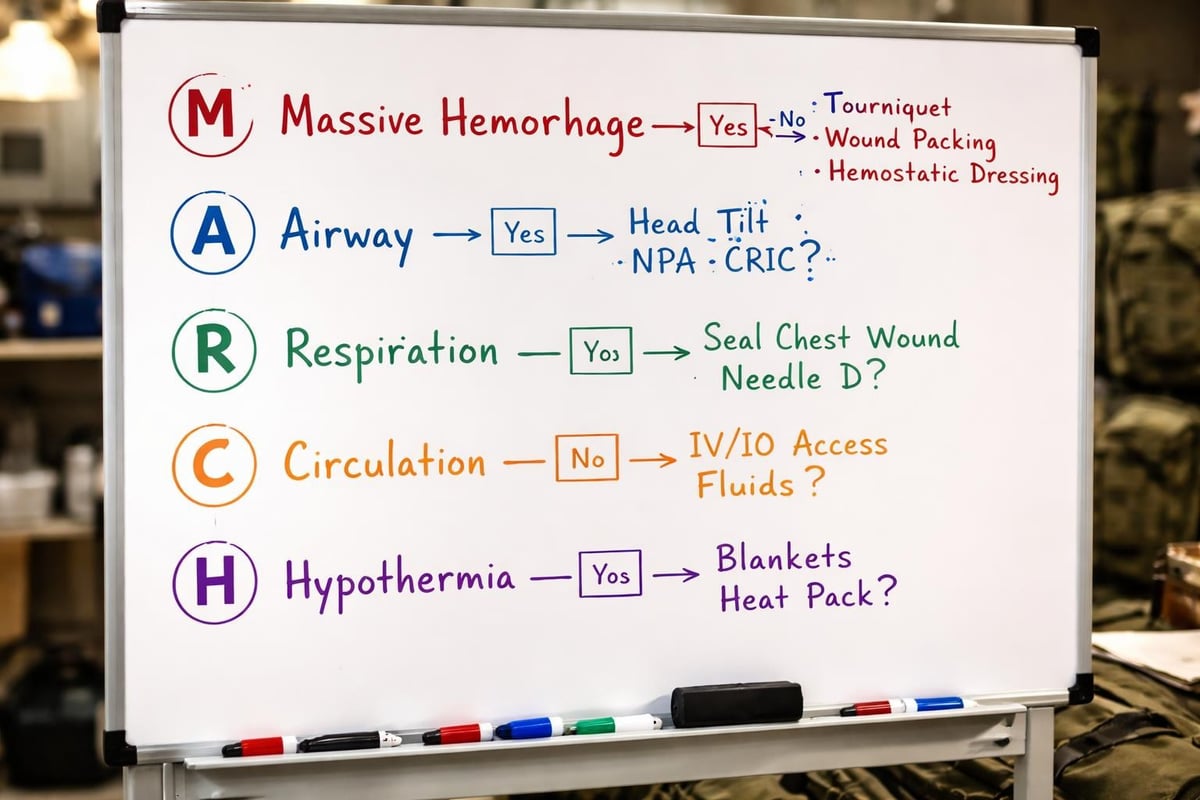
| Casualty Assessment | MARCH algorithm (Massive hemorrhage, Airway, Respirations, Circulation, Hypothermia) | Continuous scenario practice |
Medical Gear Outfitters emphasizes that purchasing quality equipment represents only the first step toward genuine emergency preparedness.
Pack Selection and Organization
Choosing the right military first aid pack involves evaluating multiple factors including mission profile, environmental conditions, and team medical capabilities.
Pouch and Carrier Options
The container protecting medical supplies must balance accessibility with durability:
- MOLLE-compatible pouches: Attach to tactical vests, belts, or packs using Modular Lightweight Load-carrying Equipment webbing
- Tear-away panels: Enable rapid deployment in emergencies
- Vacuum-sealed packaging: Protects contents from moisture and reduces bulk
- Color-coded systems: Facilitate quick identification of specific equipment
Bags designed specifically for medical gear offer features like drainage grommets, internal organization, and reinforced construction that standard pouches lack.
Environmental Considerations
Operating environment significantly impacts military first aid pack contents and packaging:
Desert/Arid Climates:
- Enhanced hydration support supplies
- Additional burn treatment capability
- Heat-resistant medication storage
Cold Weather/Arctic:
- Hypothermia prevention materials
- Cold-weather compatible adhesives
- Insulated packaging for temperature-sensitive items
Maritime/Tropical:
- Waterproof packaging throughout
- Anti-fungal treatments
- Corrosion-resistant tools and equipment
Maintenance and Resupply Protocols
A military first aid pack requires regular attention to maintain readiness. Expired medications, depleted supplies, and environmental degradation can compromise effectiveness when seconds matter.
Inspection Schedules
Military units typically conduct three levels of medical equipment inspection:
- Before mission/monthly: Visual inspection, expiration date verification, accountability check
- Quarterly: Detailed inventory, equipment function testing, replacement of questionable items
- Annually: Complete reconstitution with fresh supplies, equipment upgrade evaluation
Civilians should adopt similar discipline, with first aid resupply becoming a routine part of emergency preparedness rather than an afterthought following equipment use.
Rotation and Replacement
Effective inventory management prevents waste while ensuring readiness:
- Mark items with acquisition dates
- Implement first-in, first-out rotation
- Replace items 6-12 months before expiration when possible
- Document all equipment usage for replacement
- Budget for annual equipment refresh
Understanding first aid and kit fundamentals helps establish sustainable maintenance routines that keep medical equipment mission-ready.
Legal and Regulatory Considerations
While military first aid pack contents face fewer restrictions within armed forces contexts, civilians must navigate varying state and local regulations regarding medical equipment possession and use.
Prescription Items
Certain TCCC components require prescriptions or special authorization for civilian possession:
- Epinephrine auto-injectors
- Advanced airway devices in some jurisdictions
- Prescription pain medications
- Some antibiotics
Working with healthcare providers to obtain appropriate prescriptions ensures legal compliance while maximizing medical capability.
Scope of Practice
Using equipment within your training level and legal authority remains paramount. The concept of buddy aid in military settings operates under specific military regulations that differ from civilian Good Samaritan protections.
Training-Equipment Alignment:
- Carry only equipment you know how to use properly
- Seek formal training before adding advanced components
- Understand local laws governing emergency medical assistance
- Document training credentials and maintain certification
Integration with Broader Medical Systems
A military first aid pack represents just one component within comprehensive casualty care systems. Understanding how individual kits integrate with larger medical capabilities enhances overall effectiveness.
Casualty Evacuation Chain
Military medical systems rely on seamless handoffs between care levels:
- Self-aid/buddy aid using IFAK supplies
- Combat medic/corpsman intervention with enhanced equipment
- Forward surgical team stabilization
- Definitive care at established medical facilities
Each level builds upon previous interventions, with first aid kits serving critical roles in stabilizing patients for successful evacuation and treatment.
Communication and Documentation
Beyond physical supplies, effective casualty care requires information transfer:
- TCCC casualty cards documenting interventions
- Tactical Combat Casualty Care reporting procedures
- Time-stamped treatment records
- Medication administration documentation
These procedures ensure continuity of care and prevent dangerous duplication or omission of treatments.
Evolution and Future Trends
Military first aid pack design continues advancing as new technologies, research findings, and operational lessons emerge. The evolution of battlefield first aid kits demonstrates steady improvement in survival rates through equipment innovation.
Emerging Technologies
Current development efforts focus on:
- Advanced hemostatic agents: Faster action, broader effectiveness, reduced side effects
- Compact monitoring devices: Portable vital sign assessment tools
- Improved packaging: Lighter, more durable, better organized
- Extended shelf life: Reducing replacement frequency and logistics burden
These innovations will filter into civilian markets as technologies mature and costs decrease.
Evidence-Based Refinement
Ongoing combat experience and medical research continuously refine military first aid pack contents. Recent emphasis areas include:
- Junctional hemorrhage control for groin and axilla wounds
- Tranexamic acid for reducing blood loss
- Hypothermia prevention integrated throughout care phases
- Pain management that maintains tactical effectiveness
Staying informed about these developments ensures your medical equipment reflects current best practices rather than outdated protocols.
The military first aid pack represents a carefully refined system for addressing life-threatening trauma in the most demanding circumstances imaginable. By understanding TCCC principles, selecting appropriate equipment, and committing to proper training, both military professionals and prepared civilians can dramatically improve survival outcomes during critical emergencies. Whether you're assembling complete trauma kits for professional use or building personal emergency readiness, the expertise and equipment available through Medical Gear Outfitters provides the foundation you need to respond effectively when every second counts.