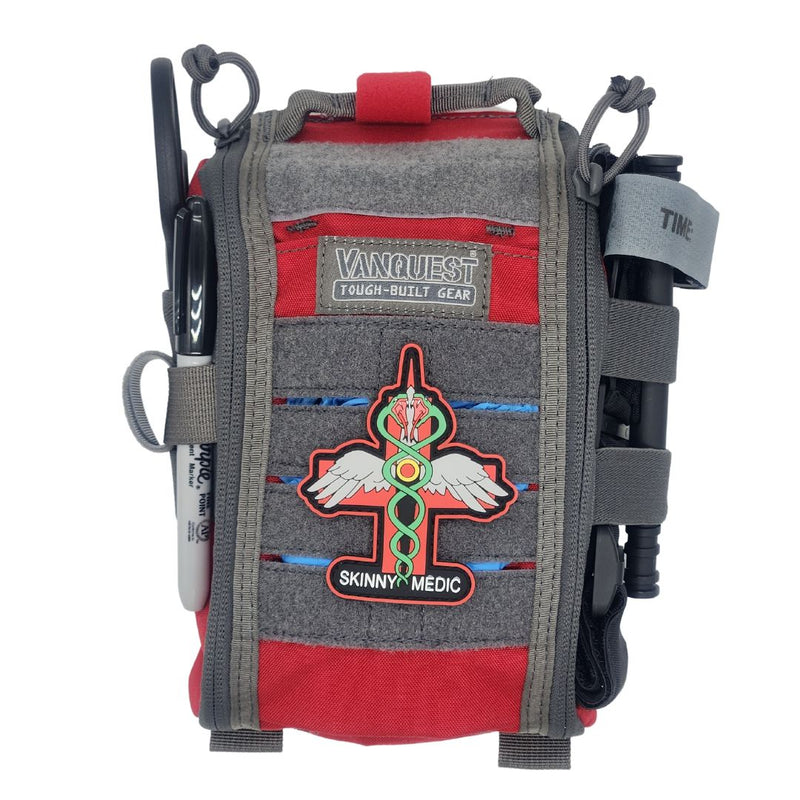
First Aid Kit and Contents: Complete 2026 Guide
Every emergency situation demands immediate action, and having the right supplies can mean the difference between a minor incident and a life-threatening crisis. Whether you're preparing for workplace accidents, outdoor adventures, or household emergencies, understanding what constitutes a proper first aid kit and contents is essential for effective emergency response. This comprehensive guide explores the critical components, regulatory standards, and customization strategies that ensure your first aid supplies meet the specific needs of your environment and activities.
Understanding First Aid Kit Standards and Regulations
Professional emergency preparedness begins with understanding the regulatory frameworks that govern first aid supplies. The ANSI/ISEA Z308.1 standard establishes minimum requirements for workplace first aid kits in the United States, dividing them into Class A and Class B categories based on the scope of contents and intended use.
Class A kits contain supplies for dealing with common workplace injuries and include a minimum of 16 types of items. These kits are designed for smaller workplaces or as supplemental stations in larger facilities. Class B kits offer a broader range of supplies with 24 types of items, making them suitable for larger workplaces or more hazardous environments.
International Standards for Medical Supplies
Beyond American standards, organizations operating internationally should familiarize themselves with BS 8599 specifications, which outline British requirements for workplace and vehicle first aid kits. These standards emphasize risk assessment-based customization, ensuring that first aid kit and contents align with specific workplace hazards and employee counts.
The key differences between standards include:
- Item quantities: BS 8599 specifies different quantities based on workplace size
- Content types: British standards may require specific items not mandated in ANSI standards
- Review frequency: Different maintenance and inspection schedules apply
- Documentation: Varying requirements for inventory tracking and expiration monitoring
Essential Components of Every First Aid Kit
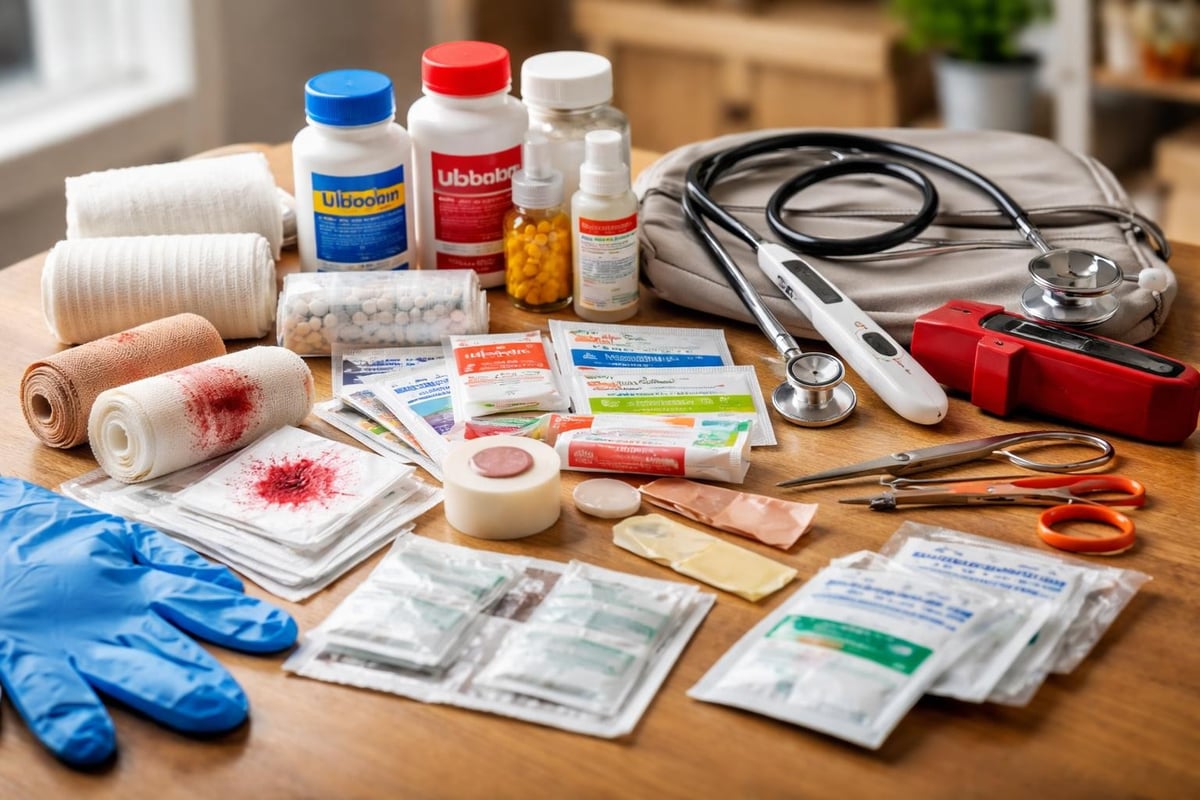
A comprehensive first aid kit and contents should address the three primary categories of emergency care: wound management, medication and treatment, and medical tools. Understanding each category ensures you can respond effectively to diverse emergency situations.
Wound Care and Bleeding Control Supplies
Traumatic injuries requiring immediate bleeding control remain the most common emergency scenarios. Your kit must include multiple options for managing wounds of varying severity.
| Supply Type | Quantity Needed | Primary Use |
|---|---|---|
| Adhesive bandages (assorted) | 16-50 pieces | Minor cuts and abrasions |
| Sterile gauze pads (4x4) | 10-25 pads | Wound coverage and absorption |
| Trauma dressings (5x9 or larger) | 2-4 dressings | Major bleeding control |
| Medical tape | 2-3 rolls | Securing dressings |
| Elastic bandages | 2-3 rolls | Compression and support |
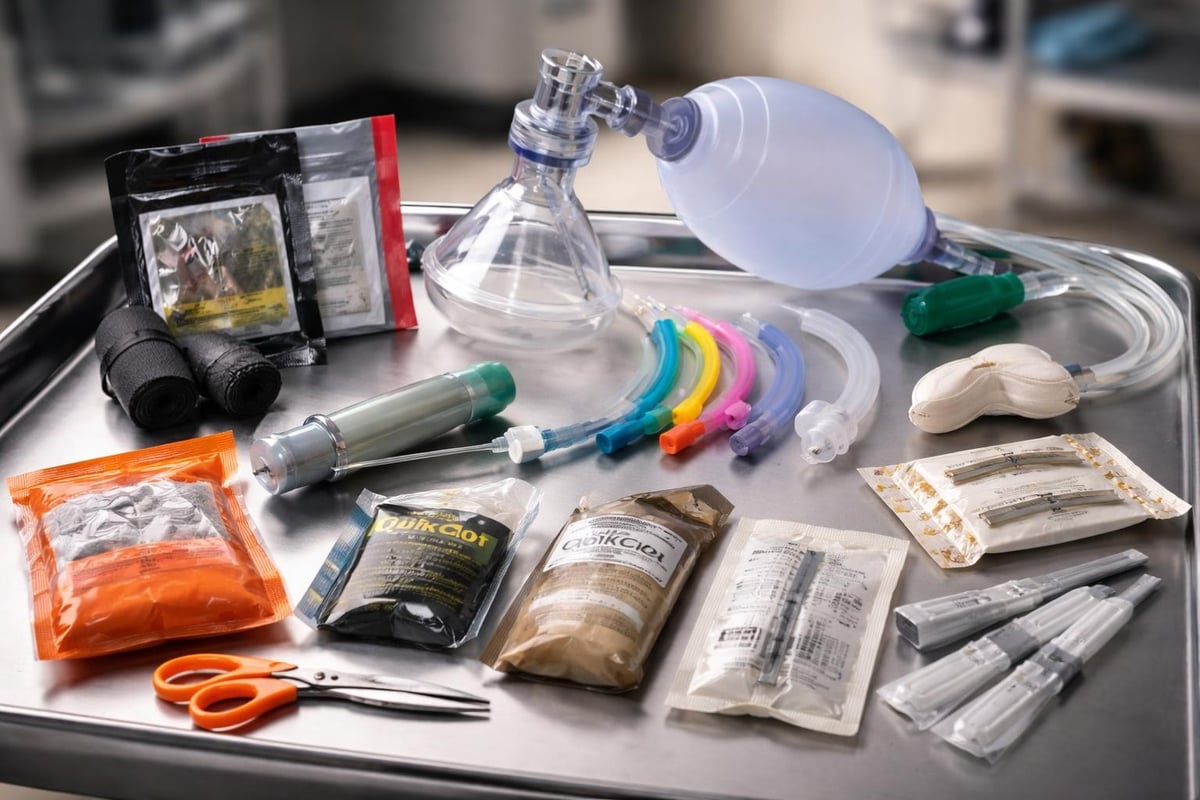
Professional responders understand that advanced bleeding control goes beyond basic bandages. Hemostatic agents like QuikClot and Celox provide critical capabilities for severe hemorrhage control, particularly when managing penetrating trauma or injuries in areas where tourniquets cannot be applied effectively.
Tourniquets represent essential components for extremity hemorrhage. The American Red Cross recommendations now acknowledge the importance of commercial tourniquets for severe bleeding scenarios, reflecting updated trauma care protocols that emphasize early hemorrhage control.
Medications and Treatment Solutions
The medication component of your first aid kit and contents must balance comprehensiveness with safety and regulatory compliance. Workplace kits must consider that some individuals may have contraindications to common over-the-counter medications.
Essential medications include:
- Pain relievers (aspirin, ibuprofen, acetaminophen)
- Antihistamines for allergic reactions
- Antacid tablets
- Anti-diarrheal medication
- Hydrocortisone cream for skin irritations
- Antibiotic ointment for wound infection prevention
Consider individual packaging for medications to maintain sterility and track expiration dates more effectively. Bulk bottles may seem economical, but individually wrapped doses ensure hygiene and simplify inventory management.
Medical Tools and Assessment Equipment
Proper assessment and intervention require specific tools beyond bandages and medications. These instruments enable responders to evaluate conditions accurately and provide appropriate care.
- Scissors and cutting tools: Trauma shears cut through clothing without injuring patients
- Tweezers: Remove splinters, debris, and foreign objects from wounds
- Thermometer: Digital non-contact thermometers provide quick temperature readings
- Blood pressure cuff: Manual or digital units assess cardiovascular status
- Stethoscope: Enables lung and heart sound assessment for trained users
- CPR barrier device: Protects responders during rescue breathing
- Examination gloves: Nitrile gloves prevent disease transmission
- Emergency blanket: Prevents shock and maintains body temperature
Customizing Your First Aid Kit for Specific Environments
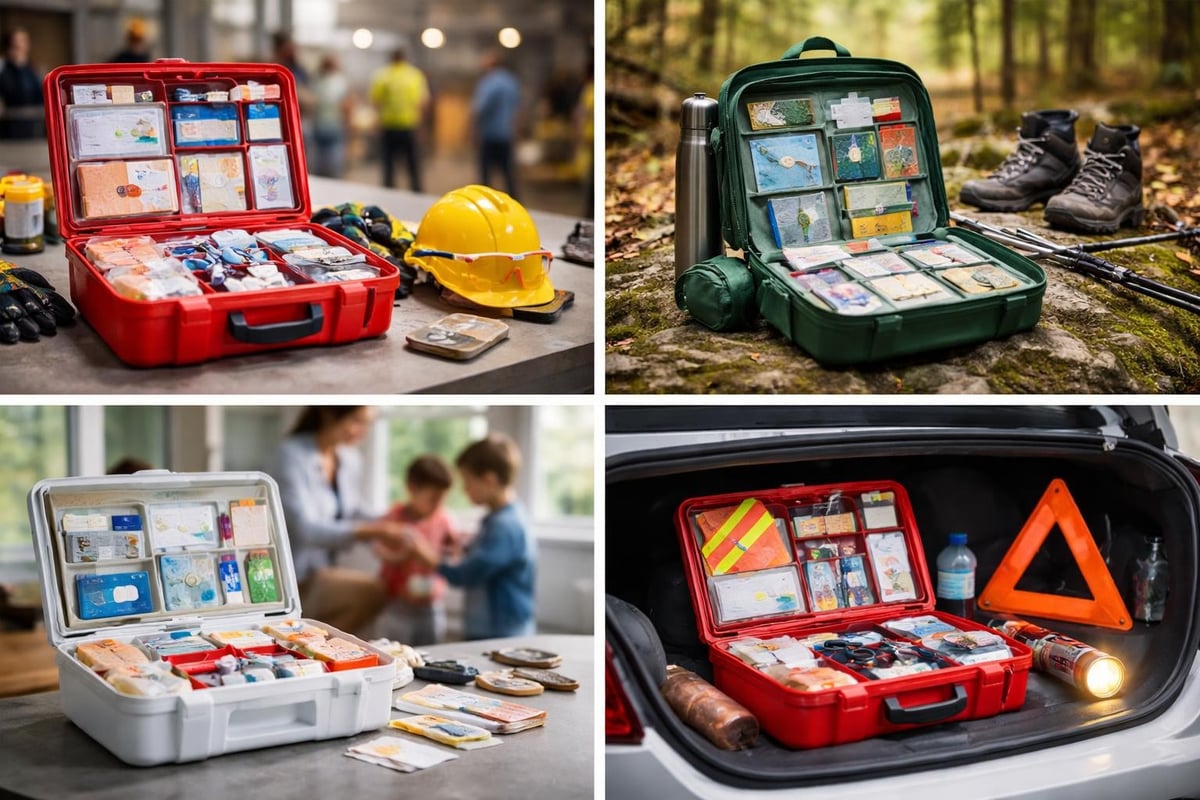
Generic first aid kits rarely address the unique hazards present in specialized environments. Customization ensures your first aid kit and contents match the actual risks your team or family faces.
Workplace-Specific Considerations
Industrial environments, offices, construction sites, and healthcare facilities each present distinct hazards requiring tailored supplies. OSHA requirements mandate that employers provide medical personnel, first aid supplies, or equivalent means for quick medical attention, but the specific contents depend on workplace assessment.
Manufacturing facilities with machinery should emphasize trauma supplies, including pressure dressings and eye wash stations. Chemical facilities require specialized antidotes and neutralizing agents. Office environments may focus more on cardiac emergency supplies and basic wound care.
Construction sites benefit from trauma kits that address common injuries like falls, lacerations from power tools, and crush injuries. These specialized kits contain Israeli bandages, combat gauze, and chest seals for penetrating injuries.
Outdoor and Recreation Kits
Adventure activities demand compact, lightweight first aid solutions that address environmental hazards. A camping first aid kit differs significantly from workplace supplies, emphasizing:
- Blister treatment: Moleskin and specialized blister bandages prevent infection
- Insect sting relief: Antihistamines and sting relief pads reduce reactions
- Burn treatment: Gel dressings for campfire and sun exposure burns
- Water purification: Tablets or filters prevent waterborne illness
- Snake bite supplies: Pressure immobilization bandages for venomous encounters
- Splinting materials: SAM splints or improvised immobilization options
Wilderness medicine requires different protocols than urban emergency response. Response times extend significantly in remote areas, making your first aid kit and contents the primary medical resource for extended periods.
Vehicle and Travel Kits
Automotive first aid kits must withstand temperature extremes while remaining accessible during roadside emergencies. Vehicle-specific considerations include:
| Item Category | Vehicle-Specific Need | Recommended Addition |
|---|---|---|
| Visibility | Accident scene safety | Reflective triangles, flares |
| Communication | Emergency contact | Charged power bank, emergency numbers |
| Environmental | Temperature extremes | Heat-resistant storage, warming packs |
| Trauma care | Collision injuries | Cervical collar, rigid splints |
The Minnesota Department of Labor and Industry recommendations provide baseline guidance for vehicle kits, though customization based on travel patterns improves preparedness. Regular long-distance travelers should consider more comprehensive supplies than urban commuters.
Maintaining and Organizing Your First Aid Supplies
Even the most comprehensive first aid kit and contents becomes ineffective without proper maintenance and organization. Systematic approaches to inventory management ensure supplies remain ready when emergencies strike.
Expiration Tracking Systems
Medical supplies have finite shelf lives. Medications, sterile dressings, and certain ointments degrade over time, potentially losing effectiveness or becoming harmful.
Implement a tracking system that includes:
- Monthly visual inspections of kit contents
- Quarterly expiration date reviews
- Annual complete inventory audits
- Immediate replacement of used items
- Documentation of all restocking activities
Color-coded labels indicating expiration quarters simplify quick assessments. Mark items expiring in Q1 2026 with green labels, Q2 with yellow, and so forth. This visual system enables rapid identification of supplies requiring replacement.
Storage and Accessibility Best Practices
Proper storage extends supply longevity while ensuring rapid access during emergencies. Storage guidelines from First Aid for Free emphasize cool, dry locations away from direct sunlight and temperature extremes.
Organizational strategies include:
- Clear containers: Transparent cases enable quick visual inventory
- Compartmentalization: Separate sections for different supply categories
- Labeling: External labels identify contents without opening containers
- Mounting: Wall-mounted kits increase visibility and accessibility
- Multiple locations: Strategic placement reduces response time
Consider keeping smaller supplemental kits in multiple locations rather than one large centralized kit. Bathroom medicine cabinets, kitchen drawers, garage workbenches, and vehicles should each contain basic supplies appropriate to their location.
Advanced Components for Professional Response
Professional responders and those trained in advanced life support require enhanced first aid kit and contents beyond basic consumer supplies. These specialized items demand proper training before deployment but significantly expand treatment capabilities.
Airway Management and Breathing Support
Respiratory emergencies represent immediate life threats requiring rapid intervention. Advanced kits include:
- Nasopharyngeal airways in multiple sizes
- Oropharyngeal airways for unconscious patients
- Bag-valve masks for positive pressure ventilation
- Oxygen delivery systems with regulators
- Pulse oximeters for oxygen saturation monitoring
Airway and breathing equipment requires regular training to maintain proficiency. Incorrect airway insertion can cause additional harm, making proper education essential before including these items in your kit.
Chest Trauma Management
Penetrating chest injuries create life-threatening conditions requiring immediate intervention. Chest seals prevent tension pneumothorax by allowing air to escape while preventing additional air entry. Understanding proper chest seal application techniques ensures effective treatment of sucking chest wounds.
Vented chest seals provide superior performance compared to occlusive dressings, automatically releasing trapped air while maintaining wound occlusion. Professional first responder kits typically include multiple chest seals to address both entry and exit wounds.
Wound Closure and Advanced Dressings
Modern wound care extends beyond simple bandages to include specialized closure devices and hemostatic dressings. Professional-grade supplies enable definitive hemorrhage control and wound stabilization.
Advanced wound care options:
- Hemostatic gauze impregnated with clotting agents
- Adhesive wound closure strips for laceration approximation
- Pressure bandages combining compression and absorption
- Specialized burn dressings with hydrogel cooling
- Occlusive dressings for abdominal evisceration
Proper wound wrapping techniques prevent contamination while maintaining adequate circulation. Excessive pressure during bandaging can cause tissue damage, while insufficient pressure fails to control bleeding.
Specialized Kits for Unique Scenarios
Certain activities and professions require purpose-built first aid kit and contents addressing specific risk profiles. Understanding these specialized applications ensures appropriate preparedness.
Tactical and Ballistic Trauma Kits
Law enforcement, military personnel, and security professionals face ballistic threats requiring immediate trauma intervention. Gun wound first aid kits emphasize rapid hemorrhage control and airway management under combat conditions.
These kits prioritize:
- Tourniquets for extremity arterial bleeding
- Combat gauze with hemostatic properties
- Chest seals for penetrating thoracic trauma
- Pressure dressings for junctional hemorrhage
- Nasopharyngeal airways for airway compromise
Tactical medicine protocols differ from civilian emergency care, emphasizing care under fire, tactical field care, and tactical evacuation phases. Each phase demands different interventions and supply prioritization.
Pediatric-Specific Supplies
Children require specialized equipment sized appropriately for smaller anatomy. Standard adult supplies may prove ineffective or dangerous when treating pediatric patients.
| Supply Category | Adult Version | Pediatric Modification |
|---|---|---|
| Blood pressure cuff | Standard adult size | Infant, child, and small adult sizes |
| Airway adjuncts | Adult OPA/NPA | Pediatric sizing in multiple options |
| Medications | Adult dosing | Weight-based pediatric calculations |
| Splints | Full-size immobilization | Smaller, adjustable pediatric splints |
Families with young children should include age-appropriate fever reducers, rehydration solutions, and comfort items that reduce anxiety during treatment. Colorful bandages and distraction toys help calm frightened children during first aid procedures.
Sports and Athletic Training Kits
Athletic injuries present unique challenges requiring immediate sideline intervention. Sports medicine kits address musculoskeletal injuries, environmental conditions, and contact sport trauma.
Essential athletic training supplies include:
- Cold therapy: Instant ice packs for acute injury management
- Compression wraps: Elastic bandages in various widths for joint support
- Blister prevention: Specialized tapes and padding materials
- Splinting materials: Moldable splints for suspected fractures
- Eye protection: Emergency eye wash and protective eyewear
- Dental emergency supplies: Tooth preservation solutions and temporary filling material
Heat-related illness prevention requires electrolyte replacement solutions, cooling towels, and rectal thermometers for accurate core temperature assessment. Exertional heat stroke represents a medical emergency requiring immediate cooling intervention.
Building Complete Preparedness Programs
Supplies alone do not create effective emergency response capability. Comprehensive preparedness integrates quality first aid kit and contents with training, protocols, and regular practice.
Training Requirements and Certification
The REAL First Aid approach emphasizes matching kit contents with responder training levels. Advanced supplies benefit only trained users, while basic kits require minimal instruction for effective use.
Recommended training progression includes:
- Basic First Aid: Wound care, bleeding control, and basic assessment
- CPR/AED: Cardiac emergency response and automated defibrillator use
- Advanced First Aid: Splinting, advanced bleeding control, and medical emergencies
- Wilderness First Responder: Extended care protocols for remote environments
- Tactical Combat Casualty Care: Trauma management under hostile conditions
Annual refresher training maintains skills and updates responders on evolving protocols. Hands-on practice with actual supplies from your kit builds muscle memory and confidence for real emergencies.
Developing Response Protocols
Written protocols guide decision-making during high-stress emergencies. Standard operating procedures should address:
- Emergency activation and communication procedures
- Scene safety assessment requirements
- Treatment priorities based on injury severity
- Documentation requirements for care provided
- Handoff procedures when professional help arrives
Regular drills test both supplies and protocols, identifying gaps before actual emergencies occur. Tabletop exercises and simulated scenarios build team coordination and reveal weaknesses in your preparedness plan.
Subscription-Based Supply Management
Maintaining current supplies requires ongoing attention to expiration dates and inventory levels. Subscription services automate resupply schedules, delivering replacement items before current stock expires.
Subscription benefits include:
- Automated expiration tracking and replacement
- Cost savings through regular ordering discounts
- Reduced administrative burden for busy organizations
- Guaranteed supply availability during shortages
- Regular exposure to new products and technologies
For organizations managing multiple kits across various locations, centralized subscription management ensures consistency while simplifying procurement processes.
Bulk Purchasing and Wholesale Considerations
Organizations maintaining multiple first aid stations benefit from bulk purchasing strategies that reduce per-unit costs while ensuring supply consistency. Wholesale emergency kits provide standardized contents across all locations, simplifying training and restocking procedures.
Cost-Benefit Analysis of Bulk Supplies
Individual item purchases offer customization flexibility but increase administrative costs and per-unit pricing. Bulk ordering reduces costs while potentially limiting customization options.
Factors influencing bulk purchase decisions:
- Number of kits requiring maintenance
- Storage capacity and environmental controls
- Staff availability for inventory management
- Budget constraints and purchasing cycles
- Regulatory compliance requirements
Large organizations benefit from master contracts with single suppliers, ensuring price consistency and simplifying procurement processes. Small businesses may find pre-assembled complete kits more cost-effective than individual component purchasing.
Quality Assurance in Bulk Ordering
Bulk purchases amplify quality issues across entire supply chains. Establishing quality standards before ordering prevents widespread problems with defective or substandard supplies.
Verification procedures should include:
- Sample testing before full order placement
- Inspection upon delivery for damage or defects
- Verification of expiration dates and shelf life
- Confirmation of regulatory compliance and certifications
- Documentation of lot numbers for recall tracking
Working with paramedic-owned suppliers ensures products meet field-tested standards developed through real-world emergency experience. Professional responders understand which supplies perform reliably under pressure and which fail when needed most.
Proper first aid kit and contents preparation represents a fundamental responsibility for individuals, families, and organizations committed to emergency readiness. By understanding regulatory standards, selecting appropriate components for your specific environment, maintaining supplies through systematic protocols, and integrating quality equipment with proper training, you create comprehensive emergency response capability. Whether you need basic household supplies or advanced trauma intervention equipment, Medical Gear Outfitters provides paramedic-selected products and expert guidance to ensure you're prepared to respond effectively when emergencies strike.