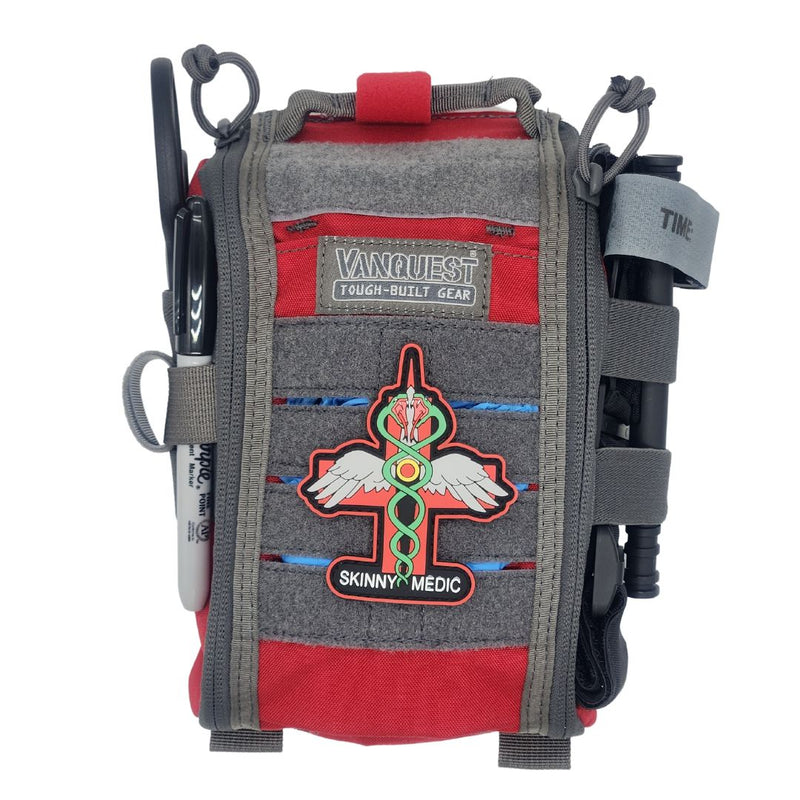
Motorcycle Trauma Kit: Essential Gear for Every Rider
Riding a motorcycle offers unparalleled freedom and excitement, but it also comes with inherent risks that every rider must acknowledge. When accidents occur on two wheels, injuries tend to be more severe than those in enclosed vehicles, and the time between injury and professional medical care can determine survival outcomes. A properly assembled motorcycle trauma kit represents the critical bridge between the moment of impact and the arrival of emergency services, giving riders and bystanders the tools needed to address life-threatening injuries during those crucial first minutes.
Understanding the Critical Need for Motorcycle-Specific Trauma Kits
The unique nature of motorcycle accidents creates injury patterns that differ significantly from other vehicular crashes. Riders lack the protective shell of a car, leaving them vulnerable to direct impact, road rash, and traumatic injuries even when wearing protective gear. Statistics consistently show that motorcyclists face higher rates of severe bleeding, fractures, and traumatic injuries compared to automobile occupants.
The golden hour concept in emergency medicine emphasizes that survival rates decrease dramatically when critical interventions are delayed beyond 60 minutes from injury. For motorcyclists involved in crashes, especially in remote areas or on less-traveled roads, professional help may not arrive within this timeframe. This reality makes carrying a motorcycle trauma kit not just prudent but potentially life-saving.
Time-Critical Injuries Common in Motorcycle Crashes
Research analyzing human errors in motorcycle crashes reveals several injury types that require immediate intervention:
- Severe hemorrhaging from extremity wounds or lacerations
- Penetrating chest injuries requiring seal application
- Airway compromise from facial trauma or loss of consciousness
- Traumatic amputations or near-amputations requiring tourniquet application
- Tension pneumothorax in severe chest impacts
Each of these conditions can prove fatal within minutes without proper intervention, yet each responds well to basic trauma care when supplies are immediately available.
Essential Components of an Effective Motorcycle Trauma Kit
Building or selecting a motorcycle trauma kit requires understanding which supplies address the most common life-threatening injuries. Unlike general first aid kits that focus on minor injuries, trauma kits prioritize stopping massive bleeding, maintaining airways, and addressing chest injuries.
Hemorrhage Control Supplies
Uncontrolled bleeding represents the leading cause of preventable death in trauma situations. Your motorcycle trauma kit must include multiple options for hemorrhage control:
| Component | Primary Use | Quantity Recommended |
|---|---|---|
| CAT or SOFTT Tourniquet | Extremity arterial bleeding | 2 minimum |
| Combat Gauze or QuikClot | Wound packing for deep bleeds | 2-3 packages |
| Israeli Bandage | Pressure dressing application | 2-3 units |
| Compressed Gauze | Secondary bleeding control | 3-4 rolls |
Tourniquets serve as the gold standard for controlling life-threatening extremity bleeding. The Committee on Tactical Combat Casualty Care (TCCC) guidelines specify that properly applied tourniquets can control arterial bleeding within seconds, making them indispensable in motorcycle trauma situations.
Hemostatic agents like Combat Gauze contain substances that promote rapid clotting when packed directly into wounds. These prove essential for areas where tourniquets cannot be applied, such as junctional zones where limbs meet the torso.
Chest Injury Management
Motorcycle crashes frequently result in chest trauma from direct impact with vehicles, guardrails, or the ground. Two supplies address the most critical chest injuries:
- Chest seals (vented designs preferred) prevent air from entering the chest cavity through penetrating wounds
- Decompression needles (for trained users) can relieve tension pneumothorax in severe cases
Chest seals should be applied to any open chest wound to prevent a sucking chest wound from developing into a tension pneumothorax. Modern vented chest seals allow air to escape while preventing entry, making them superior to improvised solutions.
Airway Management Tools
Maintaining an open airway takes precedence over all other interventions. Your kit should include:
- Nasopharyngeal airways (NPAs) in appropriate sizes
- Chest decompression devices if trained
- Nitrile gloves for provider protection
- Trauma shears for cutting clothing and gear
The Rider Trauma Kit company, founded by a paramedic with nearly two decades of emergency medicine experience, emphasizes that airway management represents the first priority in trauma response, even before addressing visible bleeding.
Packaging and Accessibility Considerations for Riders
The best motorcycle trauma kit proves worthless if you cannot access it quickly or if it gets destroyed in the crash that necessitates its use. Specialized considerations apply when carrying medical supplies on a motorcycle.
Mounting Location Strategies
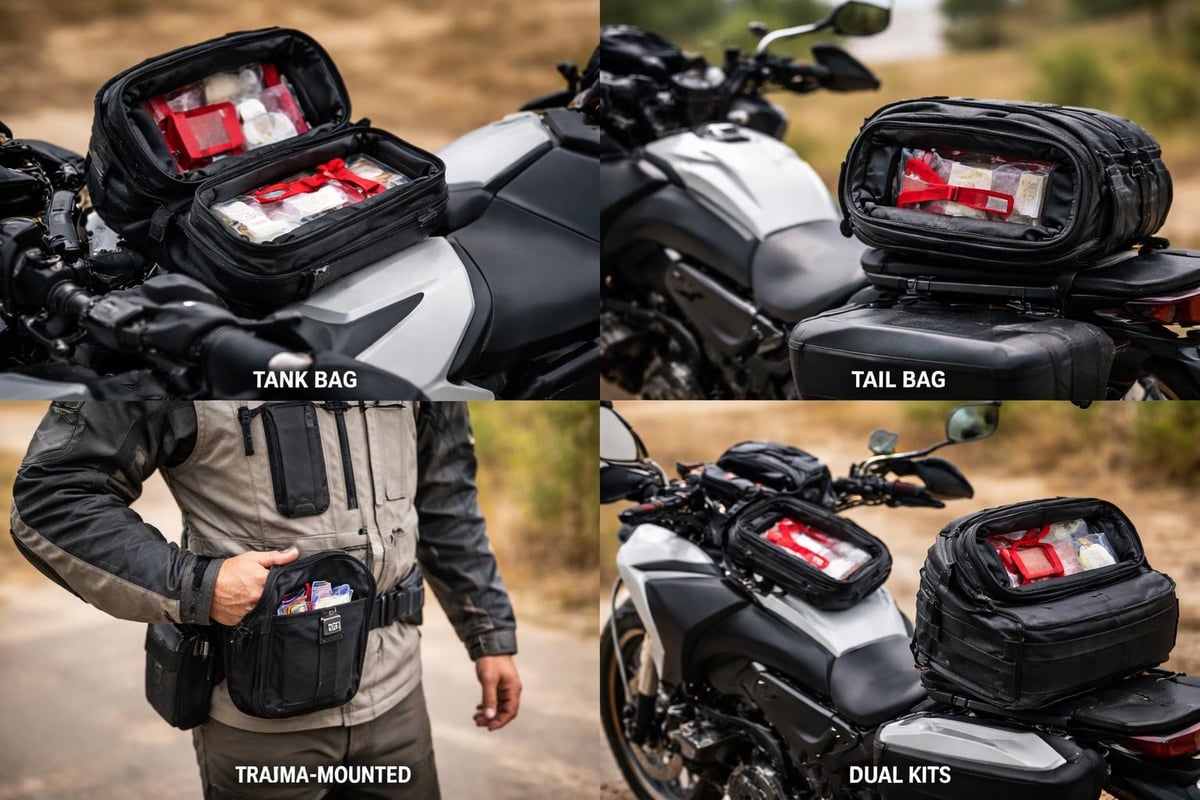
Tank bags offer quick access but may be damaged or thrown during a crash. Tail bags provide protection but require walking to the rear of the bike. Vest-mounted pouches stay with the rider but must be compact and streamlined.
Many experienced riders employ a dual-kit strategy:
- A comprehensive kit in hard saddlebags or top case
- A minimal kit on their person (vest, jacket pocket, or waist pack)
This approach ensures basic supplies remain accessible even if the motorcycle is destroyed or inaccessible after a crash. The Traumoto Micro Trauma Kit exemplifies the compact design philosophy necessary for person-mounted emergency supplies.
Environmental Protection Requirements
Motorcycle-mounted supplies face environmental challenges that stationary kits never encounter:
- Vibration that can damage packaging or loosen closures
- Temperature extremes affecting adhesives and components
- Moisture exposure from rain or humidity
- UV degradation from constant sun exposure
Select waterproof containers with secure closures. Vacuum-sealed components resist moisture while reducing bulk. Regularly inspect your motorcycle trauma kit for damaged packaging or expired supplies, replacing items as needed.
Training: The Critical Component Beyond Equipment
Possessing a motorcycle trauma kit without training resembles owning a defibrillator without knowing how to use it. The supplies only prove effective when applied correctly under pressure.
Recommended Training Programs for Riders
Several organizations offer training specifically relevant to motorcycle trauma response:
Stop the Bleed courses teach civilian bystanders to control severe bleeding using tourniquets and wound packing. These free courses, offered nationwide, provide hands-on practice with actual training supplies.
Wilderness First Aid certification addresses scenarios where professional help is distant, making it ideal for riders who frequent remote areas. The emphasis on improvisation and extended care proves valuable when crashes occur far from urban centers.
Motorcycle-specific first aid programs like those offered through Road Guardians combine trauma medicine with rider-specific scenarios, teaching participants to address injuries while managing traffic, securing crash scenes, and protecting themselves.
Practice Scenarios That Build Competence
Mental rehearsal and physical practice transform theoretical knowledge into instinctive response. Regularly practice these scenarios:
- Applying a tourniquet one-handed (in case your dominant hand is injured)
- Packing a wound while wearing riding gloves
- Assessing an unconscious rider without moving them unnecessarily
- Calling for help while providing care
Understanding the contents of individual first aid kits (IFAKs) helps riders comprehend the relationship between different trauma supplies and their specific applications in emergency scenarios.
Legal and Ethical Considerations for Roadside Trauma Care
Providing trauma care at a crash scene involves legal protections and responsibilities that every rider should understand before opening their motorcycle trauma kit.
Good Samaritan Laws and Protection
All 50 states maintain Good Samaritan laws that protect individuals providing emergency care in good faith. These laws generally shield providers from liability when:
- Care is provided without expectation of compensation
- The provider acts within their training level
- Care is provided in an emergency situation
- No gross negligence or willful misconduct occurs
The Biker Mission disclaimer highlights important limitations regarding trauma kit use, emphasizing that these supplies are intended for emergency first aid, not as substitutes for professional medical care.
Scope of Practice for Lay Responders
Stay within your training. If you have completed Stop the Bleed training, apply tourniquets and pack wounds. If you lack training, focus on calling 911, providing comfort, and keeping the injured person still.
Document your actions if possible. Note the time of injury, interventions performed, and the injured person's condition. This information proves valuable when professional responders arrive.
Never move crash victims unless they face immediate additional threats (fire, traffic). Spinal injuries occur frequently in motorcycle crashes, and improper movement can convert a survivable injury into permanent paralysis.
Specialized Kits for Different Riding Styles
Not all motorcycle trauma kits suit every rider equally well. Your riding style, typical routes, and group size should influence your kit selection and contents.
Adventure and Dual-Sport Riders
Off-road and adventure riders venture into remote areas where professional help may be hours away. Their kits should include:
- Splinting materials for fracture stabilization
- Additional hemostatic gauze for extended care scenarios
- Irrigation supplies for cleaning contaminated wounds
- Emergency blankets for exposure protection
- SAM splints for immobilizing extremity injuries
The Expedition Portal discussion of motorcycle trauma kits emphasizes that remote riders need supplies that address both immediate life threats and secondary care during extended transport times.
Sport and Track Riders
High-speed crashes on pavement create specific injury patterns requiring focused response:
| Priority | Rationale | Recommended Supplies |
|---|---|---|
| Road rash management | Extensive abrasions common | Sterile dressings, irrigation |
| Impact injuries | High-energy trauma frequent | Multiple tourniquets, chest seals |
| Head trauma monitoring | Concussion assessment | Assessment cards, lighting |
Touring and Group Riders
Riders who travel in groups or participate in organized rides can distribute trauma supplies among multiple riders, creating a more comprehensive collective response capability. Designate one rider to carry advanced trauma supplies while others carry basic kits, ensuring redundancy while avoiding excessive weight on any single motorcycle.
Maintenance and Inspection Protocols
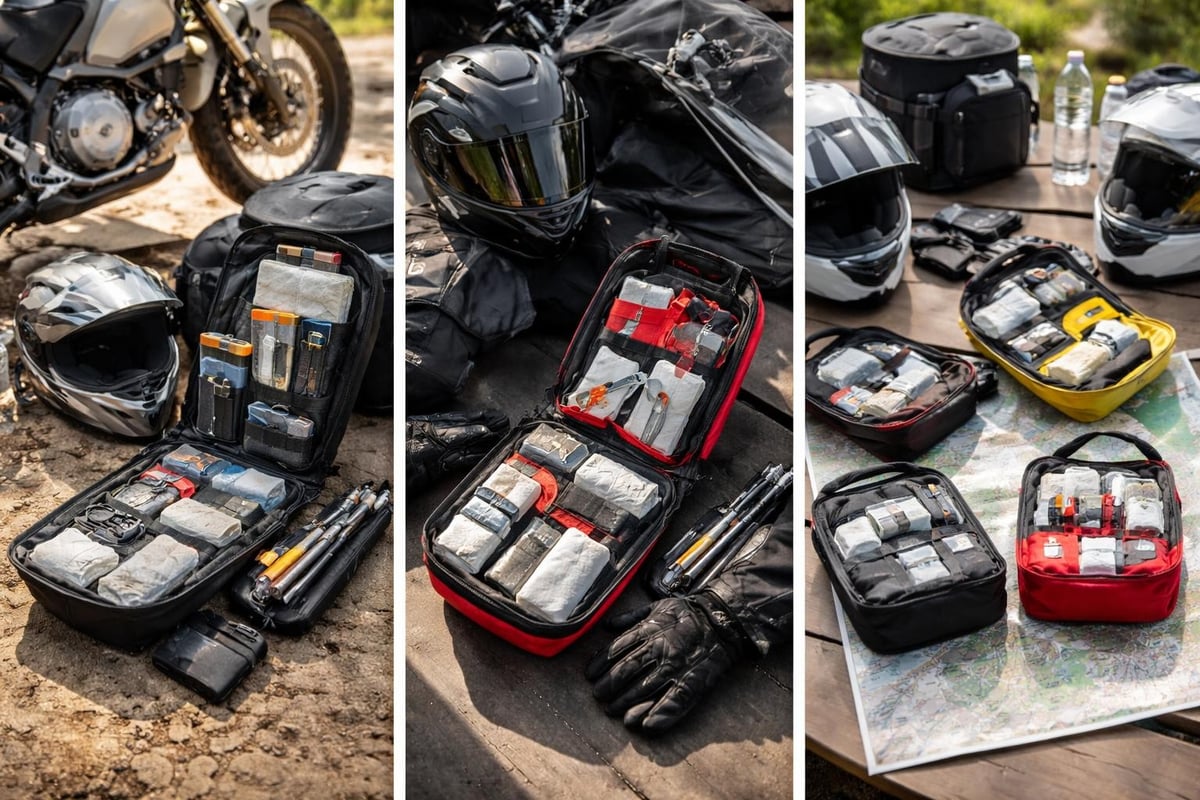
A neglected motorcycle trauma kit may fail precisely when needed. Establishing regular inspection schedules ensures your supplies remain functional and current.
Monthly Quick Checks
Spend five minutes each month verifying:
- Package integrity: No torn wrappers or damaged seals
- Accessibility: Can you reach and open the kit quickly?
- Moisture status: Check for water intrusion or condensation
- Physical location: Ensure the kit hasn't shifted or become loose
Quarterly Detailed Inspections
Every three months, remove all contents and conduct a thorough review:
- Check expiration dates on all packaged items
- Verify that adhesives (on chest seals and bandages) remain sticky
- Ensure tourniquets operate smoothly without binding
- Replace any items showing sun damage or discoloration
- Update your kit based on new training or changed needs
Replace expired items promptly. While some supplies remain functional beyond expiration dates, sterile packaging degrades over time, and adhesives lose effectiveness. The relatively low cost of replacement items makes proactive replacement the smart choice.
Seasonal Considerations
Temperature extremes affect certain trauma supplies differently:
Summer heat can degrade adhesives on chest seals and pressure dressings. Store kits in insulated bags or remove them from motorcycles when parked in direct sun.
Winter cold may make some packaging brittle. Allow cold kits to warm gradually rather than forcing stiff packaging open, which can damage contents.
Building Your Custom Motorcycle Trauma Kit
Pre-assembled kits offer convenience, but building a custom motorcycle trauma kit ensures you include supplies matching your specific training, riding style, and risk assessment. Medical Gear Outfitters provides individual trauma components that enable riders to create personalized kits.
Starting with a Foundation
Begin with the absolute essentials that address the top three preventable causes of death in trauma:
- Hemorrhage control: Two tourniquets, hemostatic gauze, pressure dressings
- Airway management: NPAs, gloves, trauma shears
- Chest injury response: Vented chest seals
This foundation addresses approximately 85% of immediately life-threatening injuries while remaining compact enough for any motorcycle mounting solution.
Adding Secondary Capabilities
Once you have established a solid foundation, add supplies based on your specific circumstances:
For group rides: Include additional quantities of basic supplies to treat multiple casualties
For remote riding: Add triangular bandages for splinting, additional gauze for extended care, and irrigation supplies
For known medical conditions: Include personal medications, epinephrine auto-injectors if allergic, or other condition-specific supplies
Container Selection Criteria
The container matters as much as the contents. Evaluate options based on:
- Visibility: Bright colors or reflective marking ensure the kit is noticed
- Durability: Hard cases protect contents but add weight; soft pouches save space
- Organization: Internal dividers or clear packaging windows speed access
- Labeling: Clear external labels identify the kit as medical supplies
The Full Throttle Law Roadside Trauma Kit demonstrates how purpose-built containers can optimize both protection and accessibility for motorcycle-mounted trauma supplies.
Integration with Broader Emergency Response
Your motorcycle trauma kit represents just one component of a comprehensive emergency response plan. Consider how it integrates with other safety measures and response protocols.
Communication Equipment
Cell phones remain the primary emergency communication tool, but riders should recognize coverage limitations. Consider:
- Satellite communicators for remote area riding
- Emergency contact cards in your wallet
- ICE (In Case of Emergency) information on your phone lock screen
Crash Scene Management
Treating injuries represents only part of roadside emergency response. Complete preparation includes:
- Scene safety assessment before approaching casualties
- Traffic control using emergency triangles or flares
- Fire suppression capabilities (small fire extinguisher)
- Information gathering for emergency services
Understanding basic first aid principles provides the foundation for integrating trauma care into broader emergency response.
Group Riding Protocols
Establish clear protocols with regular riding partners:
- Designate who carries advanced trauma supplies
- Determine communication methods if separated
- Practice emergency scenarios together
- Share medical information (allergies, conditions, medications)
Cost-Benefit Analysis for Riders
Quality trauma supplies represent an investment. Understanding the cost breakdown helps riders make informed decisions about their motorcycle trauma kit.
Initial Investment Breakdown
A properly equipped motorcycle trauma kit typically costs between $75 and $200 depending on completeness:
| Kit Level | Approximate Cost | Contents Overview |
|---|---|---|
| Minimal | $75-100 | Two tourniquets, hemostatic gauze, chest seal, gloves, shears |
| Standard | $125-150 | Minimal plus pressure bandages, additional hemostatics, NPAs |
| Comprehensive | $175-200 | Standard plus backup supplies, splinting materials, irrigation |
Pre-assembled kits often cost more than custom-built options but save research time and ensure component compatibility. Building your own allows precise customization and often reduces costs by 20-30%.
Ongoing Maintenance Costs
Annual replacement costs typically range from $15-40, primarily covering:
- Expired hemostatic gauze (every 3-5 years)
- Degraded adhesive products (chest seals, bandages)
- Used supplies after training or actual emergencies
Value Proposition
Comparing trauma kit costs to typical motorcycle accessory spending provides perspective. Riders regularly spend hundreds on aesthetic modifications, performance upgrades, or comfort accessories. A motorcycle trauma kit costs less than most exhaust systems while potentially preventing death or permanent disability.
The question is not whether you can afford a trauma kit but whether you can afford to ride without one.
Real-World Application Scenarios
Understanding how trauma kits function in actual emergency situations helps riders prepare mentally for potential use.
Solo Rider Self-Care Scenario
After a single-vehicle crash on a rural road, a rider discovers significant bleeding from a lower leg laceration. With no immediate help available:
- Move to a safe position away from traffic
- Apply direct pressure while accessing the trauma kit
- Apply a tourniquet above the wound if pressure proves insufficient
- Call 911 or activate emergency services
- Maintain the tourniquet while waiting for help
This scenario emphasizes why riders should practice one-handed techniques and keep supplies accessible even when injured.
Group Ride Multiple Casualty Event
A group of four riders encounters a two-vehicle crash involving another motorcyclist. The injured rider shows severe bleeding from an arm wound and difficulty breathing:
- Rider 1 applies a tourniquet to control arm bleeding
- Rider 2 calls 911 and provides location details
- Rider 3 manages traffic to prevent additional collisions
- Rider 4 prepares chest seals in case breathing difficulty indicates chest injury
This scenario demonstrates how distributed supplies and predetermined roles enable effective multi-person response.
Every mile you ride carries inherent risk, but proper preparation transforms you from a potential casualty into a capable first responder when accidents occur. Whether you choose a pre-assembled solution or build a custom motorcycle trauma kit, the key is ensuring you have the supplies, training, and mental readiness to act decisively during those critical first minutes. At Medical Gear Outfitters, our paramedic-owned company provides the high-quality trauma supplies and expert guidance riders need to protect themselves and others on every journey. Browse our selection of professional-grade trauma components and complete kits designed specifically for those who refuse to ride unprepared.