
Lab First Aid Kit: Essential Safety Equipment Guide
Laboratory environments present unique hazards that demand specialized emergency preparedness. Unlike standard workplaces, labs contain chemical substances, biological agents, and equipment that can cause injuries requiring immediate, specific treatment. A properly equipped lab first aid kit serves as the critical first line of defense when accidents occur, bridging the gap between incident and professional medical care. Understanding what belongs in these kits, where they should be located, and how to maintain them ensures laboratory personnel can respond effectively to emergencies while meeting regulatory compliance standards.
Understanding Laboratory-Specific First Aid Requirements
Laboratory settings differ fundamentally from typical work environments, and first aid provisions must reflect these distinctions. The OSHA guidelines for workplace first aid emphasize that first aid supplies should match the specific hazards present in each workplace. Chemical burns, thermal injuries from equipment, cuts from glassware, and exposure to biological materials all require different treatment approaches.
Research laboratories, teaching labs, and industrial facilities each face distinct risk profiles. A chemistry lab working with corrosive acids needs eyewash solutions and burn treatment supplies prominently featured in its lab first aid kit. Meanwhile, a biology lab handling infectious materials requires different provisions focused on contamination control and exposure management.
Regulatory Framework and Standards
Multiple regulatory bodies provide guidance on laboratory first aid preparedness. The American National Standards Institute (ANSI) establishes baseline standards for first aid kit contents, while individual institutions often exceed these minimums based on specific hazard assessments. Kansas State University's laboratory safety guidelines demonstrate how academic institutions customize requirements according to ANSI standards and specific laboratory hazards.
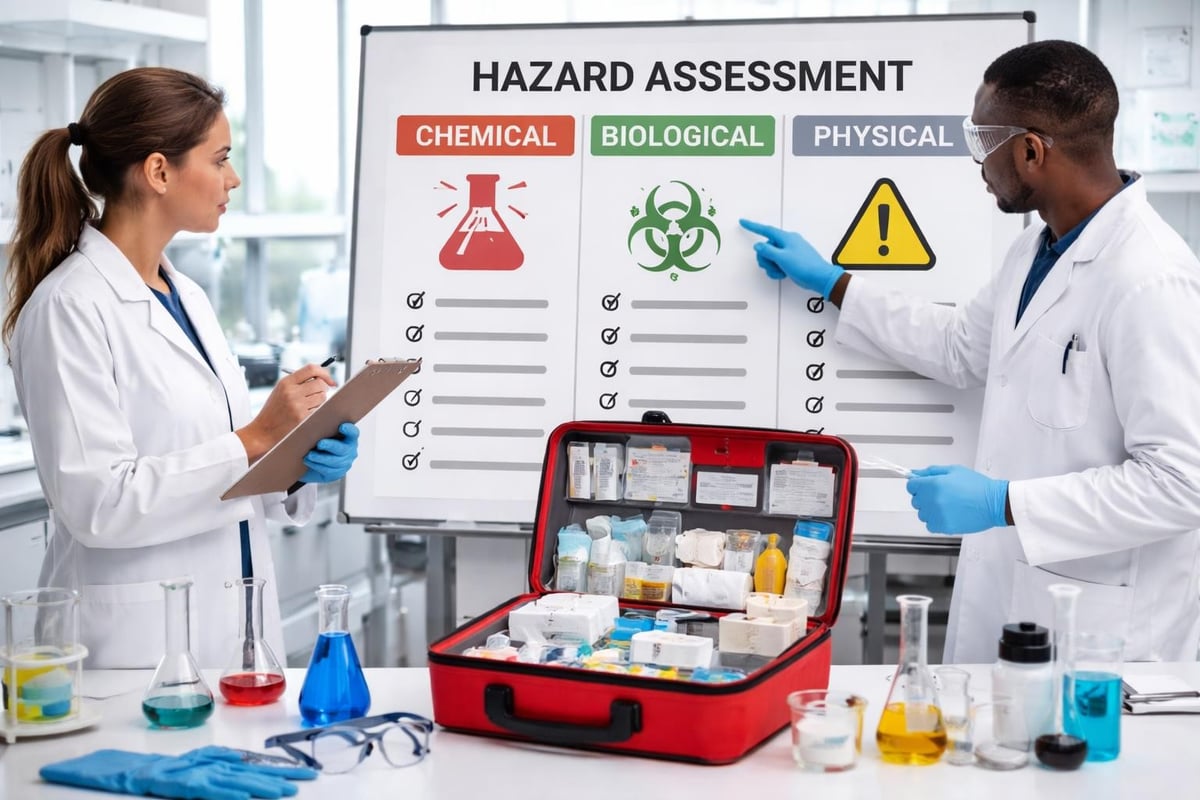
State and federal regulations mandate that employers provide medical and first aid personnel and supplies commensurate with workplace hazards. This requirement extends beyond simply purchasing a generic kit. Laboratory managers must conduct thorough hazard assessments identifying potential injuries and ensuring their lab first aid kit addresses each identified risk.
Essential Components of a Lab First Aid Kit
A comprehensive lab first aid kit contains both universal supplies and specialized items addressing laboratory-specific risks. The foundation includes standard wound care materials, but laboratories require additional provisions not found in typical workplace kits.
Universal First Aid Supplies
Every lab first aid kit should contain these fundamental items:
- Adhesive bandages in multiple sizes for minor cuts and abrasions
- Sterile gauze pads (2x2, 3x3, and 4x4 inch) for wound coverage
- Conforming roller gauze for securing dressings
- Adhesive tape in various widths
- Antiseptic wipes or solutions for wound cleaning
- Disposable gloves (nitrile preferred for chemical resistance)
- Scissors and tweezers
- Instant cold packs for reducing swelling
- CPR face shield or pocket mask
- Emergency blanket for shock treatment
These items address common injuries like cuts from broken glassware, minor burns from hot equipment, and general workplace incidents. However, standard supplies alone prove insufficient for laboratory environments.
Laboratory-Specific Additions
Chemical and biological laboratories require specialized supplies beyond basic first aid materials:
Chemical Exposure Treatment
- Specialized burn dressings for chemical burns
- Eye irrigation solution and eye cups
- Calcium gluconate gel for hydrofluoric acid exposure
- Phosphate buffer solution for certain chemical exposures
- pH indicator strips for monitoring chemical contamination
Biological Safety Provisions
- Biohazard disposal bags
- Spill cleanup materials
- Additional barrier protection supplies
- Antimicrobial hand sanitizer
- Face shields for splash protection
The University of Houston's laboratory first aid guidelines provide detailed recommendations on contents based on specific laboratory activities and hazards present.
| Supply Category | Standard Kit | Lab-Enhanced Kit |
|---|---|---|
| Adhesive Bandages | 25-50 | 50-100 |
| Sterile Gauze Pads | 10-20 | 30-50 |
| Nitrile Gloves | 2-4 pairs | 10-20 pairs |
| Eye Irrigation | Not required | Required |
| Chemical Burn Treatment | Not included | Required |
| Biohazard Bags | Not included | Required for bio labs |
Strategic Placement and Accessibility
Location matters as much as contents when establishing laboratory first aid preparedness. Emergency supplies become useless if personnel cannot reach them quickly during crisis situations.
Placement Principles
Position your lab first aid kit according to these evidence-based guidelines:
- Immediate accessibility: Place kits within 100 feet of all work areas, ensuring no physical barriers prevent access during emergencies
- Clear visibility: Mount kits at eye level with prominent signage using universal symbols and text
- Hazard proximity: Station specialized supplies near specific hazard areas while maintaining safe distances from contamination zones
- Multiple locations: Larger facilities should maintain several strategically distributed kits rather than relying on a single central location
- Climate control: Protect supplies from temperature extremes, moisture, and direct sunlight that degrade materials
UCLA's general lab safety practices emphasize the importance of accessible first aid kits as part of comprehensive laboratory safety infrastructure. Similar to how organizations carefully select complete first aid kits for different environments, laboratory managers must consider accessibility alongside contents.
Integration with Emergency Equipment
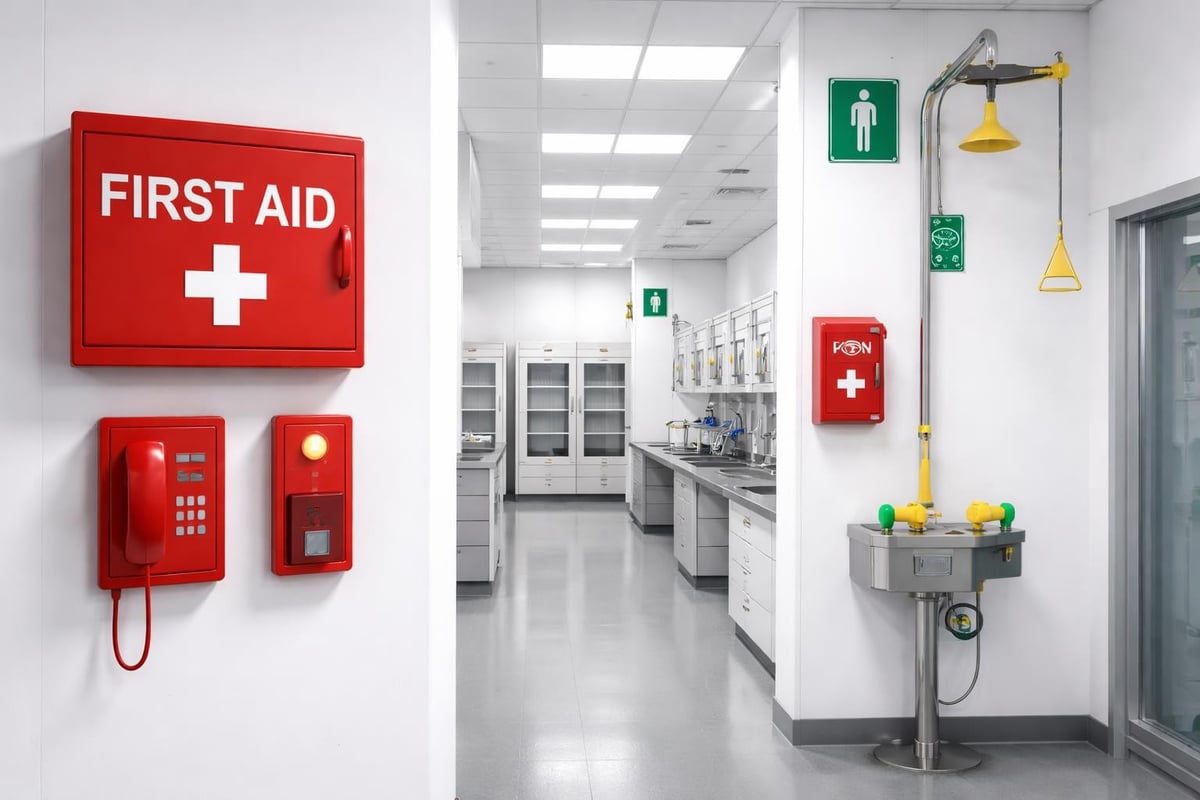
A lab first aid kit functions as part of a broader emergency response system. Position first aid supplies in coordination with other safety equipment:
- Eyewash stations and safety showers (within immediate reach)
- Fire extinguishers and fire blankets
- Emergency phone or communication devices
- Chemical spill cleanup materials
- Emergency evacuation routes
This integrated approach ensures responders can access multiple emergency resources simultaneously without navigating across the laboratory during crises.
Customization Based on Laboratory Type
Different laboratory disciplines face distinct hazards requiring customized first aid provisions. A one-size-fits-all approach fails to address specialized risks inherent to specific scientific fields.
Chemistry Laboratories
Chemistry labs working with corrosive, reactive, or toxic substances need enhanced chemical exposure treatment capabilities. Beyond standard supplies, chemistry lab first aid kits should include:
- Multiple bottles of sterile eyewash solution
- Chemical burn treatment specifically formulated for acids and bases
- Calcium gluconate gel for hydrofluoric acid (if used in the lab)
- Extended barrier protection including face shields and chemical-resistant gloves
- Specialized neutralizing agents appropriate to chemicals in use
The specific chemicals present determine exact requirements. Brown University's laboratory emergency guidance demonstrates how institutions assess chemical inventories to determine appropriate first aid provisions.
Biology and Microbiology Laboratories
Biological laboratories face contamination risks requiring infection control emphasis:
- Extensive supply of disposable gloves and barriers
- Antimicrobial solutions and hand sanitizers
- Biohazard waste disposal bags and containers
- Spill cleanup kits for biological materials
- Additional eye protection and face shields
- Documentation materials for exposure incidents
Sharps Safety Considerations
Biology labs using needles and sharp instruments require needle stick injury provisions:
- Sharps disposal containers positioned throughout the lab
- Post-exposure documentation forms
- Communication protocols for contacting occupational health services
- Antiseptic solutions specifically for puncture wounds
Teaching Laboratories
Educational laboratories present unique challenges with higher personnel numbers and varying experience levels. Teaching lab first aid kits should contain increased quantities of basic supplies while maintaining specialized items. Consider stocking 2-3 times the standard quantities of commonly used items like adhesive bandages, gauze, and gloves.
Student laboratories also benefit from clear instructional materials posted near first aid stations, including visual guides for common injuries and emergency contact information prominently displayed.
Maintenance and Inspection Protocols
A lab first aid kit provides value only when properly maintained with unexpired, undamaged supplies. Establishing systematic inspection and restocking procedures prevents emergency situations where needed supplies are missing or unusable.
Regular Inspection Schedule
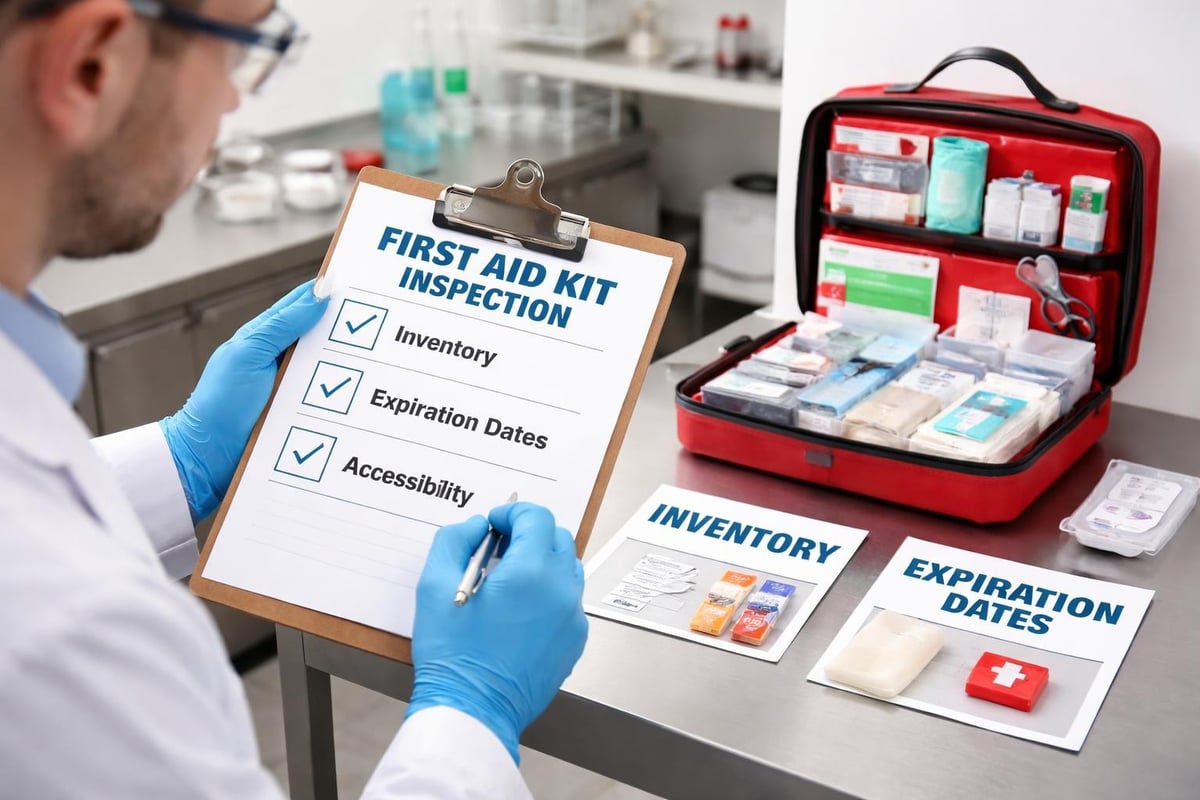
Implement monthly inspections documenting:
- Inventory completeness against established checklist
- Expiration dates on all perishable items
- Physical condition of supplies (sealed packages, undamaged items)
- Accessibility of kit location and mounting security
- Signage visibility and condition
Assign specific individuals responsibility for maintenance rather than assuming collective responsibility. Many laboratories designate safety officers or rotate responsibility among staff members with clear documentation of inspection completion.
Restocking Procedures
Establish relationships with reliable suppliers ensuring rapid replacement of used or expired items. Organizations like Medical Gear Outfitters provide specialized emergency medical supplies suitable for laboratory environments, offering both individual components and complete kits designed for specific applications.
Post-Incident Restocking
After any first aid kit use:
- Document what supplies were used and for what purpose
- Replace used items within 24 hours
- Review incident to determine if kit contents should be modified
- Update inspection logs reflecting restocking completion
This systematic approach prevents gradual depletion leaving kits inadequately stocked during subsequent emergencies.
| Inspection Element | Frequency | Responsible Party |
|---|---|---|
| Complete inventory check | Monthly | Designated safety officer |
| Expiration date review | Quarterly | Laboratory manager |
| Physical accessibility test | Monthly | All laboratory staff |
| Signage condition | Quarterly | Facilities coordinator |
| Post-use restocking | Immediately after use | Person who used supplies |
Training and Preparedness
Equipment alone cannot ensure effective emergency response. Laboratory personnel must understand what their lab first aid kit contains, when to use specific supplies, and how to coordinate first aid with broader emergency protocols.
Essential Training Components
Comprehensive laboratory safety training should address:
Basic First Aid Skills
- Wound cleaning and bandaging techniques
- Burn treatment protocols specific to chemical and thermal injuries
- Eye irrigation procedures for chemical splashes
- Recognition of shock symptoms and appropriate response
- When to provide first aid versus immediately seeking professional medical care
Laboratory-Specific Procedures
- Chemical exposure response matching substances in the lab
- Biological contamination protocols
- Documentation requirements for workplace injuries
- Communication procedures for emergency situations
- Integration of first aid with other emergency equipment
The University of Florida's first aid kit information emphasizes understanding both OSHA requirements and proper utilization of first aid supplies in laboratory contexts.
Scenario-Based Practice
Theoretical knowledge requires practical reinforcement through scenario-based training exercises. Conduct quarterly drills simulating common laboratory emergencies:
- Chemical splash to eyes requiring eyewash station and first aid kit use
- Thermal burn from hot equipment
- Laceration from broken glassware
- Needle stick injury in biological laboratory
- Chemical exposure requiring specialized treatment
These exercises identify gaps in both training and kit contents while building muscle memory for emergency response. Just as emergency responders practice with trauma kits to maintain proficiency, laboratory personnel benefit from regular hands-on practice.
Beyond Minimum Compliance
Meeting baseline regulatory requirements represents the starting point rather than the destination for laboratory safety excellence. Progressive institutions enhance their lab first aid kit provisions beyond minimum standards based on comprehensive risk assessment.
Advanced Provisions
Consider these enhanced capabilities:
Expanded Chemical Response
- Broader range of specialized antidotes and treatments
- Enhanced eye irrigation systems beyond basic solutions
- Advanced burn treatment supplies including hydrogel dressings
- Dedicated chemical exposure documentation kits
Enhanced Communication
- Emergency contact information laminated and posted at kit locations
- Quick reference guides for common laboratory injuries
- Multilingual instructions in diverse laboratory settings
- Integration with emergency notification systems
Specialized Equipment
- Automated external defibrillators (AEDs) in larger facilities
- Oxygen administration equipment for certain laboratories
- Advanced wound closure supplies
- Enhanced thermal protection for cold temperature injuries
Kent State University's compliance guidelines demonstrate how institutions consider anticipated injuries and environmental factors when selecting first aid provisions exceeding minimum standards.
Continuous Improvement Process
Establish feedback mechanisms capturing information from:
- Near-miss incidents requiring first aid kit access
- Actual injury events and treatment provided
- Staff suggestions for kit improvements
- Changes in laboratory procedures or chemicals introducing new hazards
- Advances in first aid treatment methodologies
This continuous improvement approach keeps laboratory first aid capabilities aligned with evolving risks and treatment best practices. Review and update kit contents annually at minimum, with additional reviews following significant laboratory changes.
Integration with Institutional Safety Programs
A lab first aid kit exists within broader institutional safety infrastructure. Effective integration multiplies the value of individual safety components while ensuring comprehensive emergency preparedness.
Coordination Points
Connect first aid preparedness with:
Emergency Response Plans
- Clear protocols specifying when to use first aid versus calling emergency services
- Communication chains alerting appropriate personnel during incidents
- Documentation requirements for occupational health tracking
- Post-incident review procedures improving future response
Safety Training Programs
- New employee orientation covering first aid kit locations and contents
- Annual refresher training on emergency procedures
- Specialized training for personnel working with high-risk materials
- Coordination with institutional occupational health services
Facility Management
- Regular inspections as part of broader laboratory safety audits
- Budget allocation for first aid supplies and equipment
- Coordination with purchasing for standardized, approved supplies
- Maintenance of safety equipment including eyewash stations and showers
The coordination between first aid provisions and comprehensive safety programs creates redundant protections ensuring no single point of failure compromises laboratory safety. This approach mirrors how first responder kits integrate with broader emergency medical services systems.
Documentation and Compliance
Maintain comprehensive documentation demonstrating:
- Hazard assessments identifying laboratory-specific risks
- First aid kit contents matching identified hazards
- Inspection records showing regular maintenance
- Training completion for all laboratory personnel
- Incident reports documenting first aid kit usage
- Continuous improvement initiatives enhancing safety provisions
This documentation satisfies regulatory requirements while providing evidence-based insights for ongoing safety program enhancement.
Special Considerations for Different Laboratory Settings
Laboratory contexts beyond traditional research and teaching environments require adapted first aid approaches.
Industrial Laboratories
Manufacturing and quality control laboratories operating 24/7 need enhanced first aid capabilities:
- Larger quantity provisions supporting multiple shifts
- Duplicate kits ensuring availability during restocking
- Integration with on-site medical facilities or contracted occupational health services
- Enhanced trauma supplies for higher-risk industrial processes
Field Laboratories
Mobile or temporary laboratory settings present unique challenges:
- Portable, weather-resistant first aid containers
- Self-contained supplies not requiring supporting infrastructure
- Communication equipment for remote locations
- Extended supplies accounting for delayed professional medical access
These specialized applications demonstrate that laboratory first aid kit design must account for operational context, not just scientific discipline. Much like selecting between camping first aid kits and facility-based provisions, laboratory managers must match equipment to environment.
Research Vessel and Marine Laboratories
Oceanographic and marine research facilities face compounded challenges:
- Extended isolation from shore-based medical facilities
- Motion and environmental exposure considerations
- Waterproof storage and packaging
- Enhanced provisions for cold water injuries and hypothermia
- Coordination with maritime emergency protocols
These environments require the most comprehensive first aid provisions, essentially serving as the primary medical facility until evacuation or shore access becomes possible.
Establishing and maintaining an effective lab first aid kit requires balancing regulatory compliance, hazard-specific customization, and practical accessibility. By conducting thorough risk assessments, selecting appropriate supplies, implementing systematic maintenance, and providing comprehensive training, laboratory managers create the foundation for effective emergency response that protects personnel and minimizes injury severity. Whether you're equipping a university teaching laboratory or an industrial research facility, Medical Gear Outfitters provides the expertise and high-quality supplies necessary to build first aid capabilities matching your specific laboratory environment and hazards.

