Medicine Bag Kit: Essential Guide for Emergency Preparedness
Emergency preparedness begins with having the right medical supplies readily accessible when seconds matter. A medicine bag kit serves as the cornerstone of effective emergency response, whether you're a healthcare professional, wilderness enthusiast, or conscientious citizen preparing for unexpected medical situations. Unlike basic first aid kits designed for minor injuries, a properly configured medicine bag kit provides comprehensive trauma care capabilities, organized in a way that allows rapid deployment during critical situations. Understanding how to select, configure, and maintain these essential medical resources can mean the difference between effective intervention and inadequate response during life-threatening emergencies.
Understanding the Purpose of a Medicine Bag Kit
A medicine bag kit represents far more than a simple collection of medical supplies thrown into a container. These carefully curated systems serve as portable medical response units designed to address serious injuries and medical emergencies in varied environments. The concept draws inspiration from traditional medicine bags used by Indigenous peoples, though modern iterations focus on evidence-based emergency medical care rather than cultural healing practices.
Modern medicine bag kits fulfill several critical functions:
- Providing immediate access to life-saving interventions for severe bleeding, airway compromise, and chest injuries
- Organizing supplies in logical, accessible arrangements that reduce response time during high-stress situations
- Carrying sufficient quantities of essential items to treat multiple casualties or extended care scenarios
- Protecting medical supplies from environmental factors including moisture, dust, and physical damage
The distinction between a medicine bag kit and standard first aid supplies becomes evident when examining their intended applications. While conventional first aid kits address minor injuries like cuts, scrapes, and headaches, medicine bag kits prepare responders for traumatic incidents requiring advanced interventions. This includes trauma care capabilities such as hemorrhage control, chest seal application, and airway management.
Primary vs. Supplementary Medical Kits
Medical preparedness often requires multiple layers of capability. A medicine bag kit typically serves as the primary response tool, containing everything needed for immediate stabilization and initial treatment. Secondary kits might focus on specific scenarios or provide resupply capabilities during extended operations.
| Kit Type | Primary Purpose | Typical Contents | Best Users |
|---|---|---|---|
| Individual First Aid Kit (IFAK) | Self-care and buddy aid | Tourniquet, pressure dressing, chest seal, gauze | Military, law enforcement, tactical civilians |
| Medicine Bag Kit | Multi-patient trauma response | Comprehensive trauma supplies, airway equipment, diagnostics | Paramedics, wilderness guides, team medics |
| Basic First Aid Kit | Minor injury treatment | Bandages, antiseptics, pain relievers, tweezers | General public, households, offices |
| Specialized Trauma Kit | Specific injury patterns | Targeted supplies for gunshot wounds, burns, or other specific traumas | Tactical medics, range safety officers |
Essential Components of an Effective Medicine Bag Kit
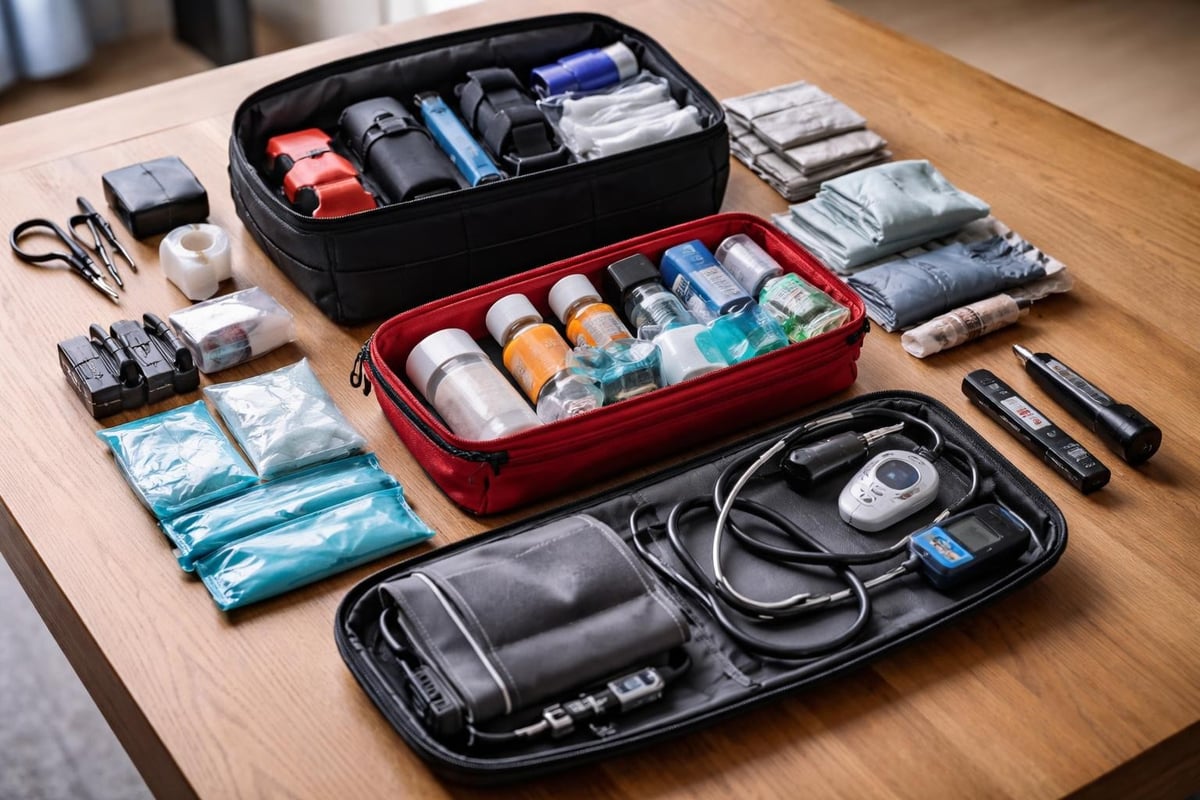
Building a medicine bag kit requires strategic selection of supplies based on potential threats, environment, user skill level, and mission duration. The foundation starts with addressing the leading causes of preventable death in trauma situations: severe hemorrhage, airway obstruction, and tension pneumothorax.
Hemorrhage Control Supplies
Uncontrolled bleeding remains the number one cause of preventable death in trauma. Your medicine bag kit must include multiple options for controlling various types of hemorrhage.
Critical hemorrhage control items include:
- Tourniquets (minimum of two, preferably CAT or SOFT-T models)
- Hemostatic gauze for wound packing in junctional areas
- Pressure dressings for direct compression
- Standard gauze rolls for packing deep wounds
- Compression bandages for circumferential pressure
Understanding how hemostatic agents work helps responders select appropriate products and apply them correctly. These advanced clotting agents prove especially valuable when treating injuries in areas where tourniquets cannot be applied, such as the groin, armpit, or neck regions.
Airway Management Equipment
Compromised airways require immediate intervention to prevent hypoxic brain injury or death. Your kit should contain tools appropriate to your training level.
Basic airway management supplies include nasopharyngeal airways in multiple sizes, which can be inserted even in semi-conscious patients. Advanced providers might carry supraglottic airways, endotracheal tubes, or surgical airway kits. All medicine bag kits should include manual suction devices to clear blood and secretions from the airway.
Chest Injury Treatment
Penetrating chest trauma creates life-threatening conditions requiring specialized equipment. Chest seals prevent air from entering the chest cavity through open wounds while allowing trapped air to escape. Modern vented chest seals have largely replaced older occlusive dressing techniques. Carrying at least two chest seals accommodates both entry and exit wounds.
Needle decompression supplies may be included for providers trained in this advanced skill. A 14-gauge catheter of appropriate length can relieve tension pneumothorax when properly deployed.
Organizing Your Medicine Bag for Rapid Response
The most comprehensive collection of medical supplies becomes ineffective if you cannot quickly locate and deploy them during emergencies. Proper packing methodology transforms a bag of supplies into an efficient response system.
The Priority-Based Organization System
Arrange supplies based on urgency and frequency of use. Items needed for immediate life-threatening conditions should occupy the most accessible positions.
Suggested organization hierarchy:
- Immediate access pocket: Tourniquets, chest seals, hemostatic gauze
- Primary compartment: Pressure dressings, standard gauze, airways, gloves
- Secondary compartment: Bandages, tape, scissors, splinting materials
- Deep storage: Resupply items, less frequently used equipment, documentation supplies
Color-coding compartments or using clear organization pouches helps speed visual identification. Some responders label sections with large, easy-to-read tags indicating contents or injury categories.
Cross-Loading for Team Operations
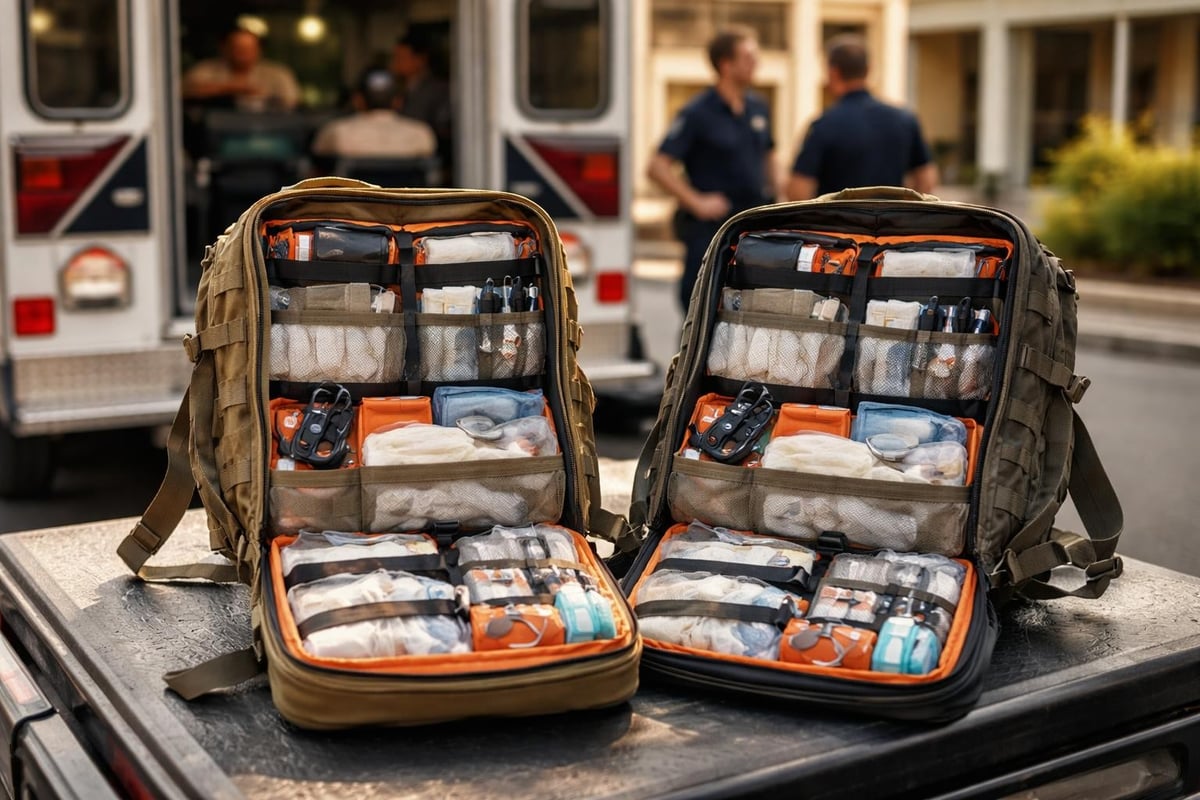
When operating with partners, cross-loading distributes critical supplies across multiple kits. This strategy ensures that loss of one medicine bag kit doesn't eliminate access to essential capabilities. If one responder carries all the tourniquets while another carries all the chest seals, losing either person's kit creates a critical capability gap.
| Supply Category | Kit Alpha Contents | Kit Bravo Contents |
|---|---|---|
| Tourniquets | 2 CAT tourniquets | 2 SOFT-T tourniquets |
| Hemostatics | 2 packs QuikClot gauze | 2 packs Celox gauze |
| Chest Seals | 2 vented seals | 2 vented seals |
| Airways | 2 NPAs (sizes 28, 30) | 2 NPAs (sizes 26, 28) |
| Pressure Dressings | 3 Israeli bandages | 3 pressure bandages |
Selecting the Right Bag or Container
The container housing your medical supplies significantly impacts functionality and durability. Selecting an appropriate medicine bag kit carrier involves evaluating multiple factors including capacity, accessibility, environmental resistance, and carrying comfort.
Capacity and Configuration
Bag size should match your supply requirements without excessive bulk. Overly large bags tempt users to add unnecessary items, increasing weight and reducing mobility. Conversely, cramming supplies into inadequate space compromises organization and damages equipment.
Purpose-built medical bags typically range from compact jump kits (500-800 cubic inches) suitable for single-responder operations to comprehensive aid bags (2000+ cubic inches) designed for extended multi-patient care scenarios. The Field Medic Kit represents a middle-ground option popular among civilian wilderness operators.
Environmental Protection Features
Medical supplies require protection from moisture, dust, and physical trauma. Quality medicine bag kit carriers incorporate:
- Water-resistant or waterproof materials and coatings
- Sealed zippers with storm flaps
- Padded construction to protect fragile items
- Reinforced stress points at handles and attachment locations
Consider your operating environment when selecting protection levels. Urban responders might prioritize abrasion resistance, while wilderness medics need superior moisture protection.
Accessibility and Opening Mechanisms
During emergencies, you need immediate access to supplies without fumbling with complicated closures. Top-opening bags with wide mouths allow clear views of contents. Some advanced designs feature clamshell openings that expose the entire interior when laid flat.
MOLLE webbing on exterior surfaces enables attachment of additional pouches for frequently accessed items. This modular approach lets you customize your medicine bag kit configuration as needs evolve.
Training and Skill Development for Medicine Bag Kit Use
Equipment alone cannot save lives. The effectiveness of any medicine bag kit depends entirely on the user's knowledge, skills, and decision-making under pressure. Comprehensive training transforms supplies into life-saving interventions.
Matching Supplies to Competency Levels
Carrying medical equipment beyond your training level creates false confidence and potential liability. Each item in your medicine bag kit should correspond to skills you've practiced and can competently perform.
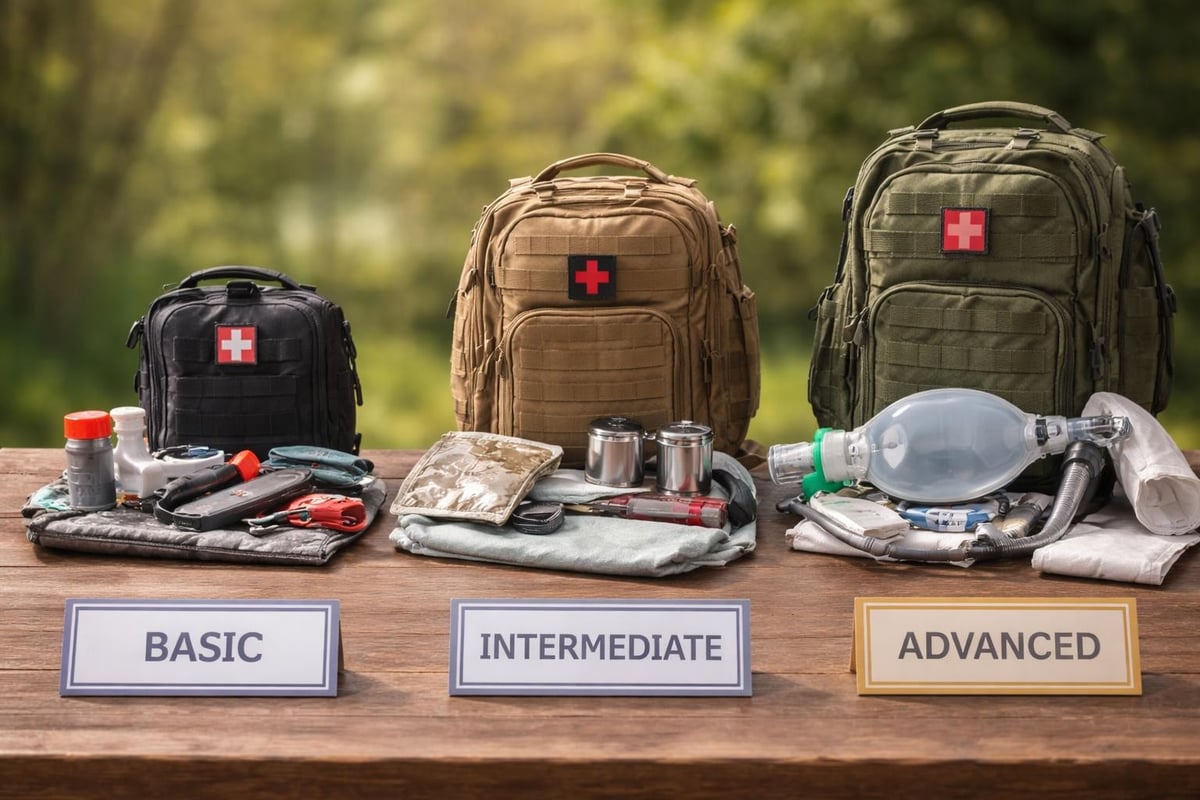
Training progression for common medicine bag kit skills:
- Basic level: Tourniquet application, wound packing with standard gauze, direct pressure techniques
- Intermediate level: Hemostatic agent use, chest seal application, basic airway positioning
- Advanced level: Nasopharyngeal airway insertion, needle decompression, intravenous access
- Expert level: Surgical airway procedures, advanced medication administration, complex medical decision-making
Organizations like North American Rescue offer training programs specifically designed around tactical medicine and trauma care. These courses provide hands-on experience with the exact supplies you'll carry in your medicine bag kit.
Practicing with Your Actual Equipment
Training should utilize the specific products in your kit. Different tourniquet models have distinct application techniques. Various hemostatic agents require different packing methods. Familiarize yourself with each item through repeated practice until deployment becomes automatic.
Regular training drills under simulated stress help build muscle memory and decision-making speed. Practice in low-light conditions, while wearing gloves, and with time pressure to approximate real emergency scenarios.
Maintenance and Readiness Protocols
A medicine bag kit represents an investment in preparedness that requires ongoing maintenance to ensure readiness. Supplies degrade, expire, and get depleted through training or actual use. Systematic inspection and replacement protocols keep your kit mission-ready.
Inspection Schedules and Methods
Establish regular inspection intervals based on storage conditions and usage patterns. Monthly inspections suit high-use environments, while quarterly reviews suffice for personal preparedness kits in stable storage.
Comprehensive inspection checklist:
- Verify all items present according to inventory list
- Check expiration dates on medications, hemostatic agents, and sealed sterile supplies
- Inspect packaging integrity for tears, moisture intrusion, or damage
- Test mechanical components like tourniquet windlasses and bag zippers
- Ensure adequate quantities of consumable items
- Confirm accessibility and organization of supplies
Document inspections with dated logs noting any deficiencies and corrective actions. This record-keeping proves valuable for identifying recurring problems and planning resupply.
Rotation and Replacement Strategies
Most medical supplies carry expiration dates that ensure optimal performance. Plan replacement cycles that use soon-to-expire items for training while restocking with fresh supplies.
Creating a subscription service for consumable supplies ensures continuous availability of fresh items. This approach works particularly well for items with shorter shelf lives like hemostatic gauze or certain medications.
Specialized Medicine Bag Kit Configurations
Different operational contexts require tailored approaches to medicine bag kit configuration. Understanding common specialized applications helps you optimize your setup for specific scenarios.
Wilderness and Remote Environment Kits
Extended operations in remote areas demand self-sufficiency for prolonged periods. Wilderness medicine bag kits emphasize extended care capabilities, environmental injury treatment, and improvisation supplies. These kits typically include:
- Expanded wound care supplies for multi-day dressing changes
- Splinting materials for fracture stabilization during extended evacuation
- Medications for pain management, infection prevention, and environmental illnesses
- Insulation and hypothermia prevention equipment
- Water purification and hygiene supplies
Weight becomes a critical consideration for backcountry operations. Every item must justify its inclusion based on likelihood of use and unavailability of alternatives.
Tactical and Law Enforcement Applications
Officers and tactical operators face unique threat profiles requiring specific capabilities. These medicine bag kits emphasize rapid hemorrhage control, penetrating trauma management, and operation under fire.
The IFAK (Individual First Aid Kit) concept provides each team member with personal life-saving supplies. Complementary aid bag configurations carried by designated medical personnel provide additional depth and capability for treating multiple casualties.
Urban Emergency Response Configurations
First responders in urban environments encounter different challenges than wilderness operators. Vehicle access enables carrying more comprehensive equipment. Shorter transport times to definitive care allow focus on stabilization rather than extended field treatment.
Urban medicine bag kits might include more advanced airway equipment, diagnostic tools like blood pressure cuffs and pulse oximeters, and supplies for medical emergencies beyond trauma. Complete kits designed for urban response balance comprehensive capabilities with reasonable portability.
Custom Building vs. Pre-Configured Kits
Assembling your medicine bag kit involves choosing between purchasing pre-configured systems or building custom configurations from individual components. Both approaches offer distinct advantages depending on your specific needs and experience level.
Advantages of Pre-Configured Systems
Commercially available medicine bag kits provide turn-key solutions designed by experienced medical professionals. These systems ensure you don't overlook critical items and often provide better value than purchasing components individually.
Benefits of pre-configured kits include:
- Vetted supply lists based on proven protocols
- Bulk purchasing cost savings passed to consumers
- Immediate readiness without research and assembly time
- Training materials and inventory lists included
- Warranty and replacement support from manufacturers
Pre-configured options work well for new users still learning what they need. The curated selection provides a solid foundation that can be modified as experience grows.
Custom Configuration Benefits
Building your medicine bag kit from individual components allows precise tailoring to your specific requirements, training level, and operational environment. Experienced users often prefer this approach after gaining field experience with pre-configured systems.
Custom building enables you to select specific brands and products that match your preferences. You avoid paying for supplies you don't need while ensuring adequate quantities of items you use frequently. This approach also facilitates incremental investment, spreading costs across multiple purchases.
| Approach | Best For | Cost Efficiency | Customization | Time Investment |
|---|---|---|---|---|
| Pre-Configured Kit | New users, standard applications | High initial value | Limited | Minimal |
| Custom Build | Experienced users, specialized needs | Variable | Complete | Significant |
| Hybrid (modify pre-built) | Intermediate users | Good | Moderate | Low to Moderate |
Legal and Regulatory Considerations
Operating a medicine bag kit involves navigating various legal and regulatory frameworks depending on your jurisdiction, professional status, and intended use. Understanding these requirements protects both you and those you assist.
Scope of Practice Limitations
Medical interventions must align with your training, certification, and legal authority. Healthcare professionals operating under their credentials face different constraints than civilian Good Samaritans providing emergency assistance.
State and local regulations vary significantly regarding what interventions laypersons can legally perform. Most jurisdictions provide Good Samaritan protections for reasonable emergency assistance, but these protections generally require acting within the bounds of your training and without gross negligence.
Prescription and Controlled Substance Regulations
Certain medications require prescriptions and cannot legally be possessed without appropriate authorization. Injectable medications, advanced pharmaceuticals, and controlled substances face particularly strict regulations.
Many effective medicine bag kit configurations function perfectly with over-the-counter supplies and equipment requiring no special authorization. Focus on mechanical interventions like tourniquets, pressure dressings, and airways that provide significant capability without regulatory complications.
Documentation and Reporting Requirements
Medical professionals may face documentation and reporting obligations when providing care, even in emergency situations. Understanding these requirements before incidents occur prevents compliance issues during already stressful situations.
Maintaining incident logs documenting care provided, supplies used, and patient outcomes serves multiple purposes. These records support quality improvement, inventory management, and legal protection should questions arise about your actions.
Cost Considerations and Budget Optimization
Building effective medical preparedness requires financial investment, but strategic planning maximizes capability while managing costs. Understanding value drivers helps optimize your medicine bag kit budget.
Priority-Based Investment Strategy
Not all supplies offer equal return on investment. Focus initial spending on items that address the most common and life-threatening situations. A basic but complete kit beats an incomplete collection of premium products.
Recommended investment priority order:
- Core trauma supplies: tourniquets, hemostatic gauze, pressure dressings, chest seals
- Basic wound care: standard gauze, medical tape, bandages, irrigation supplies
- Protective equipment: gloves, eye protection, masks
- Airways and breathing: NPAs, rescue masks, manual suction
- Specialized items: splints, advanced diagnostics, extended care supplies
This approach ensures fundamental capabilities before adding nice-to-have items. As budget allows, progressively enhance your medicine bag kit with additional depth and specialized equipment.
Balancing Quality and Cost
Medical supplies span vast quality and price ranges. While premium products often deliver superior performance and reliability, thoughtful selection allows effective kits at various price points.
Critical life-saving items justify premium investment. Tourniquets, hemostatic agents, and chest seals directly impact survival during severe trauma. Purchasing proven, quality products for these categories provides the best value regardless of higher initial cost.
Less critical supplies often perform adequately at lower price points. Generic gauze rolls, basic bandages, and simple tools function satisfactorily from budget suppliers. Directing savings from these items toward premium critical supplies optimizes overall kit effectiveness.
Building and maintaining an effective medicine bag kit requires careful planning, ongoing training, and commitment to readiness, but these investments provide invaluable capability when emergencies occur. Whether you're a medical professional, outdoor enthusiast, or prepared citizen, having organized, quality medical supplies accessible transforms good intentions into effective action during critical moments. Medical Gear Outfitters provides paramedic-selected equipment and expert guidance to help you build the perfect medicine bag kit for your specific needs, backed by the knowledge and training resources necessary to use these life-saving supplies effectively when they matter most.

