
Emergency First Aid Box: Essential Guide for 2026
When seconds count and professional medical help is minutes away, having a well-stocked emergency first aid box can mean the difference between a minor incident and a life-threatening situation. Whether you're assembling supplies for your workplace, home, vehicle, or outdoor adventures, understanding what belongs in an emergency first aid box and how to maintain it properly ensures you're prepared to respond effectively when emergencies strike. This comprehensive guide explores the essential components, regulatory requirements, and best practices for creating and maintaining an emergency first aid box that meets both your specific needs and safety standards.
Understanding Emergency First Aid Box Fundamentals
An emergency first aid box serves as your immediate response resource when injuries or medical emergencies occur. Unlike basic first aid kits designed for minor cuts and scrapes, a properly equipped emergency first aid box contains supplies capable of addressing more serious medical situations until professional help arrives.
The distinction matters significantly when considering your preparedness level. Basic first aid kits typically include adhesive bandages, antiseptic wipes, and pain relievers. Emergency first aid boxes, however, expand to include trauma supplies, bleeding control devices, and equipment for managing life-threatening conditions.
Core Components Every Emergency First Aid Box Needs
Building an effective emergency first aid box requires balancing comprehensiveness with portability. The American Red Cross provides detailed guidance on essential items that should form the foundation of any emergency kit.
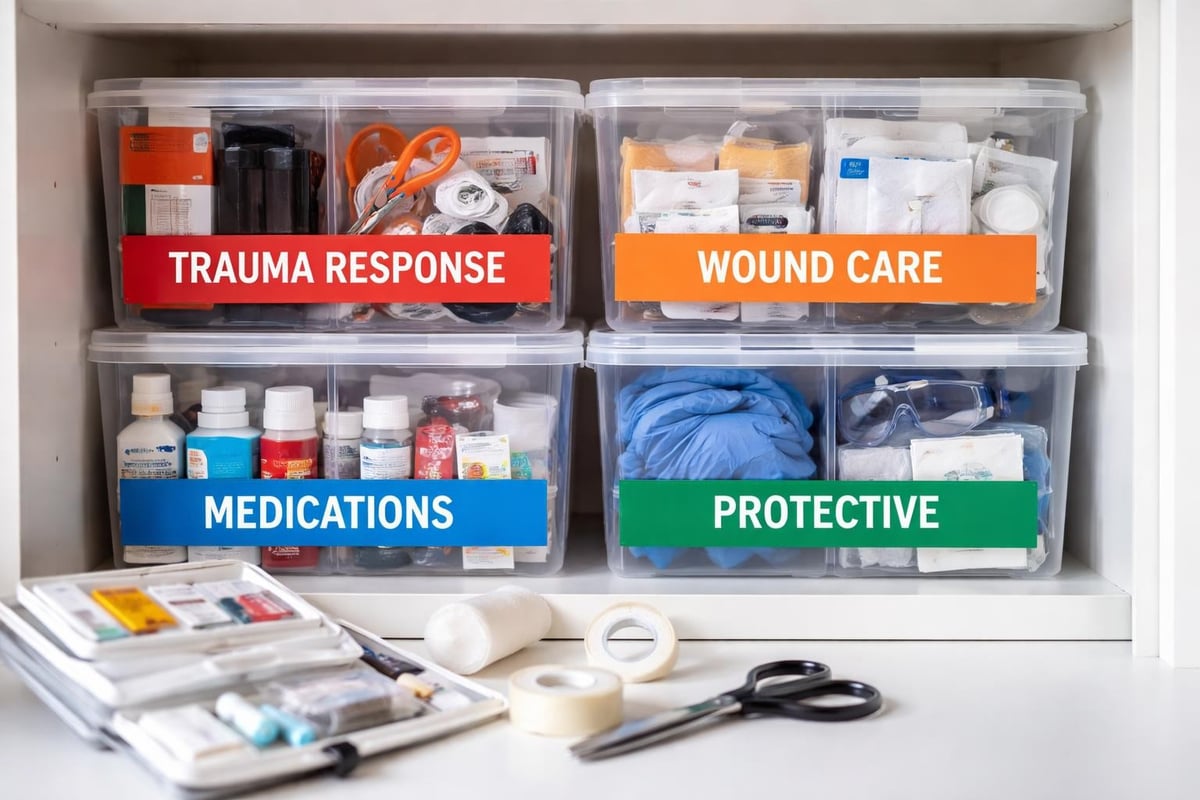
Bleeding Control Supplies:
- Sterile gauze pads in multiple sizes (2x2, 4x4 inches)
- Trauma dressings (5x9 inches minimum)
- Elastic bandages for compression
- Medical tape (cloth and waterproof varieties)
- Hemostatic gauze for severe bleeding
Wound Care Materials:
- Adhesive bandages in assorted sizes
- Butterfly closures for wound edges
- Antibiotic ointment packets
- Antiseptic wipes and solutions
- Burn gel or dressings
Protective Equipment:
- Nitrile gloves (multiple pairs, various sizes)
- CPR face shield or pocket mask
- Eye protection
- Biohazard disposal bags
Regulatory Standards and Workplace Requirements
Organizations must comply with specific standards when assembling workplace emergency first aid boxes. OSHA regulations establish minimum requirements for workplace first aid supplies, particularly in environments where professional medical care isn't immediately accessible.
The American National Standards Institute (ANSI) sets widely recognized standards through ANSI/ISEA Z308.1-2021. This standard classifies first aid kits into two types based on workplace size and hazard level. Compliance with ANSI standards ensures your emergency first aid box meets baseline requirements for employee safety.
| Standard | Application | Key Requirements |
|---|---|---|
| ANSI Type I | Small workplaces (up to 25 people) | Basic supplies for minor injuries |
| ANSI Type II | Larger workplaces (26+ people) | Expanded supplies for complex injuries |
| OSHA 1910.266 | Logging operations | Trauma-specific equipment required |
Industry-Specific Considerations
Different work environments demand customized emergency first aid box contents. Construction sites require eye wash stations and burn treatment supplies due to chemical exposure risks. Manufacturing facilities need supplies for crush injuries and amputation management. Remote work locations should include trauma kits capable of addressing severe injuries when emergency services face extended response times.
The University of Texas Environmental Health & Safety guidelines emphasize recent updates to workplace first aid requirements, including mandatory foil blankets for treating shock and hypothermia. These updates reflect evolving best practices in emergency medical care.
Advanced Supplies for Comprehensive Emergency Preparedness
While basic supplies handle common injuries, life-threatening emergencies require specialized equipment. Advanced emergency first aid boxes should include items that address the leading preventable causes of death in trauma situations.
Hemorrhage Control Equipment
Uncontrolled bleeding represents the most preventable cause of trauma death. Professional-grade tourniquets have proven effectiveness in stopping life-threatening extremity bleeding. The Committee on Tactical Combat Casualty Care recommends specific tourniquet models that have undergone rigorous testing.
Critical Bleeding Control Items:
- CAT or SOFTT-W tourniquets
- Hemostatic gauze (QuikClot or Celox)
- Pressure bandages (Israeli or H-bandage)
- Chest seals for penetrating torso injuries
Hemostatic agents work by accelerating the body's natural clotting process, making them invaluable for wounds in areas where tourniquets cannot be applied effectively.
Airway Management Tools
Compromised airways cause preventable deaths in emergency situations. Including basic airway management tools in your emergency first aid box enables intervention before professional rescuers arrive.
- Nasopharyngeal airways (multiple sizes)
- Oropharyngeal airways
- Pocket masks with one-way valves
- Suction devices for clearing obstructions
Organizing Your Emergency First Aid Box for Quick Access
Effective organization transforms your emergency first aid box from a collection of supplies into a functional emergency response tool. During high-stress situations, responders need immediate access to critical items without searching through disorganized contents.
Strategic Layout Principles
Color-coding systems help users quickly identify supply categories. Many professional responders use clear zippered pouches labeled by injury type: red for bleeding control, blue for airway management, yellow for burn treatment. This visual organization system reduces response time during emergencies.
Layered accessibility places most frequently needed items in top compartments or exterior pockets. Tourniquets, gloves, and trauma dressings should never require unpacking the entire kit to access.
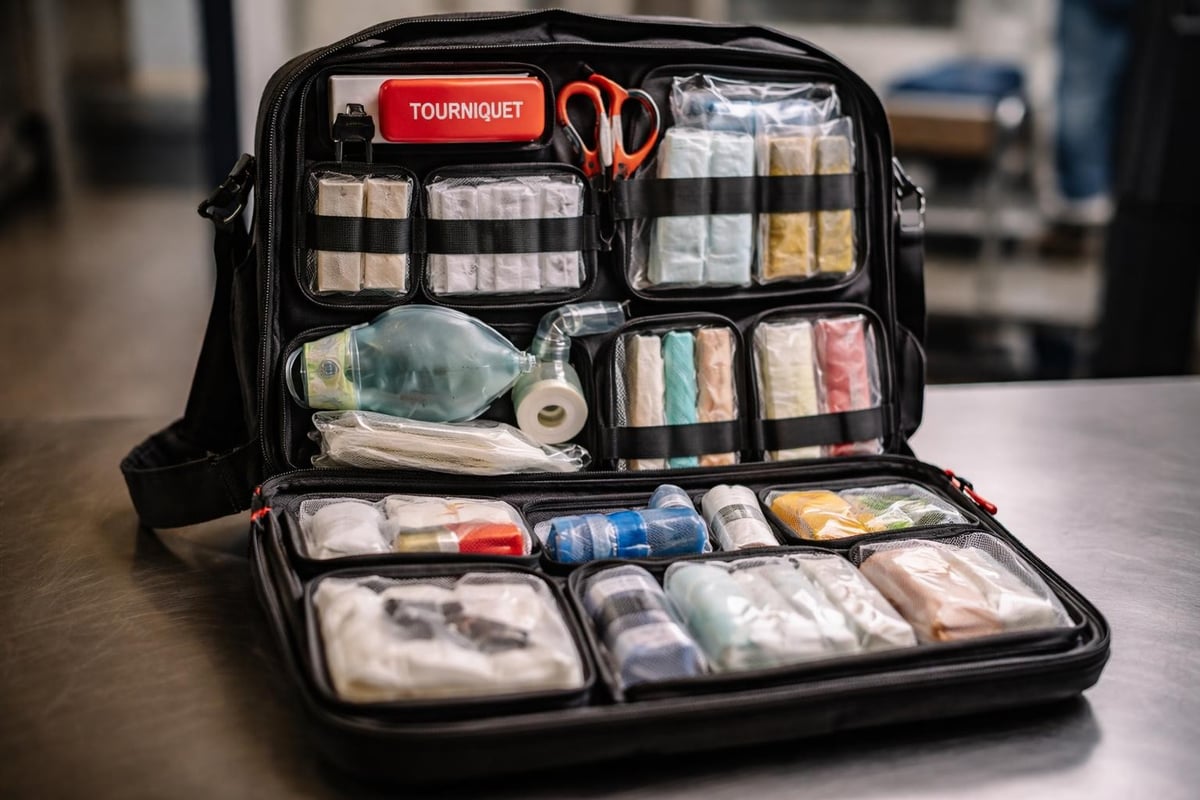
- Primary layer: Bleeding control, airway management, protective equipment
- Secondary layer: Wound care, splinting materials, medications
- Tertiary layer: Documentation, reference guides, backup supplies
Container Selection Criteria
The container housing your emergency first aid box impacts its functionality as much as the contents. Consider these factors:
| Feature | Benefit | Consideration |
|---|---|---|
| Waterproof construction | Protects supplies from moisture | Essential for vehicle/outdoor kits |
| Hard-shell vs. soft-pack | Protects fragile items vs. flexibility | Match to intended use environment |
| MOLLE compatibility | Attaches to tactical gear/vehicles | Important for first responders |
| Clear labeling | Enables quick identification | Critical in multi-kit environments |
Maintenance Protocols and Expiration Management
An emergency first aid box provides value only when properly maintained. Expired medications lose potency, adhesives fail, and sterile packaging degrades over time. Implementing systematic maintenance protocols ensures readiness when emergencies occur.
Monthly Inspection Checklist
Designate one person responsible for monthly emergency first aid box inspections. This accountability ensures consistency and completion.
Inspect for:
- Opened or damaged sterile packaging
- Expired medications and ointments
- Depleted supplies requiring replacement
- Physical damage to the container
- Missing items from previous use
Replace any item within six months of its expiration date. Many medications and sterile supplies remain effective beyond printed dates, but emergency situations demand absolute reliability.
Replenishment Strategy
After using supplies from your emergency first aid box, immediate replenishment prevents being caught unprepared during the next incident. The American College of Emergency Physicians recommends maintaining a replacement supply list specific to your kit's contents.
Consider establishing a relationship with a dedicated supplier who understands emergency medical needs. Medical Gear Outfitters offers complete kits designed by paramedics who understand real-world emergency response requirements.
Customizing Your Emergency First Aid Box
While standardized kits provide excellent foundations, truly effective emergency first aid boxes reflect the specific risks and needs of their intended environment. Customization transforms generic supplies into targeted emergency response capability.
Environmental Risk Assessment
Evaluate the specific hazards present in your environment. Chemical laboratories need extensive eye wash and chemical burn supplies. Woodworking shops require supplies for treating lacerations and embedded foreign objects. Outdoor recreational areas should include supplies for snake bites, severe allergic reactions, and environmental emergencies.
Home customization factors:
- Family member medical conditions
- Prescription medications for emergencies
- Age-specific supplies (infant, elderly care)
- Pet emergency supplies
- Local environmental hazards
Professional vs. Public Access Kits
Emergency first aid boxes designed for trained medical professionals should include items requiring specific knowledge to use safely. Public access kits, such as those in office buildings or schools, should limit contents to items usable by individuals with basic first aid training.
The Cornell University Environmental Health & Safety department emphasizes that workplace first aid kits should complement, not replace, professional emergency medical services. This philosophy guides appropriate content selection.
Training Requirements for Emergency First Aid Box Use
Equipment effectiveness depends entirely on user competency. The most comprehensively stocked emergency first aid box provides no benefit if responders lack training in proper use of its contents.
Essential Training Components
Basic First Aid and CPR certification forms the foundation for emergency response. Organizations like the American Red Cross and American Heart Association provide standardized training programs teaching fundamental life-saving skills.
Bleeding Control Education has expanded significantly following the Stop the Bleed campaign. This training focuses specifically on hemorrhage control using tourniquets, wound packing, and pressure application-skills that directly utilize advanced emergency first aid box contents.
- Tourniquet application techniques
- Hemostatic gauze packing procedures
- Pressure dressing application
- Recognition of life-threatening bleeding
Ongoing Skill Maintenance
Medical skills degrade without regular practice. Schedule quarterly training refreshers where team members practice with training supplies from your emergency first aid box. This familiarity reduces hesitation during actual emergencies.
Response kits from Medical Gear Outfitters often include training resources that help users maintain proficiency with specialized equipment.
Special Considerations for Different Settings
Emergency first aid box requirements vary dramatically based on location and intended use. Understanding these variations ensures appropriate preparedness for specific scenarios.
Vehicle Emergency Kits
Vehicle-based emergency first aid boxes must withstand temperature extremes, vibration, and space constraints. Medications and supplies sensitive to heat or freezing require special consideration. Compact, durable containers that secure properly prevent contents from becoming projectiles during accidents.
Vehicle-specific additions:
- Emergency blankets (foil and wool)
- Road flares or reflective triangles
- Fire extinguisher
- Emergency contact information cards
- Regional-specific items (snake bite kit, etc.)
Wilderness and Remote Location Kits
Extended distance from professional medical care demands expanded capabilities. Detailed disaster preparedness checklists emphasize the importance of self-sufficiency in remote emergency response.
These emergency first aid boxes should include multi-day wound care supplies, antibiotics (if authorized), splinting materials, and medications for common wilderness medical issues like allergic reactions, gastrointestinal problems, and altitude sickness.
Workplace Compliance Kits
Workplace emergency first aid boxes must balance regulatory compliance with practical utility. Many organizations satisfy minimum OSHA requirements but fail to address realistic workplace injury scenarios adequately.
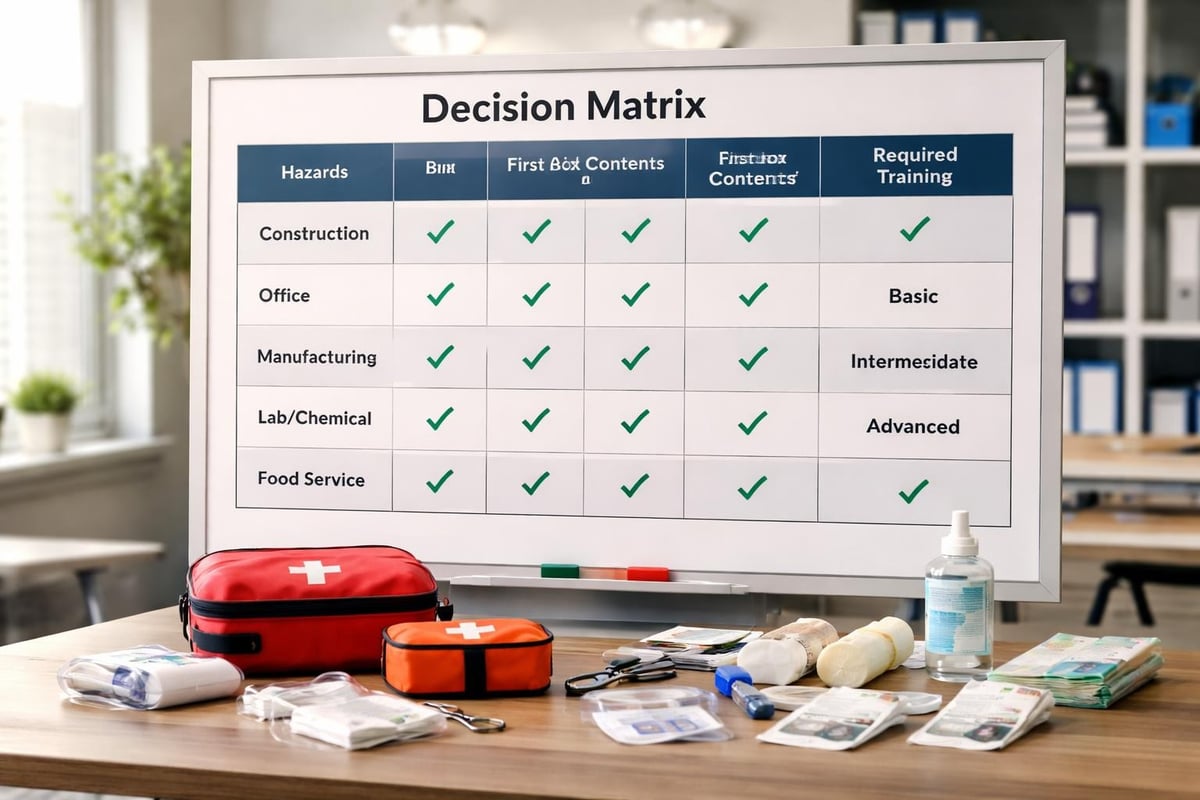
Conduct a hazard analysis identifying potential injuries specific to your workplace. Manufacturing environments need eye protection and chemical exposure supplies. Office settings require fewer trauma supplies but should include cardiac emergency equipment like AEDs.
Documentation and Emergency Information
An often-overlooked component of emergency first aid boxes is critical documentation that guides responders during high-stress situations. Including reference materials and emergency contact information significantly improves response effectiveness.
Essential Documentation
- Emergency care reference guides providing step-by-step instructions
- Emergency services contact numbers (local 911 alternatives)
- Poison control center information
- Facility-specific emergency procedures
- Individual medical alert information for residents/employees
Inventory logs track kit contents, expiration dates, and usage history. This documentation proves invaluable during regulatory inspections and identifies patterns requiring kit customization.
Digital vs. Physical Resources
While smartphone apps provide extensive medical information, emergency situations often involve damaged electronics or lack of connectivity. Physical reference cards laminated for durability ensure information availability regardless of circumstances.
Consider including quick reference cards for:
- CPR compression rates and depths
- Choking intervention procedures
- Severe bleeding control steps
- Signs of shock, stroke, and heart attack
Building Your Emergency First Aid Box Investment
Quality emergency medical supplies represent an investment in safety and preparedness. Understanding value versus cost helps organizations and individuals make informed purchasing decisions.
Quality Indicators
Medical-grade supplies meet specific manufacturing standards ensuring reliability during emergencies. Consumer-grade alternatives may appear similar but often lack the durability and sterility required for emergency medical use.
Examine product specifications carefully:
- FDA approval status
- Sterility guarantees
- Expiration date length
- Manufacturer reputation
- Professional endorsements
Bulk vs. Pre-Assembled Options
Organizations managing multiple emergency first aid boxes benefit from bulk purchasing individual components. This approach allows customization while reducing per-unit costs. However, it requires expertise in selecting appropriate items and quantities.
Pre-assembled kits from reputable suppliers provide professionally curated contents meeting specific standards. Companies like Medical Gear Outfitters, operated by experienced paramedics, design kits reflecting real-world emergency response needs rather than simply meeting minimum regulatory requirements.
| Approach | Advantages | Best For |
|---|---|---|
| Pre-assembled kits | Professional curation, time-saving, standards compliance | Single kits, non-medical buyers |
| Bulk components | Customization, cost efficiency, specific needs | Multiple kits, experienced buyers |
| Hybrid approach | Balance of benefits | Growing programs, evolving needs |
Assembling and maintaining an effective emergency first aid box requires understanding both the medical supplies needed and the specific risks you're preparing to address. By following regulatory guidelines, incorporating advanced trauma care equipment, and ensuring proper training, you create genuine emergency response capability rather than simply checking compliance boxes. Whether you need comprehensive workplace kits, specialized trauma supplies, or guidance in building custom emergency response capabilities, Medical Gear Outfitters provides paramedic-designed solutions and the expertise to ensure you're truly prepared when emergencies occur.

